
The Hearing Benefit Catch: What Nations, TruHearing and UHC Cover
By Dr. Jade Husby, Au.D. | September 20, 2026
Short Version
There is a hearing benefit catch, and it is not the money. Your plan hands hearing over to an outside administrator with its own network, its own device list, and in one case its own locked devices. Ask one question before you commit. Will the hearing aids you fit me be locked to anybody’s network?
People turn suspicious when a hearing aid arrives mostly paid for, and that instinct deserves a hearing. The hearing benefit catch is real, though it rarely turns out to be the thing people brace for. Nobody hands you a worse device because a plan is paying for part of it. What can happen is that the benefit quietly decides who adjusts your hearing aids for the next five years, and that is worth understanding before you sign anything.
We see this weekly at both clinics. Patients arrive holding a benefit letter, half convinced it is a coupon with strings attached, and the honest answer sits somewhere in between. Our overview of using insurance for hearing aids covers the money side. This is about the part nobody puts in the letter.

Where the Hearing Benefit Catch Comes From
A hearing benefit is not your health plan paying a clinic directly. Your plan carves hearing out of its medical coverage and hands the whole category to a third-party administrator, and that administrator then builds its own contracted network of providers, sets its own device list, and decides what it pays a provider for a fitting. UnitedHealthcare states the separation plainly in its own UnitedHealthcare Hearing FAQs, noting that it contracts an independent network of hearing professionals, separate from the UnitedHealthcare medical network.
That single structural fact explains every limit people run into. Because the administrator, not your insurer, controls the network and the price it pays, the administrator also controls how much time a provider can afford to spend with you, which devices are on the menu, and whether those devices stay open to outside service later. None of that is hidden. It simply lives in a contract between two companies you are not party to.
Three things sit with the administrator rather than with your insurer or your clinic, and each one shapes your experience:
- The provider list, which is why an in-network medical clinic can still be out of network for hearing.
- The covered device tiers, which is why two people with the same plan can be offered different technology.
- The service terms behind the device, including whether another provider can adjust it later.
Every hearing benefit catch people run into grows out of one of those three, so knowing which one your plan leans on tells you most of what you need before you walk in.
Is There a Hearing Benefit Catch? Three Limits Worth Knowing
Yes, and there are three of them, only one of which is serious. Weigh each hearing benefit catch on its own rather than treating them as one problem. Each limit comes straight from that administrator structure, so none of them is a surprise once you know where to look.
| The limit | What it means for you | How much it should worry you |
|---|---|---|
| Network | You choose from the administrator’s provider list, not your plan’s medical directory | Low, if a local clinic you trust is on the list |
| Device list | Your benefit covers certain technology tiers, not everything on the market | Low to moderate, and worth asking about early |
| Locking | Some devices can only be adjusted by the network that sold them | High, because it follows you for the life of the device |
The Network Limit
Hearing benefits run on their own provider list, and being in-network for medical care means nothing here. A clinic your plan covers for a physical can sit entirely outside the hearing network, which is how patients end up surprised at the front desk. The fix is small. Check the hearing network specifically, by name, before you book anything.
The network limit controls less than patients assume, and the difference matters:
- It decides which clinics can bill your benefit, which is a real restriction on where you go.
- It sets the fitting fee the clinic receives, which is why some providers decline certain benefits outright.
- It does not set the quality of care at any given clinic, which varies provider by provider inside the same network.
So the network limit is a question about access, and you settle it with one phone call.
The Device List Limit
Your benefit covers a defined set of technology tiers rather than the whole market. Plans differ widely on how generous that set is, and the same administrator often runs a basic tier and a richer one, so two neighbors with the same card can be offered different devices. This is the limit people expect and it is usually the least painful, because most benefit device lists include real manufacturers rather than mystery hardware. You can see the hearing aid brands we carry and ask which of them your particular plan reaches.
Worth asking your provider before the fitting:
- Which tiers my benefit covers, since that determines the features on the table.
- What the difference in daily listening is between the covered tier and the next one up.
- Whether the covered devices come from a major manufacturer or a private label built for the network.
That last question leads straight into the one limit that bites.
The Locking Limit
A locked hearing aid is one that only the selling network can program, and it is the hearing benefit catch that costs people something. Manufacturers build the software lock at the request of the seller, so the device works normally in every other respect and simply refuses adjustment from an outside provider. Move house, fall out with the clinic, or watch that clinic close, and you own a device nobody nearby can touch. We wrote a fuller piece on choosing unlocked hearing aids because this comes up constantly.
Three consequences follow from a locked device, and they all land years after the purchase:
- Service is tied to one network, so a move across the country can strand a working pair of hearing aids.
- Resale and hand-me-down value drop to near nothing, because the next person cannot have them programmed.
- Your bargaining position disappears, since a clinic that knows you cannot go elsewhere has no reason to compete for your follow-up.
None of that shows up during the first appointment, which is exactly why it deserves the question up front.
UnitedHealthcare Hearing, Relate, and the Clearest Hearing Benefit Catch of the Three
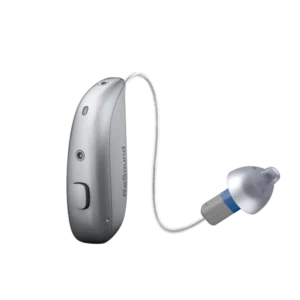
The UnitedHealthcare Hearing benefit works at Stanford Hearing, and we fit unlocked devices under it. That matters because UnitedHealthcare Hearing also sells a private-label line called Relate, which Sonova builds on the Unitron platform. UnitedHealthcare Hearing locks those Relate aids to its own network, so only a Relate provider can adjust or service them.
So the choice inside this one benefit is unusually clear. Take the private-label route and your service is tied to that network for the life of the device. Come to us under the same benefit and your hearing aids stay open, which means our team can adjust them, and so can a provider in another state if you spend winters somewhere warm. The benefit pays either way. What changes is who can help you in year four.
The UnitedHealthcare Hearing FAQs also describe a three-year extended warranty covering repairs and a one-time loss and damage replacement. That is a term of the UnitedHealthcare Hearing benefit for members using it, not a Stanford Hearing offer, and it is worth confirming against your own plan documents rather than assuming it applies to you.
Two things to sort out before your appointment, and both take minutes:
- Whether your plan steers you toward Relate, which you can confirm with the administrator directly.
- Whether the clinic you pick fits unlocked devices under the benefit, which we do and will say so plainly.
Our full breakdown of UnitedHealthcare Hearing benefits walks through the rest.
What Nations Hearing and TruHearing Each Carry
Terms differ by administrator, and a figure from one is never a figure from another, which is its own quiet hearing benefit catch. Nations Hearing administers hearing benefits for Aetna members, and TruHearing administers them for a long list of plans including Humana and Blue Cross Blue Shield lines. We accept both, along with UnitedHealthcare Hearing, and we verify your coverage for free before your appointment.
| What to ask about | Typical Nations benefits include | TruHearing and UHC Hearing |
|---|---|---|
| Return window | A 60-day, 100 percent money-back guarantee | Set by your plan, so we verify it for you |
| Follow-up visits | Three follow-up visits | Set by your plan, so we verify it for you |
| Repair warranty | A three-year manufacturer’s repair warranty | Set by your plan, so we verify it for you |
| Batteries | Three years of batteries | Set by your plan, so we verify it for you |
| Loss and damage | One-time replacement coverage | UHC Hearing states a one-time replacement in its own FAQs |
| Financing | 0 percent APR options with no money down | Set by your plan, so we verify it for you |
Every term in that Nations column belongs to the Aetna Nations benefit for patients using it, never to Stanford Hearing generally, and never to the other two administrators. Our pages on Nations Hearing benefits and TruHearing benefits go deeper on each.
On the locking question, we answer the same way across all three. We do not lock the Nations Hearing devices we fit, and you keep the freedom to get service from our team whenever you need it.
Why an Unlocked Hearing Aid Still Matters in Year Four
Hearing drifts, and a reprogramming appointment is how the devices keep up with it. The settings that fit you on fitting day come from the hearing test in your file that week, so when the test changes, the software has to change with it, and a provider pulls the devices up on a computer and moves the targets to match the new results. That is a twenty minute visit for whoever has the manufacturer’s software in front of them. It is impossible for everybody else, which is the whole of the difference between an unlocked device and a locked one.
We hear about this from patients in ordinary ways rather than dramatic ones:
- A winter in Arizona turns into six months without adjustments if no local provider can open the software.
- An adult child moving a parent closer to home discovers the hearing aids cannot come along to a new clinic.
- A clinic closure leaves a working pair that nobody in the region will touch.
Nothing about that is theoretical, and avoiding this particular hearing benefit catch is the main reason we fit only unlocked devices regardless of which benefit is paying.

How to Check Your Own Plan Before You Book
Start with the administrator rather than your insurer, because the administrator holds the answers. Your benefit letter or member portal names which of the three runs your hearing coverage, and a single call settles the rest. Bring what you learn to your first appointment and the conversation gets much shorter.
Four questions do most of the work:
- Which administrator runs my hearing benefit, since that determines everything downstream.
- Is the clinic I want in that hearing network, which is separate from the medical directory.
- Which device tiers does my benefit cover, so nothing at the fitting comes as a shock.
- Will the devices be locked, which is the one answer that follows you for years.
Those four answers are the whole hearing benefit catch, and one phone call gets you all of them.
We handle the verification side ourselves, at no cost, before you come in:
- We confirm which administrator your plan uses and what it covers, so you are not decoding a benefit letter alone.
- We tell you what your benefit reaches and what it does not, in plain numbers you can plan around.
- We fit unlocked devices under every benefit we accept, so your options stay open later.
Booking a hearing test is the step that turns all of this from research into a plan, because a provider reading your own audiogram is the only way to know which covered devices suit your hearing.
Why Choose Stanford Hearing When You Use Your Benefit
Locally owned and independent, we have spent more than 20 years looking after hearing in this region, and we have been voted Sioux Falls Local Best for over 20 years. Free consultations come with no pressure to buy, and your first appointment is a complimentary assessment of your hearing and your needs, with no obligation.
Everything that follows is ours rather than the administrator’s, which is the distinction that matters most when a benefit is paying:
- Five premium brands rather than a single-brand menu, with unlocked devices and recommendations based on your hearing and your lifestyle.
- Options for every budget, so the conversation starts with what you need rather than what you can be sold.
- A trial so you can buy with confidence, wearing your hearing aids in real life before you decide, and the Phonak Virto trial runs 30 days. If they are not right for you, return them inside your trial window for a full refund.
- Your hearing aids come with the manufacturer’s warranty, including the manufacturer’s loss and damage coverage, and terms vary by brand and model.
- A price match guarantee means you will not overpay locally. Bring us what another local clinic quoted you and we will take a look.
- 12 months no-interest financing spreads the cost into monthly payments, for qualifying patients and subject to credit approval.
- In-network with all major insurance providers, including Medicare Advantage, and we verify your benefits before your appointment so you know what is covered before you commit.
- In-person care from testing through fitting to follow-up adjustments, at our Sioux Falls hearing center and our Buffalo hearing center.
Bring the benefit letter, bring the worry about a hearing benefit catch, and let us do the verification. Schedule a free consultation and we will tell you which administrator runs your coverage, what it reaches, and which unlocked devices it will pay toward, before you commit to anything.
More Questions About the Hearing Benefit Catch
Does Original Medicare cover hearing aids?
No. Medicare states plainly that Original Medicare does not cover hearing aids or the exams for fitting them, which is the whole reason the administrator model exists. Most Medicare Advantage plans now include some form of hearing benefit, according to KFF’s analysis of Medicare Advantage coverage, and coverage varies by plan. Stanford Hearing is in-network with all major insurance providers, including Medicare Advantage, and our guide to Medicare hearing aid coverage has more.
Is TruHearing the same thing as my UnitedHealthcare hearing benefit?
They are separate companies running separate networks with separate terms. TruHearing administers hearing benefits for a wide range of plans, while UnitedHealthcare Hearing runs its own network and its own private-label line. Stanford Hearing accepts both, plus Nations Hearing, and we verify which one your plan uses for free before your appointment.
What happens if my benefit does not cover the whole cost?
Most benefits pay toward a device rather than for all of it, and the gap is the part worth planning for. Stanford Hearing verifies your coverage for free before the appointment, so you see the remainder in advance instead of at the counter, and 12 months no-interest financing is available for qualifying patients, subject to credit approval. Our price match guarantee means you will not overpay locally either.
What if I do not like the hearing aids my benefit paid for?
Two separate windows may apply, and you should know both. Your benefit may carry its own return period set by the administrator, which is a hearing benefit catch in your favor for once, and every purchase at Stanford Hearing includes a 10-day trial so you can wear your hearing aids in real life before you decide. If they are not right for you, return them inside your trial window for a full refund.
What should I bring to my first benefit appointment?
Bring the benefit letter or member card that names your administrator, a list of the medications you take, and someone who hears you every day if you can. That last one helps more than people expect, because a spouse or an adult child notices the situations you have quietly stopped putting yourself in. Stanford Hearing handles the coverage side from there, and we accept benefits administered through Nations Hearing, TruHearing, and United Healthcare Hearing.
This content is for informational purposes and is not a substitute for medical advice, diagnosis, or treatment. If you notice a sudden change in your hearing, see a licensed medical professional.