
Making the Switch: A Guide to Rechargeable Hearing Aids
Remember the last time you struggled with tiny hearing aid batteries? Fumbling with the packaging, dropping the battery on the floor, wondering if you inserted it correctly? Those frustrations can become a thing of the past.
Rechargeable hearing aids work just like your smartphone or wireless earbuds. Place them in a charging case overnight and wake up to fully powered devices ready for your entire day. No more buying batteries, no more last-minute replacements, no more worrying about running out of power at inconvenient moments.
This guide helps you understand rechargeable hearing aids and decide if making the switch makes sense for your lifestyle. We’ll explore how the technology works, what benefits you’ll enjoy, and which models deliver the best performance.
How Rechargeable Hearing Aid Technology Works
Modern rechargeable hearing aids use lithium-ion batteries sealed inside the device. This is the same proven battery technology powering millions of smartphones, laptops, and electric vehicles worldwide.
The development of compact, powerful lithium-ion batteries suitable for hearing aids actually traces back to NASA’s space program research. Scientists working on space technology needed lightweight, reliable power sources that could withstand extreme conditions. That innovation eventually made its way into consumer electronics and medical devices including hearing aids.
The Charging Process
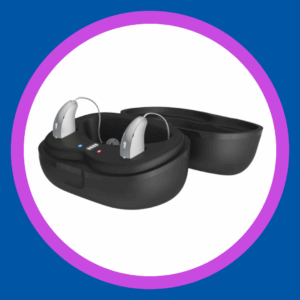
Charging works through simple electrical contacts. When you place your hearing aids in their charging case, small metal pins connect with corresponding contact points on the devices. Electricity flows through these connections to recharge the internal batteries.
Most chargers include LED indicators showing charging status. You’ll see lights confirming your hearing aids are properly seated and charging correctly. When fully charged, the indicators change color or turn off completely.
The charging case plugs into any standard electrical outlet using a USB cable. Many models also function as portable power banks, storing enough charge to refill your hearing aids multiple times even when you’re away from outlets.
Why Lithium-Ion Batteries Excel
Lithium-ion technology offers several advantages over disposable zinc-air batteries used in traditional hearing aids.
Consistent power output means your hearing aids perform at full capacity throughout the day. Disposable batteries gradually lose voltage as they drain, which can cause subtle declines in sound quality and processing power.
Stable performance remains unchanged whether the battery is at 100% or 20% charge. You won’t notice your hearing aids getting quieter or less effective as the day progresses.
Longer lifespan allows most lithium-ion batteries to last the entire useful life of the hearing aid, typically four to five years. You won’t need replacements unless you keep your devices longer than the standard replacement cycle.
Environmental benefits add up significantly. One set of rechargeable hearing aids eliminates the need for roughly 100-200 disposable batteries per year, keeping substantial waste out of landfills.
The Real Benefits of Making the Switch
Switching to rechargeable hearing aids delivers practical advantages that improve your daily experience beyond just eliminating battery changes.
Daily Convenience That Actually Matters
Your new routine becomes remarkably simple. Remove your hearing aids at bedtime and place them in the charging case on your nightstand. That’s it. No searching for fresh batteries, no checking expiration dates, no keeping track of your supply.
Morning preparation gets easier too. Grab your fully charged hearing aids and start your day knowing you have reliable power for 16 to 51 hours depending on your model.
Travel becomes less complicated. Pack one small charging case instead of multiple battery packets. Many charging cases hold enough power for several days of recharging without needing to plug into outlets.
Ideal for Dexterity Challenges
If you have arthritis, tremors, or vision difficulties, disposable batteries can be genuinely frustrating. The batteries measure barely larger than a kernel of corn. Handling them requires precise finger movements and good close-up vision.
Rechargeable hearing aids eliminate this struggle completely. You simply drop the devices into their charging case using regular hand movements. No tiny objects to manipulate, no wrestling with plastic packaging, no squinting to identify the positive side of the battery.
This independence matters tremendously for maintaining dignity and confidence in your hearing aid use.
Better for Your Budget Long-Term
Yes, rechargeable hearing aids typically cost slightly more upfront. However, the math works strongly in your favor over time.
Disposable batteries cost approximately $1-2 per battery depending on where you purchase them. Most hearing aid users need roughly 50-100 batteries annually per hearing aid. That’s $100-400 yearly just for batteries.
Rechargeable hearing aids eliminate this ongoing expense entirely. The initial price difference usually pays for itself within the first two years. Everything after that represents pure savings.
Safety Considerations
Sealed rechargeable batteries can’t be removed by curious children or pets. This eliminates the serious safety risk of button battery ingestion, which can cause severe internal injuries.
Families with young grandchildren visiting or households with pets gain important peace of mind from this built-in safety feature.
Rechargeable vs. Disposable: Making Your Decision
Understanding the key differences helps you choose the right power solution for your specific needs and lifestyle.
| Feature | Rechargeable Hearing Aids | Disposable Battery Hearing Aids |
| Daily Routine | Simple overnight charging, no battery handling required | Manual battery changes every 3-10 days depending on usage |
| Upfront Cost | Moderately higher initial purchase price | Lower initial cost but ongoing battery expenses |
| Long-Term Cost | No battery purchases needed, saves $100-400 annually | Continuous need to buy replacement batteries |
| Dexterity Needs | Easy for anyone, no fine motor skills required | Requires ability to handle tiny batteries and small doors |
| Travel Convenience | Portable charging case provides multiple recharges anywhere | Must carry multiple spare batteries and remember to pack them |
| Power Reliability | Consistent performance all day until charge depletes | Gradual power decline as batteries drain over several days |
| Environmental Impact | Significantly reduces battery waste in landfills | Generates substantial ongoing waste unless properly recycled |
| Size Options | Available in most popular styles but limited in smallest sizes | Available in all sizes including tiny completely-in-canal models |
| Emergency Backup | Requires access to charging when battery depletes | Instant power restoration with fresh battery swap |
| Battery Replacement | Professional service required after 4-5 years (if needed at all) | User performs simple replacements as needed |
Both options work effectively for hearing amplification. Your choice depends primarily on lifestyle preferences and physical capabilities rather than hearing performance.
Understanding Battery Life Across Leading Brands
Each manufacturer approaches rechargeable battery technology slightly differently. Knowing what to expect from specific models helps set realistic expectations.
| Brand & Model | Battery Life (Normal Use) | Battery Life (Heavy Streaming) | Quick Charge Capability | Charging Case Features |
| Starkey Omega AI (RIC RT) | Up to 51 hours | Up to 44 hours | 3 hours from 10 minutes | Portable power pack available |
| Starkey Omega AI (mRIC R) | Up to 51 hours | Not specified | 3 hours from 10 minutes | Waterproof Pro10 HydraShield |
| Phonak Sphere Ultra | 16-18 hours | Not specified | 3 hours from 15 minutes | Portable ChargerGo with power bank |
| Phonak Ultra Infinio | 16-18 hours | Not specified | 3 hours from 15 minutes | Standard charger or portable option |
| ReSound Vivia | Up to 30 hours | Around 20 hours | 2.7 hours from 10 minutes | Quick charge feature included |
| ReSound Nexia | Up to 30 hours | Not specified | 2.7 hours from 10 minutes | Portable case holds 3 full recharges |
| Oticon Intent | Up to 20 hours | Not specified | 4 hours from 15 minutes | SmartCharger with 2-hour full charge |
Battery life varies significantly based on your specific usage patterns. Factors affecting daily runtime include streaming frequency, environmental conditions, and which advanced features you use most often.
All these models provide sufficient power for typical daily wear. Choose based on your lifestyle demands rather than focusing exclusively on maximum battery hours.
How Bluetooth Streaming Affects Battery Life
Wireless streaming draws considerably more power than normal hearing aid operation. Understanding this impact helps you manage expectations and plan accordingly.
Why Streaming Drains Batteries Faster
Bluetooth streaming requires multiple energy-intensive processes happening simultaneously. The hearing aids maintain a constant wireless connection to your phone, tablet, or television. This active connection consumes significant power by itself.
Processing demands increase dramatically during streaming. Your hearing aids decode incoming audio signals, mix them appropriately with ambient environmental sounds, and synchronize stereo output between both ears.
Dual-ear coordination adds another layer of power consumption. One hearing aid typically serves as the primary Bluetooth receiver and then wirelessly transmits audio to your other hearing aid. This master device drains notably faster than the secondary unit.
Real-World Impact on Daily Use
Light streaming minimally affects battery life. Making a few phone calls or listening to a podcast for an hour typically reduces total runtime by just an hour or two.
Moderate streaming for several hours daily might decrease your battery life by 20-30%. A hearing aid rated for 24 hours might last 17-20 hours with regular streaming throughout the day.
Heavy streaming can cut battery life nearly in half. Users who stream audio continuously for work calls, entertainment, or all-day music listening should expect significantly reduced runtime.
Technology Improvements Help
Bluetooth Low Energy Audio represents the latest wireless standard specifically designed for power efficiency. Newer hearing aids with Bluetooth capabilities leverage this technology to reduce streaming power consumption while actually improving sound quality.
Intelligent power management systems built into modern rechargeable hearing aids optimize energy use during streaming. They allocate processing resources efficiently and minimize unnecessary power drain.
Managing Heavy Streaming Needs
Quick-charge features become especially valuable for frequent streamers. Fifteen to thirty minutes on the charger during lunch or breaks provides several additional hours of power.
Portable charging cases allow convenient top-ups throughout the day. Keep your charging case with you and briefly recharge your hearing aids whenever you have a few spare minutes.
Consider models with longer baseline battery life if streaming represents a significant part of your daily hearing aid use. Devices rated for 30-51 hours provide more buffer for heavy streaming demands.

Quick Charging: Power When You Need It
Quick-charge capability transforms how you think about battery management. Even brief charging sessions deliver substantial usable power.
How Fast Charging Technology Works
Quick charging delivers a rapid burst of power during the initial minutes when batteries are most depleted. Lithium-ion batteries naturally accept charge much faster when nearly empty than when approaching full capacity.
Optimized charging algorithms maximize this efficiency. The charger communicates with your hearing aids to deliver power at the optimal rate for rapid charging without damaging the batteries.
Safety features prevent overcharging automatically. Once batteries reach full capacity, the charger reduces power flow or stops completely to protect battery longevity and device circuitry.
Brand-Specific Quick Charge Performance
Different manufacturers implement quick charging with varying levels of speed and efficiency.
Starkey Omega AI and Edge AI models feature turbo charging that delivers approximately three hours of use from just ten minutes on the charger. This exceptional speed helps you recover quickly from unexpected power depletion.
Phonak Sphere Ultra and Ultra Infinio provide roughly three hours of power from fifteen minutes of charging. This slightly longer charge time still offers excellent convenience for quick top-ups.
ReSound Vivia and Nexia deliver 2.7 hours of use from a ten-minute rapid charge. A longer one-hour charge provides around fifteen hours of full power.
Oticon Intent offers approximately four hours of power from a fifteen-minute quick charge. A thirty-minute charge delivers up to eight hours of use.
These quick-charge capabilities mean forgetting to charge overnight doesn’t ruin your day. A brief morning charge while you shower and dress often provides sufficient power until evening.
What to Expect from Rechargeable Battery Lifespan
Understanding long-term battery performance helps set realistic expectations about ownership costs and device longevity.
Typical Battery Longevity
Most rechargeable hearing aid batteries last the entire useful life of the device. Manufacturers design lithium-ion batteries to maintain adequate performance for four to five years of daily charging cycles.
This lifespan aligns perfectly with typical hearing aid replacement timelines. Most users upgrade to newer technology every four to six years as hearing aid innovation advances and their hearing needs change.
Charging cycles represent the primary measure of battery longevity. Lithium-ion batteries typically withstand 500 to 1,500 complete charging cycles before capacity begins degrading noticeably. Daily charging over four years equals roughly 1,460 cycles, which falls comfortably within this range.
Recognizing Battery Degradation
As rechargeable batteries age, you’ll notice gradual performance changes. These signs indicate your batteries are approaching the end of their useful life.
Reduced daily runtime appears first. Hearing aids that previously lasted your entire day may start requiring midday charging or dying before bedtime.
Unexpected shutdowns happen more frequently. Your hearing aids might power off suddenly even though they showed adequate charge remaining.
Charging irregularities become apparent. The devices may not consistently charge in their case, or charging indicator lights might behave erratically.
Sound quality degradation can occur with severely weakened batteries. Audio may become distorted, intermittent, or quieter than normal.
Battery Replacement Options
Most rechargeable hearing aids feature sealed batteries that cannot be replaced by users. When batteries eventually fail, you have several options.
Professional replacement through the manufacturer typically costs $300 or more per hearing aid for out-of-warranty service. Many users find this expense comparable to purchasing newer technology with improved features.
Warranty coverage sometimes includes battery replacement if failure occurs within the warranty period, typically three years. Check your specific warranty terms for this coverage.
Technology upgrades often make more sense than battery replacement. After four to five years, newer hearing aid models offer substantially improved features, processing power, and connectivity that justify moving to current technology.
Some manufacturers design batteries for easier replacement. Select Oticon models allow hearing care professionals to replace batteries in the office rather than requiring factory service.
Popular Rechargeable Models Worth Considering
Stanford Hearing Aids carries excellent rechargeable options across multiple manufacturers. Each brings unique strengths to different hearing needs and preferences.
Starkey Omega AI: Health Meets Hearing
Starkey’s flagship rechargeable models combine exceptional battery life with comprehensive health monitoring features. The receiver-in-canal styles provide up to 51 hours of use per charge, industry-leading performance that eliminates battery anxiety completely.
Fall detection alerts emergency contacts automatically if you take a tumble. Balance Builder exercises help prevent falls through guided coordination training. Respiratory rate monitoring tracks this vital sign continuously without any effort from you.
Gen AI Smart Assistant responds to voice commands for hands-free control. Edge Mode Plus instantly boosts speech clarity in challenging listening situations with a simple tap.
Pro10 HydraShield waterproofing protects against moisture, sweat, and rain. Turbo charging delivers three hours of power from just ten minutes on the charger.
Phonak Sphere Ultra and Ultra Infinio: Speech Clarity Leaders
Phonak’s rechargeable models excel at understanding speech in noisy environments. The proprietary DEEPSONIC AI chip processes sound through advanced neural networks specifically designed for challenging conversations.
Spheric Speech Clarity 2.0 separates and enhances multiple voices simultaneously in group settings. Clinical research shows users become three times more likely to understand every word in complex noise.
AutoSense OS 7.0 automatically identifies your listening environment and optimizes settings 24% more precisely than previous versions. Transitions between situations feel natural and seamless.
Universal Bluetooth connectivity pairs with virtually any device. ChargerGo portable cases include built-in power banks for multiple recharges anywhere.
Battery life ranges from 16 to 18 hours with normal use, sufficient for most daily routines. Quick charging provides three hours of power from fifteen minutes on the charger.
ReSound Vivia: Compact Power
ReSound delivers premium rechargeable technology in the smallest rechargeable design available. The microRIE style offers remarkable discretion without sacrificing battery performance or advanced features.
Intelligent Focus adapts to your head movements and prioritizes sounds from the direction you’re facing. This creates natural listening that follows your attention rather than forcing rigid patterns.
The dual-chip AI system performs 4.9 trillion operations daily to separate speech from noise with exceptional efficiency. Deep Neural Network processing trained on 13.5 million spoken sentences ensures accurate understanding across diverse accents and speaking styles.
Battery life reaches 30 hours with standard use or approximately 20 hours with moderate streaming. Quick charging delivers 2.7 hours of power from just ten minutes on the charger.
Portable charging cases hold enough power for three complete recharges of your hearing aids. This extended portable capacity suits travelers and active users excellently.
Oticon Intent: Natural Listening Focus
Oticon’s rechargeable Intent models use revolutionary 4D Sensor Technology that adapts based on your listening intention. The system monitors conversation activity, head movement, body movement, and acoustic environment simultaneously.
MoreSound Intelligence 3.0 processes sound to maintain natural environmental awareness while enhancing speech clarity. The system provides up to 12 dB of noise suppression without completely cutting off surrounding sounds.
BrainHearing technology delivers sound in ways that support your brain’s natural processing methods. This approach reduces listening effort and maintains clearer cognitive function throughout the day.
Battery life provides approximately 20 hours of use per charge. SmartCharger delivers full charging in two hours or quick charging of four hours’ power from fifteen minutes.
The system includes sophisticated feedback cancellation that prevents whistling before it occurs. You can hug loved ones, wear hats, and use phones naturally without embarrassing squeals.
Special Features in Modern Rechargeable Hearing Aids
Today’s rechargeable devices include sophisticated features that extend well beyond basic amplification and battery convenience.
Tinnitus Management Tools
Many rechargeable hearing aids incorporate adaptive sound therapy for tinnitus relief. Customizable masking tones help your brain tune out ringing, buzzing, or hissing sensations.
AI-driven systems adjust relief sounds automatically based on your environment. The masking integrates seamlessly with normal hearing aid processing so you’re not constantly aware of the therapy sounds.
For comprehensive guidance on managing both hearing loss and tinnitus together, explore our detailed tinnitus resource.
Custom Fit Options
Rechargeable technology isn’t limited to standard behind-the-ear styles. Custom hearing aids molded specifically to your ear shape are now available with rechargeable batteries.
Custom rechargeable models offer personalized fit comfort combined with the convenience of lithium-ion power. They’re ideal for users who prefer in-the-ear styles but want to eliminate disposable battery hassles.
Wireless Connectivity Features
Modern rechargeable hearing aids include sophisticated wireless capabilities that enhance daily convenience. Direct streaming from smartphones, televisions, and tablets works seamlessly through Bluetooth connections.
Hands-free calling allows natural phone conversations without holding devices to your ear. App-based controls provide easy volume adjustments and program changes through your smartphone.
Advanced connectivity features continue evolving rapidly. Staying informed about new capabilities helps you maximize your hearing aid investment.
Caring for Your Rechargeable Hearing Aids
Proper maintenance extends the life of your rechargeable devices and ensures optimal performance throughout their service life.
Daily Charging Routine
Establish a consistent charging location and routine. Place your charging case on your nightstand or bathroom counter where you’ll remember to use it nightly.
Clean your hearing aids gently before placing them in the charger. Wipe away any earwax, moisture, or debris with a soft, dry cloth. Pay special attention to microphone ports and receivers where buildup commonly occurs.
Verify proper seating in the charging case. Check that indicator lights confirm charging has started correctly. This quick verification prevents waking up to uncharged devices.
Charger Maintenance
Proper charger care ensures reliable charging performance over time. Keep charging contacts clean by gently wiping them with a dry cloth monthly.
Store your charger in a safe location away from moisture and extreme temperatures. Avoid bathroom storage where humidity and temperature fluctuations can affect electronics.
Inspect cables periodically for damage or fraying. Replace damaged charging cables promptly to maintain safe, reliable power delivery.
Professional Maintenance
Schedule regular appointments with your hearing care provider for professional cleaning and inspection. Expert maintenance services identify potential issues before they become serious problems.
Professional cleanings remove stubborn buildup from hard-to-reach areas. Your provider checks all components, verifies charging performance, and ensures your hearing aids operate at peak efficiency.
Software updates often improve battery management and charging algorithms. Your provider installs these updates during maintenance appointments to optimize your devices’ performance.
Making Your Decision: Is Rechargeable Right for You?
Several factors help determine whether rechargeable hearing aids suit your specific situation and lifestyle.
You’re an Ideal Candidate If:
You struggle with dexterity challenges that make handling tiny batteries difficult. Arthritis, tremors, or vision problems make rechargeable hearing aids dramatically more convenient.
You want to simplify your daily routine and eliminate battery shopping trips. The convenience of overnight charging appeals strongly to you.
You’re concerned about environmental impact and want to reduce battery waste. Rechargeable technology aligns with your sustainability values.
You have young grandchildren or pets in your home. The safety of sealed batteries eliminates ingestion risks completely.
You stream audio frequently throughout the day. Modern rechargeable batteries handle streaming demands much better than disposable batteries.
Consider Disposable Batteries If:
You spend extended periods without access to electricity. Remote camping, international travel to areas with unreliable power, or similar situations favor disposable battery flexibility.
You prefer the smallest possible hearing aid size. Completely-in-canal styles currently offer limited rechargeable options.
You want the ability to instantly restore power anytime. Swapping in a fresh disposable battery takes seconds compared to waiting for charging.
Getting Started with Rechargeable Hearing Aids
Stanford Hearing Aids makes transitioning to rechargeable technology comfortable and straightforward. We start with comprehensive hearing evaluations that identify your specific needs and discuss whether rechargeable devices match your lifestyle.
Our hearing care providers demonstrate charging procedures and answer all your questions about daily routines. We ensure you feel completely confident managing your new rechargeable hearing aids before you leave our office.
We carry the complete range of rechargeable models from leading manufacturers. This selection ensures you get devices that truly match your hearing loss pattern, lifestyle demands, and personal preferences.
Follow-up appointments verify you’re charging correctly and getting optimal battery performance. We address any concerns and fine-tune settings based on your real-world experiences.
Insurance coverage often includes rechargeable hearing aids without additional cost beyond standard hearing aid benefits. We work with major insurance carriers including Medicare Advantage plans to maximize your coverage.
Financing options make premium rechargeable technology accessible regardless of budget constraints. No-interest payment plans spread costs comfortably over time.
Frequently Asked Questions About Rechargeable Hearing Aids
How long do rechargeable hearing aid batteries last before needing replacement?
Most rechargeable hearing aid batteries last four to five years with daily charging, which typically matches the normal hearing aid replacement cycle. Many users upgrade to newer technology before battery replacement becomes necessary. When replacement is needed, it requires professional service through the manufacturer.
Can I travel internationally with rechargeable hearing aids?
Yes, rechargeable hearing aids travel easily anywhere. The charging cases work with international voltage (100-240V) using appropriate plug adapters. TSA and international security screening handles them like any other electronic device. Carry your charging case in your carry-on luggage for convenient access and protection.
What happens if I forget to charge my hearing aids overnight?
Quick-charge features help tremendously in this situation. Most modern rechargeable hearing aids provide several hours of use from just 10-15 minutes of rapid charging. Charge them while you shower and dress, and you’ll have sufficient power for most of your day.
Do rechargeable hearing aids work during power outages?
Your hearing aids continue working normally during power outages as long as they hold a charge. Portable charging cases with built-in power banks can recharge your devices multiple times without needing electrical outlets. Consider keeping your charging case fully charged as emergency preparedness.
Are rechargeable hearing aids more expensive than disposable battery models?
Rechargeable hearing aids typically cost slightly more upfront, often $100-300 more per pair. However, you’ll save $100-400 annually by eliminating disposable battery purchases. The investment usually pays for itself within two years, with ongoing savings afterward.
Can I replace the batteries myself if they eventually wear out?
Most rechargeable hearing aids feature sealed batteries that require professional replacement. A few specific models allow user-replaceable batteries or enable hearing care providers to replace them in the office. Discuss replacement options with your provider when selecting devices.

Experience the Rechargeable Difference at Stanford Hearing
Rechargeable hearing aids eliminate daily battery frustrations while delivering exceptional sound quality and advanced features. The convenience of overnight charging, consistent power output, and long-term cost savings make them ideal for most hearing aid users.
Whether you prioritize Phonak’s speech clarity technology, Starkey’s health monitoring features, or ReSound’s compact design, rechargeable options deliver outstanding performance across all listening situations.
Stanford Hearing Aids brings over 20 years of expertise helping patients transition smoothly to rechargeable technology. Our hearing care providers ensure proper fitting, demonstrate charging procedures, and provide ongoing support throughout your journey to better hearing.
Ready to simplify your hearing aid routine and enjoy the benefits of rechargeable technology? Browse top hearing aids to explore your options, or contact us today to schedule your comprehensive hearing evaluation. Discover how rechargeable hearing aids can transform your daily experience.