
Discover the Future of Hearing: Phonak Audeo Infinio Unveiled
Updated September 2026 · Dr. Jade Husby, Au.D.
Short Version
The Phonak Audeo Infinio comes in two shapes. The R models run the ERA chip alone, and the Sphere models add a second DEEPSONIC chip devoted to speech in noise. Both are still fitted here, both stream well, and the Sphere is the one to look at if loud rooms are your problem.
Phonak’s Audeo line moved on again in August 2026 with the EON platform, and the Phonak Audeo Infinio did not become obsolete when it did. We still fit both Infinio families, patients still choose them, and on battery the Sphere Infinio beats the newer device outright. This page is the buyer’s version rather than the launch version: what the two Infinio shapes are, how they differ, and when to choose one over the newer platform. Our Phonak hearing aids page has the wider lineup.
The Phonak Audeo Infinio Comes in Two Shapes
Infinio is not one device. It is a platform with two families under it, and the difference between them is the single most useful thing to understand before you shop. Get this part right and the rest of the decision follows quickly. For the view across the four current Phonak platforms, start there instead.
Audeo R Infinio
The R models run the ERA chip on its own. ERA handles sound processing and connectivity together, and it is the chip that made universal Bluetooth pairing work properly on a hearing aid.
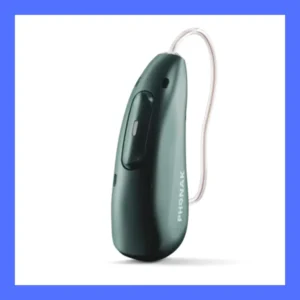
- 550 million operations per second, with 74 percent more memory than the chip before it
- AutoSense OS 7.0, scanning your surroundings 700 times per second and shifting programs on its own
- Universal Bluetooth, so an iPhone, an Android tablet and a Windows laptop can all talk to your hearing aids
- Eight remembered pairings with two active at once
- Hands-free calling in stereo, so both ears get the call
- RogerDirect, pulling sound from a Roger microphone with no extra receiver clipped on
- An IP68 rating
Audeo Sphere Infinio
The Sphere models take everything above and add a second chip called DEEPSONIC, dedicated to real-time AI sound work. Spheric Speech Clarity runs on that second chip.
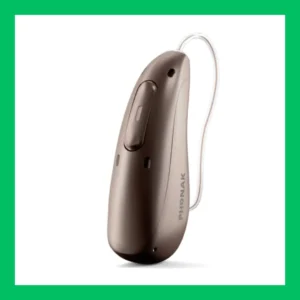
Splitting the work is the point. A single processor juggling streaming, classification and noise reduction does all three less well, and a dedicated chip can run a heavy noise algorithm continuously without starving the rest.
The Sphere I90 also carries:
- Up to 56 hours per charge, with 36 to 56 hours typical and 12 to 24 when streaming heavily
- A quick charge of 15 to 30 minutes
- Twenty fine-tuning channels and 360 degree directionality
- Bluetooth 5.3, with Auracast readiness
- A mild to profound fitting range
- UltraZoom, WindBlock, WhistleBlock, SoundRecover2 and Tinnitus Balance
- Own voice processing, so your own speech stops booming in your head
Phonak Audeo Infinio R and Sphere, Side by Side
| Feature | Audeo R Infinio | Audeo Sphere Infinio |
|---|---|---|
| Chips | ERA alone | ERA plus DEEPSONIC |
| Dedicated noise processing | No | Yes, Spheric Speech Clarity |
| Operating system | AutoSense OS 7.0 | AutoSense 7.0 |
| Bluetooth | Universal, 8 pairings, 2 active | 5.3, 2 active |
| RogerDirect | Yes | Yes |
| Water and dust | IP68 | IP68 |
| Telecoil | No | No |
| Single-sided loss | CROS Infinio pairs with it | Not the CROS partner |
Choose the R if your hardest listening is ordinary, if you have hearing in only one ear and need the CROS pairing, or if the budget matters. Choose the Sphere if restaurants and crowded rooms are the reason you came in.
Which Tier, Within Each Family
Stanford names the 90 and 70 tiers, and the tier decides how much of the platform you get rather than which platform you are on.
- The chip choice comes first. Moving from an R model to a Sphere model changes what the device can do at all, because it adds hardware. Moving between tiers changes how much processing is switched on
- Higher tiers buy noise handling. That is where the money goes, and it is worth it in proportion to how often you sit in hard rooms
- Every tier streams the same. Bluetooth, hands-free calling and app control do not change as you move down, which surprises people
- Every tier carries the durability. IP68 and the same shell, top to bottom
The practical implication is worth stating. A Sphere at a lower tier will usually serve a noise-troubled patient better than an R at the top tier, because the second chip is doing work no amount of tier can replicate.
What the Second Chip Changes in Practice
Patients ask what a noise chip feels like, which is a fair question and a hard one to answer with a specification.
Where it shows up:
- A restaurant at its worst hour, when the noise is other conversations rather than machinery
- A family gathering with several voices at once and children in the room
- Church halls and community rooms, where hard surfaces bounce everything
- Any setting where you have been nodding along rather than following
Where it does not: quiet rooms, one-to-one conversation, television with the house settled, and phone calls. If that describes most of your week, the R model is not a compromise, it is the right device.
One limit we state to every patient. No hearing aid removes background noise. Both families reduce it so speech is easier to follow, and the gap between a verified fitting and an unverified one is wider than the gap between these two families.
Where the Phonak Audeo Infinio Sits Against EON
Phonak launched the Audeo EON platform in August 2026, in the 90 and 70 tiers, and it is the newer answer rather than the automatic one.
| Consideration | Audeo Infinio | Audeo EON |
|---|---|---|
| Second chip, on the Sphere models | DEEPSONIC | HYPERSONIC |
| Operating system | AutoSense 7.0 | AutoSense OS AI 8.0 |
| Battery | Up to 56 hours on the Sphere I90 | Up to 38 hours |
| Fine-tuning channels | 20 | 20 |
| Housing | Previous generation | 25 percent smaller, 20 percent lighter |
| Single-sided loss | CROS Infinio, with the R models | CROS E, with the EON R 90 only |
| Auracast | Yes | Yes |
Read that battery row twice. On the published figures the Sphere Infinio outlasts its own successor by a wide margin, which is a real reason to choose the older platform on purpose rather than as a compromise. The EON’s advantages are the newer operating system, the current speech processing, and a noticeably smaller housing.
Living With a Phonak Audeo Infinio
Specifications describe a device. These describe wearing one.
- Charging. A portable ChargerGo case travels alongside a standard nightstand charger. With 56 hours in hand on the Sphere, a forgotten night is an inconvenience rather than a lost day
- Water and sweat. IP68 covers submersion to half a metre and sweat, so gardening, mowing and a caught shower are fine. Swimming is not
- Cleaning. Wax filters need changing on your ears’ schedule rather than a calendar. Our hearing aid repair and maintenance service handles that in minutes
- The app. Volume, programs and small adjustments from your phone. Most patients live in it for a fortnight and then forget it exists
- Handling. This is the housing before the EON slimming exercise, which some patients prefer precisely because it is easier to grip
Upgrading, or Not
Plenty of the people reading this already wear an Infinio, and the honest advice for them differs from the advice for a first-time buyer.
- If it is working and your hearing has not changed, keep it. A device programmed correctly to a current audiogram is doing its job, whatever has launched since
- If sound has gone flat or muddy, book a test before you shop. A prescription that has drifted feels exactly like a device that has failed, and one of those is free to fix
- If noise is the specific complaint on an R model, that is the case where moving to a Sphere earns the money, and it is a smaller step than moving platforms
- If the whistling has started, that is a fit problem rather than a device problem. A remade mold or a feedback recalibration usually settles it
- If the battery has faded, rechargeable cells do age, and a service visit will tell you whether that is what you are hearing
We would rather see you for a check and send you home with what you already own. That is not generosity, it is how a practice keeps patients for twenty years, and it is why this page tells you when not to buy.
Who Should Look Somewhere Else
There is no single best hearing aid, only the one that is best for you, and that means naming the cases where the Phonak Audeo Infinio is the wrong answer.
- If you rely on looped venues, neither Infinio family has a telecoil, and that requirement points at a behind-the-ear device instead
- If you want the smallest possible device, the newer EON housing and ReSound’s microRIE are both smaller
- If your loss is profound, a receiver-in-canal platform can reach a long way with the right receiver and mold, and a dedicated power behind-the-ear line is still the honest first suggestion
- If forgetting chargers is your pattern, look at the Sphere Infinio rather than the R, since the battery gap between the families matters more than the processing to you
Only about one in five people who would benefit from a hearing aid wears one, according to the National Institute on Deafness and Other Communication Disorders. Being able to choose between four Phonak platforms is a good problem, and it is also why an appointment beats a comparison page.
How We Fit a Phonak Audeo Infinio
A flagship programmed casually will underperform a mid-tier device programmed properly. We see that every time a patient brings in devices bought elsewhere.
Our sequence starts with a hearing test, including speech testing rather than tones alone. From there we set the receiver power and the coupling to your loss, take impressions where a custom mold is called for, and verify the output inside your ear canal with live speech mapping rather than trusting the software’s prediction for an average ear.
Then we adjust. Two follow-ups in the first month is normal here, and patients who use them get noticeably better results than patients who skip them. Our professional hearing aid fittings run that sequence every time.
Why Choose Stanford Hearing
We are locally owned, with 20-plus years of trusted care in Sioux Falls and Buffalo, and voted Sioux Falls Local Best 20 years. We carry five premium hearing aid brands and recommend based on your hearing, your lifestyle, and the places you most want to hear well, which is why this page tells you when to buy the cheaper model.
- Free consultations with no pressure to buy
- A 10-day trial so you can wear your hearing aids in real life before you decide, and if they are not right, return them within the 10 days for a full refund
- A price match guarantee, so you will not overpay locally. If a nearby clinic beats our price on a comparable device, we meet it
- 12 months no-interest financing, subject to credit approval
- In-network with all major insurance providers, including Medicare Advantage, with benefit verification before you arrive
- Sioux Falls and Buffalo clinics, with remote care available for small adjustments
Your hearing aids come with the manufacturer’s warranty, including the manufacturer’s loss and damage coverage, and terms vary by brand and model. Schedule a free consultation and hear the R against the Sphere on your own ears.
Common Questions About the Phonak Audeo Infinio
Is the Phonak Audeo Infinio still current?
Yes. Stanford Hearing still fits both the R and Sphere families. Phonak’s newer EON platform sits alongside them rather than replacing them in every case, and the Sphere Infinio still holds the longer battery figure.
What is the difference between Audeo R Infinio and Audeo Sphere Infinio?
The R runs the ERA chip alone, and the Sphere adds a second chip, DEEPSONIC, dedicated to separating speech from noise. If loud rooms are your problem, that is the difference worth paying for.
Does it have a telecoil?
No, on either family. If you use looped venues at church or in a theater, say so at your appointment, because that requirement narrows the field considerably and Stanford Hearing carries options that address it.
What about hearing in only one ear?
CROS Infinio pairs with the R models, which is the route for single-sided loss on this platform. On the newer EON platform the equivalent is CROS E, which pairs with the EON R 90 only. We will show you both.
How long does the battery last?
The Sphere I90 is rated up to 56 hours per charge, with 36 to 56 hours typical and 12 to 24 when streaming heavily, plus a quick charge of 15 to 30 minutes. That figure is higher than the newer EON platform’s.
Should I buy Infinio or wait for EON?
Both are available at Stanford Hearing now, so there is nothing to wait for. Choose EON for the smaller housing and the newer processing, and Infinio for battery. Come in and hear them against each other, because on this particular pair the specification sheet will not tell you which one you prefer.