
Understanding How To Clean Hearing Aids for Best Performance
Updated August, 2026
The Short Version Clean your hearing aids every night, before the wax dries. Wipe the shells with a dry cloth, brush the ports, and check the wax guard. Never use water, alcohol, or wipes. Open the battery door or dock the aids to dry overnight. Bring them in for a professional cleaning every three months.
Your hearing aids spend all day in one of the warmest, most humid places on your body, collecting earwax, sweat, and skin oil the entire time. Cleaning hearing aids properly is the single most useful habit you can build around them, and it takes about three minutes a night once you know the steps. Skip it for a few weeks and the sound goes dull, the whistling starts, or the device quits on a Tuesday morning with no warning. Almost none of that is bad luck. Moisture and earwax do predictable damage on a predictable schedule, and a good nightly habit gets in front of both.
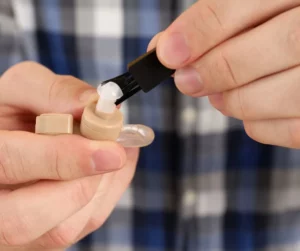
Why Cleaning Hearing Aids Protects More Than Sound Quality
Wax is what we pull out of most of the devices that come across our bench, and it does its damage in three places:
- Sound ports, where a plug of wax turns speech muddy before it turns it off
- Microphone screens, which clog slowly enough that you adapt to the loss instead of noticing it
- Wax guards and receivers, where buildup sits against the parts most expensive to replace
None of that happens overnight, and that is what makes it easy to miss. Patients often come in convinced their hearing has slipped again when the problem is a two-dollar filter.
Moisture does quieter damage. Sweat and humidity work into seams and settle on electronic components, and corrosion follows. A South Dakota year works on hearing aids from both directions. Humid summers push moisture in, dry furnace heat stiffens tubing all winter, and nightly drying earns its keep here in a way it might not somewhere milder.
There is an ear-health side to this too. A device carrying wax and debris sits in your ear canal for twelve or more hours a day, and that contact can leave the canal irritated. Heavy wax buildup in the canal itself is a separate matter, and professional earwax removal is a quick appointment rather than something to attempt at home. The American Speech-Language-Hearing Association treats consistent care as a core part of using hearing aids well, including cleaning them the way your provider showed you and keeping them dry. Good hearing aid maintenance protects your ears and your equipment at the same time.
What You Need for Cleaning Hearing Aids
You should have gotten a basic kit at your fitting appointment. If yours has gone missing, or you were never given one, we can replace it at your next visit. Keep everything in one place near where you sleep, because a routine you have to hunt for is a routine you will skip.
- Soft, dry cloth or microfiber wipe for the shells and the outer surfaces
- Soft-bristled cleaning brush for microphone ports and vents
- Wax pick or loop tool for debris the brush cannot reach
- Replacement wax guards in the size your devices take
- Vent cleaner, a thin filament tool, for clearing vent channels
- Drying container or electronic dehumidifier for overnight moisture removal
- Bulb blower for pushing water out of BTE tubing
Nothing on that list costs much, and every item is there because the household substitute does the job worse. Our how-to video library shows several of these steps on camera.

Hands clean a hearing aid with a microfiber cloth.
The Dos and Donts of Cleaning Hearing Aids
Most of what goes wrong with cleaning hearing aids is not a missed step. It is a well-meant shortcut, usually one that works fine on eyeglasses and ruins a hearing aid.
| Do | Never |
| Clean at night, so any moisture dries before morning | Clean in the morning and put damp devices straight in |
| Work over a bed, a towel, or another soft surface | Clean over a sink, a tile floor, or an open drain |
| Hold the device with the opening pointing down | Tilt the opening up, which drives debris deeper |
| Wash your hands first, every time | Handle devices after lotion, sunscreen, or hairspray |
| Use the dry brush and pick that came with your kit | Use cotton swabs, whose fibers break off inside ports |
| Let the dehumidifier pull out moisture overnight | Use a hair dryer, a microwave, a radiator, or sunlight |
| Wipe the shells with a dry cloth | Rinse, submerge, or wipe with alcohol or cleaning spray |
One line surprises people. Water resistance is not waterproof. An IP rating covers a walk in the rain and a sweaty afternoon, not a rinse under the tap, and running water finds seams humidity never reaches.
Cleaning Hearing Aids by Style
Everything above holds for every device. Specific steps do not, because a receiver deep in your canal collects wax differently than an earmold on tubing.
Receiver-in-Canal and Receiver-in-the-Ear
RIC and RITE devices sit behind your ear with a thin wire running down into the canal. The receiver at the end of that wire sits closest to the eardrum, which means it takes the most wax.
- Wipe the body of the device with a dry cloth.
- Brush the microphone ports along the top, holding the device face down.
- Check the dome or custom mold at the tip for buildup.
- If you wear domes, pull the dome off and inspect the wax guard behind it. Replace the guard monthly, or the first day sound turns muffled.
- If you wear a custom earmold, detach it and wipe it down. A brief soak in warm water is fine for the mold alone, and it must be bone dry before it goes back on. The device body never gets wet.
- Clear the dome opening with the wax pick, working from the outside.
- Set the devices in the dehumidifier or the charger overnight.
Behind-the-Ear
BTE devices rest behind your ear and connect to an earmold through a length of clear tubing. That tubing is where most BTE problems start, because moisture collects inside it and hardens the plastic over time.
- Wipe the device body with a dry cloth.
- Brush the microphone ports on top.
- Disconnect the earmold from the hook.
- Wash the mold in warm soapy water and rinse it well.
- Blow the water out of the tubing with the bulb blower before it has a chance to sit.
- Let the mold dry completely, then reconnect. Trapped moisture is behind most complaints of muffled sound and sudden feedback in BTE wearers.
- Look the tubing over for cracks, yellowing, or stiffness. Replace it every three to six months, sooner if it looks tired.
- Store the device in the dehumidifier overnight.
In-the-Ear, In-the-Canal, and Completely-in-Canal
Custom styles sit entirely inside your ear, closer to the skin that produces wax, so they need the most attention and the most frequent wax guard changes.
- Hold the device with the sound port aimed at the floor and keep it there.
- Brush every opening, including the microphone port, the sound port, and any vents.
- Lift visible wax out of the sound port with the pick. Work gently and outward, never inward.
- Change the wax guard every two to four weeks, depending on how much wax you produce.
- Thread the vent cleaner through the vent channel, then wipe the filament before you pull it back.
- Wipe the shell with a dry cloth.
- Set the device in the dehumidifier overnight.
Rechargeable Devices
Follow the steps for your own style first, then add the one that catches a lot of people out.
- Clean the device according to its style above.
- Wipe the charging contacts on the devices and inside the case with a dry cloth or soft brush.
- Check those contacts weekly. Wax on a contact is the most common reason a device sits in the charger all night and comes out flat.
- Keep water and cleaning solutions away from the charging port entirely.
- Store the devices in the case whenever they are out of your ears.
Battery behavior goes beyond cleaning hearing aids, and our guide to rechargeable hearing aids covers what to expect over the life of the devices.
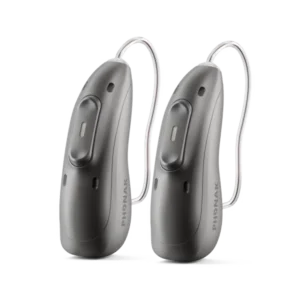
Quick Reference by Style
| Style | Nightly wipe | Wax guard | Earmold soak | Tubing check | Overnight |
| RIC / RITE | Yes | Monthly, or when muffled | Dome or mold only, never the body | Not applicable | Dehumidifier |
| BTE | Yes | Not typical | Yes, nightly if tolerated | Every 3 to 6 months | Dehumidifier |
| ITE / ITC / CIC | Yes | Every 2 to 4 weeks | No | Not applicable | Dehumidifier |
| Rechargeable | Yes | Per style above | See style above | Per style above | Charging case |
Building a Cleaning Routine You Will Keep
Consistency beats thoroughness here. Three unhurried minutes every night protects your devices better than an ambitious deep clean once a month, and the nightly version is the one people stick with.
Every evening:
- Take the devices out over a soft surface and set them down
- Wipe both with a dry cloth
- Brush the ports and openings
- Clear the sound port with the pick if you see buildup
- Put them in the dehumidifier or the charging case
Once a week:
- Look at the wax guards and change any that look loaded
- Check BTE tubing for cracks or hardening
- Wipe out the charging case or drying container
- Count your wax guards and reorder before you run out
Once a month:
- Change wax guards on schedule, whether or not they look dirty
- Deep clean earmolds in warm water
- Think back over the month and note any change in how the devices sound
Sound quality slides slowly, and the patient who notices early usually needs a wax guard rather than a repair.
When to Bring Your Hearing Aids In for Professional Cleaning
At-home cleaning handles the daily grind well. It does not reach everywhere, and some jobs need a vacuum and magnification rather than a brush. Come see us when you notice any of these:
- Muffled or quiet sound that a fresh wax guard does not fix
- Whistling that continues even when the device seats properly
- Crackling or distortion in ordinary listening
- Sound that cuts in and out
- Debris inside the shell that the pick cannot lift
- Any change after a heavy sweat, a downpour, or a fall
We use vacuum tools and ultrasonic equipment that clear deep-set wax out of vents, microphone screens, and receiver housings without risking the components around them. Plenty of these take us ten minutes at the counter. Left alone, the same problem goes back to the manufacturer, and you are without your hearing aids for as long as that takes.
Plan on a professional cleaning every three months. Patients who work outdoors, exercise hard, or produce more wax than average do better every six to eight weeks. We will tell you which group you are in once we have seen your devices a few times. Our hearing aid repair and maintenance page covers what a visit involves.
How Care Habits Show Up in Your Hearing
Clean devices deliver a cleaner signal, and a cleaner signal is easier for your brain to turn into speech. When wax degrades that signal, your brain covers the difference by working harder. You feel it as fatigue by the end of a long dinner rather than as a hearing aid problem. Patients describe that as getting tired of the conversation. What got harder was the conversation.
Patients who keep up a routine also notice changes early and mention them at follow-ups, which keeps their devices matched to the hearing they have now. Regular hearing tests and evaluations do the same work from the other direction. If you are still weighing which style fits your life, our guide to types of hearing aids is a good place to start, because cleaning hearing aids is easier when the device suits you from the beginning.
Ongoing Hearing Aid Care in Sioux Falls and Buffalo
At Stanford Hearing, cleaning hearing aids is not something we teach you once at the fitting and leave you to manage alone. Bring your devices in and we will handle what you cannot reach, walk you through anything that has stopped making sense, and adjust the fit while they are in our hands.
What that looks like for our patients:
- Professional cleanings on a schedule that matches how much wax you produce
- Wax guard, dome, and tubing replacement while you wait
- Checks and fine-tuning as your hearing changes, with remote care available for follow-ups
- Both of our clinics, in Sioux Falls and in Buffalo, Minnesota
If you are reading this for a parent who has not bought yet, that same care model is what they would be buying into. We are locally owned and have cared for patients here for more than 20 years. Carrying five premium brands, Phonak, Starkey, ReSound, Unitron, and Oticon, means a recommendation comes from what suits their hearing rather than from what one manufacturer wants moved. Your first appointment is a free consultation with no pressure to buy. Every purchase includes a 10-day trial so you can wear your hearing aids in real life before you decide. If they are not right for you, return them within the 10 days for a full refund. A price match guarantee means you will not overpay locally. 12 months of no-interest financing is available for qualifying patients, subject to credit approval, and we are in-network with all major insurance providers, including Medicare Advantage. We verify your benefits before your appointment so you know what is covered before you commit.
Contact us to book a cleaning or a free consultation.
Your Questions About Cleaning Hearing Aids, Answered
What if arthritis or poor eyesight makes cleaning hearing aids difficult?
Tell us, because it changes what we recommend. A larger-handled brush or a magnifier on a stand solves it for some patients. Others move to a style with fewer fiddly parts at their next fitting, or come to Stanford Hearing more often and let us handle what their hands will not manage. We will also walk a spouse or an adult child through the routine so it is not resting on one person.
Can I use alcohol wipes for cleaning hearing aids?
No. Alcohol strips the protective coating, weakens the seals, and clouds plastic shells. Damage builds slowly rather than all at once, which is why the habit feels harmless. Use the dry cloth and dry tools from your kit, and ask your provider at Stanford Hearing which disinfecting products are safe for your model before you buy anything.
My hearing aid sounds muffled. Will cleaning hearing aids fix it?
Usually, yes. Muffled sound almost always means wax in the sound port or a clogged wax guard, so change the guard first and listen again. If nothing improves, clear the sound port with the pick. Still muffled after both, bring it to Stanford Hearing before you assume the electronics have failed. That assumption sends a lot of working devices back to the manufacturer.
Is the dehumidifier necessary every single night?
Yes, and we treat it at Stanford Hearing as part of the routine rather than an optional extra. Overnight drying pulls out the moisture your devices absorbed during the day, before it has time to corrode anything. Models with UV sanitizing cut down surface bacteria as well. Ask us before putting rechargeable devices in a desiccant-style dryer, since not every model tolerates one.
What should I do if my hearing aids get wet?
Take them out and pat them down with a soft cloth. Do not reach for a hair dryer or a radiator, since heat does more damage than the water did. Open the battery doors if your devices use disposable batteries, then leave everything in the electronic dehumidifier overnight. If the sound has not come back within a day, bring them to Stanford Hearing.
Can cleaning hearing aids the wrong way void the warranty?
It can, which is the practical reason we are firm about water and alcohol. Your hearing aids come with the manufacturer’s warranty, including the manufacturer’s loss and damage coverage, and terms vary by brand and model. Liquid damage and improper cleaning are exactly what a manufacturer looks at closely on a claim. Bring a device to Stanford Hearing before you try anything drastic on it and we will tell you what is safe.