
Hearing Test Cost in Sioux Falls: What Is Free and What Is Billed
Short Version
Two different appointments in Sioux Falls share the name hearing test. One is a free consultation and screening that costs you nothing. The other is a diagnostic evaluation, which is a billable medical service, and we bill insurance for it. What decides your hearing test cost is the reason for the test, not the booth you sit in.
Ask about hearing test cost around Sioux Falls and you can get three different answers from three different front desks, all of them true. One clinic tells you it is free. Another says your plan covers it. A third quotes a charge, and nobody is being cagey with you, because those three answers describe two different appointments that happen to share one name. Once you can tell the two apart, every confusing thing about hearing test cost falls into place, including why the bill sometimes arrives weeks later. We run both appointments at our Sioux Falls hearing center, and knowing which one you booked is something you are owed before you sit down, not after.

Two Appointments Share the Name Hearing Test
A hearing screening and a diagnostic hearing evaluation are different appointments with different purposes, and the difference is the whole reason hearing test cost is such a slippery question.
Screenings sort people. The American Speech-Language-Hearing Association describes adult hearing screening as a test or inquiry used to identify people who are at risk for a hearing disorder and who may benefit from further assessment. It gives one of two results, pass or refer, and a refer result sends you on to a fuller assessment. Nothing about a screening measures the shape of your hearing loss, because that was never its job.
A diagnostic evaluation does the measuring. Your provider tests each ear across the pitches that carry speech, checks how your inner ear responds separately from your outer and middle ear, sees how well you understand words rather than just detect tones, and looks at how your eardrum moves. Out of that hour comes an audiogram, which is a map of what you hear and what you miss, ear by ear and pitch by pitch.
When a Screening Result Means You Need More
Getting referred onward is not a diagnosis, and it is not a sales cue either. It means something in the quick check did not look typical, and the only way to find out what is to measure properly.
Take a refer result seriously when any of this is also true:
- One ear has changed and the other has not, which points to a cause worth investigating
- The change arrived suddenly rather than creeping up over years
- Ringing, fullness or dizziness came along with it
- Conversation in restaurants has become work even though quiet rooms are fine
- Someone at home has been telling you for a while and you have been telling them it is the television
Two of those showing up together is a reason to measure rather than to wait and watch.
How the two appointments compare:
| Hearing screening | Diagnostic hearing evaluation | |
|---|---|---|
| Question it answers | Should you be looked at more closely | What type and degree of hearing loss do you have, in each ear |
| What you leave with | A recommendation | An audiogram and a plan |
| Roughly how long | Minutes | Closer to an hour |
| Tests speech understanding | No | Yes |
| Can be billed to insurance | No, it is not a diagnostic service | Yes, when the reason for the test is medical |
Read the last row twice, because it is where the money lives.
What Decides Your Hearing Test Cost
Your hearing test cost is set by the reason for the test, not by the equipment used or the letters after the provider’s name.
This is the part almost no page explains, and it is the single most useful thing to understand before you book. Medicare states the rule plainly. Part B covers diagnostic hearing and balance exams when a doctor or other health care provider orders them to find out whether you need medical treatment, and Original Medicare does not cover exams for fitting hearing aids. Same room, same booth, same provider, same hour. Run to answer a medical question, it is a covered diagnostic service. Done to select a hearing aid, it is not covered at all.
Private plans generally follow the same logic, which is why two neighbors can walk out of identical appointments with different paperwork. One came in because a physician wanted sudden hearing changes investigated. The other came in to shop for devices. Coverage varies by plan, and the reason for the visit is what the claim turns on.
What moves your hearing test cost up or down:
- The reason for the appointment, which decides whether a claim can be filed at all
- Whether the visit is a screening or a billable diagnostic evaluation
- Whether your plan includes a hearing benefit, since coverage varies by plan
- Where the test happens, because a hospital outpatient setting adds a facility charge that a private clinic does not
- Whether you have met your deductible for the year
Not one of those five is about the machine in the booth, and all five are about why you walked in.
Where You Get Tested Changes the Bill
Setting matters as much as reason, because the same test carries different overhead in different buildings.
How the setting moves the number:
- A hospital outpatient department adds a facility charge on top of the professional charge, which Medicare states plainly
- A private clinic bills the professional charge alone, with no facility fee behind it
- A physician office visit may bundle a basic check into the visit rather than billing it separately
- A community screening event carries no charge and produces no audiogram, so it settles nothing
- A retail hearing aid center usually offers the check free, because the device sale is the business
Same hour of your time, four different pieces of paper afterward.
Does Medicare Cover a Hearing Test?
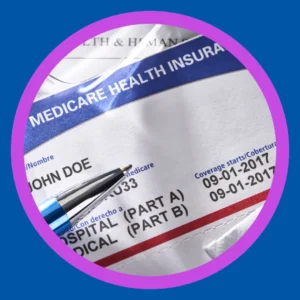
Original Medicare covers a diagnostic hearing test when a doctor or other health care provider orders it to determine whether you need medical treatment, and it does not cover exams for fitting hearing aids.
That distinction has one more wrinkle worth knowing, and it works in your favor. Since 2023, Medicare lets you see a hearing care provider directly, without an order from anyone, once every 12 months, for non-acute hearing conditions such as hearing loss that came on slowly over many years. So the classic situation, the one where you have been turning the television up for a decade, does not require you to book a physician visit first just to get in the door.
When a diagnostic test is covered under Part B, you are responsible for your deductible and a share of the Medicare-approved amount, and a hospital outpatient setting adds a facility charge on top. Medicare Advantage plans work differently from Original Medicare and often add a hearing benefit that Original Medicare does not include. Coverage varies by plan, so the only way to know your own numbers is to have someone check them against your specific plan before you arrive.
Worth separating in your head:
- A hearing test and a hearing aid are two different claims, and they are covered under different rules
- Original Medicare does not cover hearing aids, whatever it does for the test
- Many Medicare Advantage plans include a hearing benefit, and coverage varies by plan
- A referral requirement comes from your plan rather than from Medicare, which is why one neighbor needs one and another does not
If the device side is what you came here for, our post on South Dakota Medicare hearing aid coverage takes that up properly.
Why One Clinic Says Free and Another Sends a Bill
Both clinics can be telling you the truth, because a free hearing check and a billable diagnostic evaluation are not competing offers for the same appointment, and hearing test cost follows whichever one you booked.
Two appointments, and you get told which one you are on the schedule for. We offer free consultations with no pressure to buy. Your first appointment is a complimentary assessment of your hearing and your needs, with no obligation. That visit answers the question most people arrive with, which is whether something has changed and whether it is worth doing anything about. We also provide diagnostic hearing evaluations, and a diagnostic evaluation is a medical service that we bill to insurance the way any medical service is billed.
Nothing about that should feel like a trap, and the way to keep it from becoming one is a single question at the front desk. Ask which appointment you are on the schedule for. A practice that cannot answer that in one sentence is the one to be careful with.
Ask these before your appointment, anywhere you go:
- Am I booked for a screening or a diagnostic evaluation
- Will anything from this visit be billed to my insurance
- Does my plan require a referral before this visit
- Will I leave with an audiogram, or only with a recommendation
- If I want devices afterward, is that a separate appointment
Five questions, one phone call, and no hearing test cost arriving by mail three weeks later. If you want the fuller walkthrough of the no-cost route, we wrote how do you get a free hearing test in Sioux Falls for exactly that.
What Happens During a Diagnostic Hearing Evaluation
Expect about an hour, and expect to leave with a measurement of your hearing rather than an opinion about it, which is what you are paying for when a hearing test cost applies.
Your provider starts by looking in your ears, because earwax against the eardrum can imitate hearing loss well enough to fool anyone. Then come tones, through headphones and again through a small device behind your ear, and comparing the two tells us whether the trouble sits in the ear canal and middle ear or further in. Speech testing follows, since detecting a tone and understanding a word are separate skills people lose at different rates. A quick pressure test checks how your eardrum moves.
Everything lands on an audiogram, and we go through it with you in the room rather than mailing it. If you would like to know how to read one before you come in, audiogram 101 walks through it. You can also see our hearing evaluation process end to end.
What an audiogram tells your provider:
- Which pitches you have lost, since most hearing loss takes the high frequencies that carry consonants
- How much you have lost at each pitch, in each ear separately
- Whether the loss is conductive, sensorineural, or a mix of both
- How well you understand speech, which predicts how much a device can help you
- Whether anything points to a medical cause that belongs with a physician
A hearing evaluation is not a medical diagnosis, and a result that looks unusual is a reason to involve a physician rather than a conclusion on its own. Which of the two appointments that hour turns out to be is something we settle with you when we book it, never after.
What We Check With Your Plan Before You Come In
Your coverage for an evaluation depends on your specific plan, and that is a question we answer before your appointment rather than at checkout.
Original Medicare does not cover hearing aids. Many Medicare Advantage plans include a hearing benefit, and coverage varies by plan. We are in-network with all major insurance providers, including Medicare Advantage, and we verify your benefits before your appointment so you know what is covered before you commit. Being in-network is not the same as your plan covering a given service, and we would rather tell you that plainly than let you assume it. We also accept hearing benefits administered through Nations Hearing, TruHearing, and United Healthcare Hearing, and we verify your coverage for free before your appointment.
Benefit verification is a service we provide, not a promise about what your plan pays. What it buys you is the end of guessing. For the wider picture on using insurance for hearing aids, we keep that in one place, and if device pricing rather than hearing test cost is what brought you here, hearing aid costs in Sioux Falls covers that ground.
What we check before you arrive:
- Whether your plan carries a hearing benefit at all, since coverage varies by plan
- Whether a diagnostic evaluation is covered under your medical benefit
- Whether your plan uses a third-party administrator such as Nations Hearing, TruHearing, or United Healthcare Hearing
- Whether your plan requires anything from you first
- What your share would be if a claim is filed
Knowing all five before you walk in is the difference between an appointment and a gamble.

Why Choose Stanford Hearing for Your Hearing Test
Locally owned, with 20-plus years of care in Sioux Falls and Buffalo, Minnesota, and voted Sioux Falls Local Best 20 years. Twenty years of the same neighbors coming back is why we can be straight with you about hearing test cost, telling you which appointment is free and which is billed rather than blurring the two to get you through the door.
What you get with us:
- Free consultations with no pressure to buy, and your first appointment is a complimentary assessment of your hearing and your needs, with no obligation
- Five premium hearing aid brands, recommended on your hearing and your life rather than on what we stock
- Options for every budget, discussed openly once we know what your hearing needs
- A trial so you can buy with confidence, wearing your hearing aids at home, at work, and out with people before you decide, and if they are not right for you, return them inside your trial window for a full refund
- A price match guarantee, so you will not overpay locally on a comparable device
- 12 months no-interest financing for qualifying patients, subject to credit approval
- In-network with all major insurance providers, including Medicare Advantage, and we verify your benefits before your appointment
- In-person care from testing through fitting to follow-up, with the same team each time
- Our Sioux Falls hearing care team, whose bios you can read before you call
Two things only a conversation can settle. First, what your plan covers, which we verify before you come in. Second, when we can see you, since appointment availability at our Sioux Falls location changes week to week. Contact us and we will sort out both in one call.
Hearing Test Cost Questions We Hear Most in Sioux Falls
Can I bring someone with me to my hearing test?
Please do. The person who has been asking you to repeat yourself is often the best witness to what has changed, and at Stanford Hearing we would rather hear from both of you. They also catch half of what gets said about the results, which helps a week later when you are talking it over at home.
Will Stanford Hearing bill my insurance without telling me first?
No. We verify your benefits before your appointment and we tell you which appointment you are booked for, so nothing lands on a bill that you did not know about when you walked in. Free consultations with no pressure to buy are exactly that, and a diagnostic evaluation is discussed with you before it happens.
How often should adults get their hearing checked?
At Stanford Hearing we suggest every couple of years for most adults, and yearly once you are past 60 or working around loud equipment. Come to Stanford Hearing sooner than that if people sound like they are mumbling, if noisy rooms have turned exhausting, or if one ear has changed on its own.
Is an online hearing test as good as one at a clinic?
An online or telephone check is a screening, so it can tell you something may be off and it cannot tell you what. It does not test bone conduction, speech understanding, or eardrum movement, and it never produces a real audiogram. Treat it as a nudge to book with Stanford Hearing, not as a result.
Will my hearing test cost anything if I already wear hearing aids?
That depends on which appointment you need and what your plan covers, which is why we check it first. Bring your current devices to Stanford Hearing when you come in, since knowing how they were programmed tells us a great deal before we test anything.
This content is for informational purposes and is not a substitute for medical advice, diagnosis, or treatment. If you notice a sudden change in your hearing, see a licensed medical professional.