
Hearing Aid Service After a Clinic Closes: What to Do Next in Sioux Falls and Buffalo
By Dr. Jade Husby, Au.D. | November 2026
Short Version: Your hearing aids keep working when the clinic that sold them closes, and a manufacturer’s warranty covers the device itself, not the shop. What stays behind is the service. Gather your proof of purchase and model names, find out whether the devices are locked, and book a hearing evaluation with a new provider before something needs fixing.
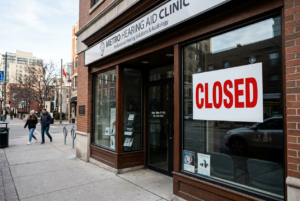
A clinic closing its doors feels like losing a mechanic who knew your car, except the car is in your ears every day. If you’re searching for hearing aid service after a clinic closes, you’re probably holding a pair of devices that still work and wondering who will adjust them next spring, or the next time the receiver, the tiny speaker that sits in your ear, quits. The answer depends on two things you can find out this week, whether you live in Sioux Falls, Buffalo or the towns around them: what transfers with the hearing aids, and whether anyone nearby is able to program them.
What Transfers With Your Hearing Aids and What Stays Behind
The hearing aids travel with you, while the clinic’s services and its records of your visits do not. That split makes sense once you see who issues what. The manufacturer builds the device and issues its warranty, which typically covers defects in the hearing aid itself, requires proof of purchase, and leaves out the services a clinic performs in its office. Check the terms for your brand and model, because coverage varies.
Everything the clinic did around the device stays with the clinic, which is the mechanic’s service history all over again: the parts are yours, but the record of how your provider tuned them lives in a file you may never see. The fitting appointments, the follow-up adjustments, a service plan you paid for up front, and the notes about how your provider set your hearing aids all belong to that practice. When it closes, those services end with it, even though the devices in your ears are fine.
“Most people who come in after a clinic closes are worried their hearing aids are suddenly worthless,” says Dr. Jade Husby. “Usually the devices are fine. What they lost was the person who programmed those hearing aids, and a fresh hearing test is where we start working out what comes next.”
Here is how the pieces usually sort out:
| What you had | Does it transfer? | What to do now
|
|---|---|---|
| The hearing aids themselves | Yes, they are yours | Keep using them and keep them clean and dry |
| The manufacturer’s warranty | It covers the device, with proof of purchase | Find your receipt, model names and serial numbers, then check your brand’s terms |
| A service plan or prepaid visits | Usually not, since the clinic provided them | Ask the closing clinic in writing what happens to anything you prepaid |
| Your hearing test and fitting history | Only if you get copies | Ask the closing clinic for copies while staff are still reachable |
| Programming access | Depends on whether the device is locked | Check before you need an adjustment |
That last row decides more about your next few years than any of the others, so it is worth settling first.

How to Tell Whether Your Hearing Aids Are Locked
A locked hearing aid uses fitting software that the seller has restricted, so only certain clinics can program it, while any qualified provider who carries that manufacturer’s software can program an unlocked device. Programming a hearing aid takes the manufacturer’s own fitting software and a provider trained to use it, and a lock limits which providers can open the device in that software. An article on the pitfalls of locked hearing aids in The Hearing Review describes the concern plainly: when a seller keys the software to its own stores, a patient who moves or wants a second opinion can find their choices of where to go limited.
You can usually find out where you stand before anything breaks. Check these four things, roughly in this order:
- The brand and model name on your paperwork. These tell a new clinic exactly what you wear and which manufacturer’s software it needs.
- Your purchase agreement. Look for language about where you can have the devices serviced or programmed, since a restriction often shows up there.
- The manufacturer. Call the brand’s customer support with your serial numbers and ask whether a provider outside the original seller can program the devices.
- A new provider. A clinic that carries the brand can usually tell you within one visit whether it can connect to the devices.
If the answer is that the devices are locked, you still own working hearing aids. You just need to plan for where adjustments will come from, which is the conversation a new provider can help you have.
Your First Steps After the Clinic Closes
Getting hearing aid service after a clinic closes takes three moves: gather your paperwork, find out whether your devices are locked, and book a hearing evaluation before you need a repair. The order matters because a closed clinic’s staff and records get harder to reach with every week, while your hearing aids may run fine for months. Waiting for a breakdown means sorting out warranty, records and programming all at once, usually on a day you can’t hear well.
Start with what you can collect at home:
- Proof of purchase. Manufacturer warranties generally require it, so a receipt or purchase agreement is worth more than any other paper you hold.
- Model names and serial numbers. These let a new provider and the manufacturer identify exactly what you wear, including the generation.
- Copies of your hearing test and fitting notes. Ask the closing clinic for them while someone is still answering the phone, since your history shows how your hearing has changed. If the doors are already locked, skip this one, because a new hearing test gives a provider a current picture without the old file.
- Your accessories and charger. A provider checking the devices will want to see the full setup, including how you charge them.
UCSF’s guide to what to bring to a hearing aid repair appointment suggests the same kind of kit: the hearing aids and accessories, warranty documentation, and notes on what has gone wrong and when. Bring that list to your first visit with a new provider and the appointment goes faster.
What a Visit With a New Provider Looks Like
Plan on a hearing evaluation first and a device check second, because a new provider has to know your hearing before deciding whether your current hearing aids still fit it. Hearing changes over time, and settings that matched your hearing two years ago may not match it now. A fresh test tells both of you whether your devices need a small adjustment, new programming, or replacement.
At Stanford Hearing, that visit starts with our free consultation, which includes a hearing test that produces an audiogram, a chart of the softest sounds you hear at each pitch. From there, what we can do depends on the device:
| Your situation | What we can usually do
|
|---|---|
| A physical problem: no sound, whistling, a torn dome, wax buildup | Handle hearing aid repair and maintenance for every major brand, bought from us or not, with some fixes done in the clinic and others sent to the manufacturer |
| An unlocked device from one of the five brands we fit | Look at taking over the programming after your hearing test, case by case |
| A locked device, or a brand we don’t fit | Talk through your options plainly, including whether new hearing aids make more sense than keeping the old ones |
We would rather tell you the limit now than at the front desk: no clinic can promise to adjust every device from every maker, and we would rather say so than have you drive across town on a maybe. Our programming help runs through the brands we carry: Phonak, ReSound, Starkey and Unitron, with Oticon available by order.
Choosing Unlocked Hearing Aids Next Time
If you replace your hearing aids, ask whether they are unlocked before you sign anything, because that one answer decides how easily another provider can pick up your care if you ever need hearing aid service after a clinic closes again. An unlocked device keeps your options open if a clinic closes, if you move closer to family, or if you simply want a second opinion on how your hearing aids are set. Any provider who carries the brand and its fitting software can pick up where the last one left off.
Three things to confirm with any clinic before you buy:
- The devices are unlocked. Ask in plain words whether another clinic could program them, and get the answer in writing if you can.
- You know the brand and model. Ask for the manufacturer’s name and model on your paperwork, so any clinic can tell which software it needs.
- You get copies of your records. Ask how you would get your hearing test and fitting information if you ever needed it elsewhere.
We fit unlocked devices across the hearing aid brands we carry, so a patient who moves away can take their hearing aids to another provider and keep going.
Why Choose Stanford Hearing After Your Clinic Closes
Choose us if you want to start where Dr. Husby starts, with a hearing test and your questions, before anyone talks about buying anything. Your first visit is a free consultation, so you see where your hearing stands today and get a plain look at the devices you already own. We have been locally owned for more than 20 years across Sioux Falls, Buffalo and the surrounding communities. Voters also count us a consistent Sioux Falls Local Best winner.
Here is what comes with that visit and anything after it:
- Free consultations with no pressure to buy. Your first appointment is a complimentary assessment of your hearing and your needs, with no obligation.
- Five premium brands. Unlocked devices and recommendations built on your hearing and your lifestyle, so you never get a one-brand pitch.
- Options for every budget. If no one can adjust your old devices, you hear about repair and replacement side by side, so cost is part of the first conversation rather than a surprise at the end.
- A trial so you can buy with confidence. Every purchase includes a 10-day trial so you can wear your hearing aids in real life before you decide, and the Phonak Virto trial is 30 days. If they are not right for you, return them inside your trial window for a full refund.
- A price match guarantee. You will not overpay locally. If a nearby clinic beats our price on a comparable device, we meet it. Bring us what another local clinic quoted you and we will take a look.
- No-interest financing. 12 months no-interest financing is available for qualifying patients, subject to credit approval.
- In-network insurance and Medicare Advantage. We are in-network with all major insurance providers, including Medicare Advantage, and we verify your benefits before your appointment so you know what is covered before you commit.
- In-person care at every step. Testing, fitting and follow-up adjustments happen face to face at our Sioux Falls hearing center and our Buffalo hearing center.
Book the free consultation at the clinic closer to you, and we will start with a hearing test. Bring your hearing aids, the paperwork you gathered and notes on what has been bothering you, and we will tell you plainly what we can do for your devices and where the limits are. Schedule a free consultation, or call Sioux Falls at 605-305-1522 or Buffalo at 763-284-9200.
More Questions About Hearing Aid Service After a Clinic Closes
Is my hearing aid warranty still good if the clinic closed?
The manufacturer issues the warranty, not the clinic, so it covers the device itself, though terms vary by brand and model and usually require proof of purchase. Keep your receipt and serial numbers, and Stanford Hearing can help you work out whether a repair falls under the manufacturer’s coverage.
Can Stanford Hearing repair hearing aids it didn’t sell?
Yes, for every major brand, with some repairs done in our clinic and others sent to the manufacturer. Reprogramming is a different question, and Stanford Hearing can only consider it for unlocked devices from the five brands we fit.
Do I need a new hearing test if my hearing aids still work?
It is a good idea, because your provider based your settings on a test that may be years old. Stanford Hearing includes a hearing test in the free consultation, so you find out whether your current devices still match your hearing at no cost.