
Get to Know Phonak Audeo Hearing Aids and Starkey Edge Hearing Aids
Updated September 2026 · Dr. Jade Husby, Au.D.
Short Version
Phonak Audeo vs Starkey Edge comes down to automation against control. Phonak reads the room and adjusts without being asked, and its newest EON Sphere adds a second chip just for speech in noise. Starkey Edge runs longer, tracks your activity, and gives you a tap for hard moments.
Two families, two philosophies, and both of them good. Patients ask us to settle Phonak Audeo vs Starkey Edge almost weekly, and the honest answer is that they solve the same problem from opposite ends. Phonak wants the hearing aid to make the decisions. Starkey wants to hand you the controls and keep the battery alive long enough that you never think about it. Which suits you depends on how you like technology to behave, and on what your audiogram says. Both sit within our hearing aid options.
Phonak Audeo vs Starkey Edge: Two Philosophies, One Goal
Neither company is chasing a different outcome. They disagree about how to get there.
- Phonak automates. AutoSense OS AI 8.0 classifies your surroundings and shifts the processing without you touching anything, and the flagship devotes a whole second chip to pulling speech out of noise
- Starkey hands you a lever. Edge Mode is a tap that reprocesses a difficult moment on demand, and the platform layers on health sensing the others do not attempt
Both approaches work. People who dislike fiddling gravitate to Phonak, and people who want to feel in charge gravitate to Starkey, and we have watched both groups be happy.
The Phonak Audeo Family Today
Audeo is Phonak’s receiver-in-canal line, and it moved a generation in August 2026. We have a fuller tour of the Phonak lineup if you want it.
Audeo EON Sphere, tiers 90 and 70
EON Sphere is the flagship, and it runs two chips rather than one. The ERA chip handles processing and connectivity, while a second chip called HYPERSONIC does nothing but real-time AI sound work. That is where Spheric Speech Clarity 3.0 lives, and it is the reason this device is the one we reach for when a patient’s hardest listening happens in loud rooms.
Audeo EON R, tiers 90 and 70
EON R runs the ERA chip alone. No second chip means no Spheric Speech Clarity, and the rest of the platform is intact: AutoSense OS AI 8.0, Adaptive Phonak Digital 4.0, StereoZoom 2.0, Dynamic Noise Cancellation, and WindBlock 2.0. The 90 adds Speech Enhancer and SpeechSensor over the 70, and the 90 is the only EON model that pairs with CROS E for single-sided hearing loss.
Shared across both EON families:
- Twenty fine-tuning channels and up to 38 hours per charge
- An IP68 rating
- Auracast broadcast audio, eight remembered pairings, two active connections
- Hands-free calling in stereo, so both ears get the call
- RogerDirect, pulling sound from a Roger microphone with no extra receiver
- Tap control and Tinnitus Balance
- Twenty-five percent smaller and twenty percent lighter than the previous generation
Audeo Sphere Infinio, Audeo R Infinio and Audeo Lumity
All three remain available and all three are still fitted here. Where a patient has worn Phonak happily for years, or where budget shapes the decision, the previous generations are honest choices rather than consolation prizes. Our Phonak hearing aids page carries the full range.
The Starkey Edge Family Today
Edge AI runs Starkey’s G2 Neuro Processor, and it is the device that made Edge Mode a selling point.
- Up to 51 hours per charge, with 36 to 56 hours typical, and a quick charge of 15 to 30 minutes
- Twenty-four fine-tuning channels, the finest adjustment grid in our lineup
- Edge Mode, a tap that takes a fresh read of a difficult room
- Health and activity tracking through onboard sensors
- Own voice processing, so your own speech stops booming in your head
- Direct television streaming with no accessory in the middle
- An IP68 rating, 360 degree directionality, Auracast readiness, and tinnitus sound support
Edge AI is rated mild to severe, has no telecoil, and is not CROS compatible. Starkey’s newer G3 platform, Omega AI, sits above it and matches the battery figure. Our Starkey hearing aids page covers both.
Phonak Audeo vs Starkey Edge, Side by Side
| Feature | Phonak Audeo EON | Starkey Edge AI 24 |
|---|---|---|
| Processing | ERA, plus HYPERSONIC on Sphere | G2 Neuro Processor |
| Noise approach | Automatic, with Spheric Speech Clarity on Sphere | Automatic plus Edge Mode on demand |
| Fine-tuning channels | 20 | 24 |
| Battery per charge | Up to 38 hours | Up to 51 hours |
| Paired devices | 8 remembered, 2 active | 2 active |
| Television | Streams direct | Streams direct |
| Remote microphone | RogerDirect, no receiver needed | Starkey accessories |
| Health tracking | Not included | Activity sensors on board |
| Single-sided loss | CROS E, on the EON R 90 only | Handled by a separate Starkey CROS device |
| Water and dust | IP68 | IP68 |
Tier by Tier, Within Each Family
The brand choice is only half of it. The tier decides what you get, and Stanford names the 90 and 70 tiers of both Phonak EON families.
| Model | What it adds | Suits |
|---|---|---|
| Audeo EON Sphere 90 | Two chips, Spheric Speech Clarity 3.0 at full strength | Hard listening in loud rooms, several times a week |
| Audeo EON Sphere 70 | The same two chips and denoising, one tier down | Regular noisy settings on a tighter budget |
| Audeo EON R 90 | ERA alone, plus Speech Enhancer, SpeechSensor and CROS E pairing | Mixed days, soft voices, single-sided loss |
| Audeo EON R 70 | ERA alone, Dynamic Noise Cancellation and StereoZoom 2.0 | Predictable environments, mostly quiet rooms |
| Starkey Edge AI 24 | G2 processing, 24 channels, health sensing, Edge Mode | Long days, active life, hands-on control |
Notice that moving from Sphere to R is a bigger step than moving from 90 to 70. A chip change alters what the device can do at all. The tier only changes how much of it you get.
How They Behave in a Loud Room
This is where the money goes, and where the two families diverge most.
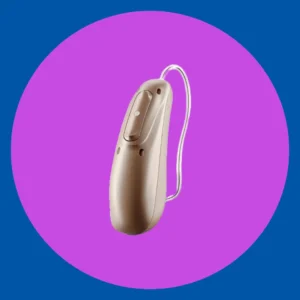
Phonak’s answer on the Sphere models is brute engineering. A second chip runs Spheric Speech Clarity 3.0 while the first keeps everything else going, so the noise work never competes with the streaming or the classification. It engages by itself. On the EON R models there is no second chip, so you get StereoZoom 2.0 narrowing toward the person in front of you and Dynamic Noise Cancellation cleaning up behind it, which is still strong and is a step below the Sphere.
Starkey’s answer is a partnership. The processor handles the room, and when a restaurant turns against you, a tap on the device reprocesses the moment. It works, and it asks you to notice and act.
One caution worth stating. No hearing aid removes background noise, and both families reduce it so speech is easier to follow. The gap between a verified fitting and an unverified one is wider than the gap between these two brands.
Battery, Charging and Daily Rhythm
On battery, Phonak Audeo vs Starkey Edge is not close. Thirty-eight hours against fifty-one is a real difference, and it matters less than the raw numbers suggest.

- Both cover a normal day with room to spare, so this is about what happens when you forget
- Starkey’s quick charge of 15 to 30 minutes rescues a morning you have already lost
- Heavy streaming pulls both figures down, and the published lower bound is the honest number to plan around
- Both use portable charging cases, so both travel
If you camp, travel across time zones, or simply have a poor relationship with chargers, Starkey wins this category outright.
Ecosystems and Accessories
Phonak Audeo vs Starkey Edge is also a choice between two ecosystems, and what surrounds the hearing aid matters more as the years go on.
- Phonak’s Roger system is the strongest remote microphone ecosystem we work with, and EON pulls from a Roger microphone directly with no extra receiver clipped to the device
- Starkey’s app carries the health tracking and Edge Mode controls in one place, which appeals to patients already tracking their steps
- Both apps allow home adjustment, and both look and behave quite differently, which is worth ten minutes on your own phone before you commit
Comfort, Size and Handling
Everything above is processing. This section is why a device stays in an ear.
- Size. The EON housings are 25 percent smaller and 20 percent lighter than the Phonak generation before them, which is the most noticeable physical change in years. Edge AI sits in a standard receiver-in-canal size and also comes in a mini version
- Controls. Both use tap control. If your fingers are less cooperative than they used to be, tapping a device beats finding a rocker switch, and both brands benefit from that
- Chargers. Phonak offers a ChargerGo with a built-in battery for travel and a compact charger for the nightstand. Starkey’s case holds about three full charges. Handle both, since one of these lives beside your bed
- Domes and molds. Comfort comes from the coupling far more than from the shell, and a device you love with the wrong dome is a device you stop wearing by week three
- Moisture. Both carry IP68 ratings, and both still need cleaning. Our hearing aid repair and maintenance service exists because ears are damp places
We put both families in your hands at the appointment for exactly this reason. Fifteen minutes of holding, tapping and wearing settles questions that no specification table can.
Tinnitus, Wind and the Smaller Features
A few things patients raise that rarely make the headline comparisons.
- Both platforms include tinnitus sound support. Phonak calls its version Tinnitus Balance. Neither cures tinnitus, and both can make it intrude less
- Phonak’s WindBlock 2.0 addresses wind noise directly, which matters if you golf, walk, or spend time on a boat
- Starkey’s own voice processing stops your own speech booming in your head, which is the complaint that sends more new wearers back to the clinic than any other
- Both handle sudden loud sounds, Phonak with SoundRelax and Starkey through its processing
Fitting Range and Single-Sided Loss
Two practical limits decide some cases before preference is ever discussed.
Edge AI is rated mild to severe. The EON families are receiver-in-canal platforms whose reach depends on the receiver we pair with them, and for a profound loss the conversation moves to a power behind-the-ear device instead.
For hearing in only one ear, the EON R 90 pairs with CROS E, and it is the only EON model that does. Edge AI does not, and Starkey handles single-sided loss with a separate CROS device. If that describes you, say so early, because it narrows the field faster than anything else on this page.
Best If You
There is no single best hearing aid, only the one that is best for you. Here is how Phonak Audeo vs Starkey Edge usually resolves once we have your audiogram.
- Best if loud restaurants are your hardest listening: Phonak Audeo EON Sphere 90, with a chip dedicated to the problem
- Best if you want the newest Phonak processing at a gentler tier: Audeo EON R 90, which keeps Speech Enhancer and SpeechSensor
- Best if you use a remote microphone at meetings or church: Phonak, for RogerDirect
- Best if you forget to charge things: Starkey Edge AI, at up to 51 hours with a quick charge
- Best if you want a manual control for hard rooms: Starkey Edge AI and Edge Mode
- Best if you already track your activity: Starkey Edge AI, with sensors on board
- Best if you have hearing in only one ear: Phonak Audeo EON R 90 with CROS E
Only about one in five people who would benefit from a hearing aid wears one, according to the National Institute on Deafness and Other Communication Disorders. Nobody in that four stayed away because of a chipset.
Why Choose Stanford Hearing
We are locally owned, with 20-plus years of trusted care in Sioux Falls and Buffalo, and voted Sioux Falls Local Best 20 years. We carry five premium hearing aid brands and recommend based on your hearing, your lifestyle, and the places you most want to hear well. Because we are brand neutral, settling Phonak Audeo vs Starkey Edge here is a demonstration rather than a pitch.
- Free consultations with no pressure to buy
- A 10-day trial so you can wear your hearing aids in real life before you decide, and if they are not right, return them within the 10 days for a full refund
- A price match guarantee, so you will not overpay locally. If a nearby clinic beats our price on a comparable device, we meet it
- 12 months no-interest financing, subject to credit approval
- In-network with all major insurance providers, including Medicare Advantage, with benefit verification before you arrive
- Sioux Falls and Buffalo clinics, with remote care available for small adjustments
Schedule a free consultation and we will test your hearing, put both families on your ears, and use live speech mapping to verify what each one does inside your ear canal.
Common Questions About Phonak Audeo vs Starkey Edge
In Phonak Audeo vs Starkey Edge, which handles noisy restaurants better?
The Phonak Audeo EON Sphere has the strongest claim, because a second chip runs Spheric Speech Clarity 3.0 with no other job to do. Starkey Edge AI answers with Edge Mode, a tap that reprocesses the moment. At Stanford Hearing you hear both in our fitting room before choosing between them.
Which lasts longer on a charge?
Starkey Edge AI, at up to 51 hours against up to 38 for the Phonak EON platforms, plus a quick charge of 15 to 30 minutes. Both comfortably cover a normal day, so this matters most if you forget your charger.
Do both work with iPhone and Android?
Yes, and both support hands-free calling and Auracast. Phonak’s EON platforms remember eight paired devices and keep two active. Bring your own phone to Stanford Hearing and we will pair it in the room.
What if I only have hearing in one ear?
That narrows it. The Phonak Audeo EON R 90 pairs with CROS E and is the only EON model that does, while Starkey handles single-sided loss with a separate CROS device. Tell us at your appointment and we will show you both routes.
Is the older Phonak Infinio or Lumity still worth buying?
Often yes. Stanford Hearing still fits Audeo Sphere Infinio, Audeo R Infinio and Audeo Lumity, and where budget or fitting history points that way they remain honest choices rather than leftovers.
Can I try both before deciding?
Yes. Every purchase includes a 10-day trial so you can wear your hearing aids at home, at work, and out with people before you decide. If they are not right for you, return them within the 10 days for a full refund.