Hearing Aid Innovation: Keeping Up with the Latest Technology Trends
Updated November 2026 · Dr. Jade Husby, Au.D.
Short Version
Three hearing aid technology trends matter right now: a second chip devoted to separating speech from noise, Bluetooth LE Audio with Auracast for venue broadcasts, and batteries that outlast a long day. Everything else is refinement. The fitting still decides more than any of it.
Hearing aid technology moves in bursts, and August 2026 was one of them. Both Phonak and ReSound launched new platforms within a week of each other, which is unusual, and it means the hearing aid technology trends we discuss with patients today are different from the ones we discussed in spring. Part of what changed is substantial. The rest is specification that reads well and changes little in a real living room. Here is our plain sorting of the two, from a clinic that fits all of it.
How Far Hearing Aid Technology Has Come in a Decade
Ten years ago, most hearing aids made sound louder and left the sorting to your brain. Today’s devices do much of that sorting before the sound reaches you, which is why patients who upgrade from an older pair often notice the change in the first restaurant they walk into. Every one of the hearing aid technology trends below grew out of that shift, so it helps to see the before and after side by side.
Here is how the basics compare.
| Technology | A Decade Ago | Today | What It Changes for You |
|---|---|---|---|
| Sound processing | Digital amplification with simple directional microphones | AI processing that reads the room and separates speech from background sound | Conversations take less effort in noisy places |
| Noise management | Fixed noise programs you switched yourself | Processing that adjusts continuously as the room changes | Fewer moments of reaching for a button mid-conversation |
| Connectivity | Streaming through a separate accessory, if at all | Direct streaming from phones and tablets, plus Bluetooth LE Audio and Auracast on current platforms | Calls, music and TV go straight to your ears |
| Power | Small disposable zinc-air batteries | Rechargeable lithium-ion that runs a full day on a charge | No more handling tiny batteries |
| Durability | Moisture and sweat a common cause of repairs | IP68 water and dust resistance across the current platforms we fit | Rain, sweat and yard work are less of a worry |
| Health features | Hearing only | Activity and health tracking on some models, including fall alerts on Starkey Omega AI+ | Extra wellness insight on top of better hearing |
| Support | An in-person visit for every change | Remote care available for many adjustments, with in-person follow-up | Small fixes without a trip across town |
What the table cannot show is fit. A new device on a generic setting still leaves a lot on the table, which is why the rest of this page keeps coming back to the fitting room.
Trend One: A Second Chip Just for Noise
Of the hearing aid technology trends on this page, this is the one with the most engineering behind it, and the change is architectural. Rather than asking one processor to handle everything, manufacturers started adding a second chip whose only job is separating speech from background sound.
Phonak’s Audeo EON Sphere, in the 90 and 70 tiers, pairs the ERA chip with a second chip called HYPERSONIC. ERA runs processing and connectivity, HYPERSONIC runs real-time AI sound work, and Spheric Speech Clarity 3.0 lives on the second chip. ReSound’s Sensia, in the 9 and 7 tiers, uses a dual chip design with a deep neural network denoiser working alongside the main processor.
Why the split matters:
- A single processor splitting attention between streaming, classification and noise reduction does all three less well
- A dedicated chip can run a heavier algorithm continuously without draining the device
- The gain shows up exactly where patients struggle, which is a busy restaurant rather than a quiet room
One caveat. No hearing aid removes background noise, and both of these reduce it so speech is easier to follow. If someone promises silence, walk away.
Trend Two: Bluetooth Grew Up
Connectivity used to mean pairing to one phone and hoping. Three things changed it.
| Change | What it does | Whether it matters to you |
|---|---|---|
| Bluetooth LE Audio | A more efficient standard built for hearing devices | Yes, quietly. Better sound, less battery drain |
| Auracast broadcast | Venues transmit sound to any listening device in range | Only if your venues have it, and coverage is spreading |
| Multiple connections | Two devices live at once, and Phonak remembers eight | Yes, if you juggle a phone, a tablet and a television |
Auracast is the one worth watching. A looped venue used to need a telecoil in your hearing aid. An Auracast venue broadcasts, and any capable device in the room can tune in, the way a radio does. Airports, theaters, gyms and places of worship are adopting it at their own pace, which means its value to you is local rather than universal.
Every current platform we fit is Auracast capable. ReSound got there first with Nexia, and the rest of the industry followed.
Trend Three: Batteries That Outlast the Day
Rechargeable stopped being a premium feature and became the default, and the figures have stretched.
- Phonak’s EON platforms reach up to 38 hours per charge
- ReSound Sensia and Vivia both reach up to 30 hours without streaming, and about 24 with several hours of streaming
- Starkey Omega AI+ reaches up to 51 hours on the RIC RT and up to 41 on the smaller mRIC R
Every one of those covers a normal day. The gap shows up on the night you forget the charger or the week you travel, which is why we ask about your routine rather than quoting the headline figure.
Trend Four: Sensors, and Where We Are Cautious
Starkey has put motion and activity sensors in hearing aids longer than anyone, and its current devices track activity through onboard sensors. Anyone already counting steps tends to like it. Patients who do not will ignore it entirely, and that is fine too.
Where we are careful: a hearing aid is a hearing device first. We will not recommend one for its sensors over one that fits your loss better, and we do not present activity data as clinical measurement. If a health feature is the reason you want a particular device, tell us, and we will be straight with you about what it does.
What Hearing Aid Technology Trends Never Touch
This is the part the coverage skips, and it is the part that decides your outcome.
- A fitting is measured, not predicted. Software estimates what a device does in an average ear. We use live speech mapping to measure what it does in yours
- Acclimatization takes weeks. Most people notice a difference right away, and the brain keeps adjusting for a month or more
- The coupling matters more than the chip. A wrong dome or a loose mold undoes a great device
- Follow-up is the treatment. The first setting is rarely the final one, on any platform
- Your audiogram narrows the field before preference enters. Half the devices in a roundup may not suit your loss at all
Only about one in five people who would benefit from a hearing aid wears one, according to the National Institute on Deafness and Other Communication Disorders. That number has not moved much through several generations of chips, which tells you where the real bottleneck sits.
When Upgrading Older Hearing Aids Is Worth It
An upgrade is worth it when your daily struggles are the ones newer technology was built to solve. Older hearing aids were designed around amplification, so they tend to hold up in a quiet living room and fall behind in exactly the places where current processing has improved most. If your devices still suit your hearing and your routine, a fresh program may serve you better than a new pair.
These are the signs we look for when a patient asks.
- Restaurants and family gatherings still wear you out. Speech-in-noise processing is where current platforms have changed most, so this is the strongest case for upgrading.
- You switch programs by hand all day. Current devices adjust as the room changes, which takes that job off your list.
- Your phone and your hearing aids do not get along. Direct streaming and hands-free calling now work with many current phones.
- Tiny batteries are getting harder to handle. Rechargeable models remove the daily fiddling, which matters most for anyone with stiff fingers or changing eyesight.
- Your hearing has changed since your last fitting. Sometimes new programming is the fix, and sometimes the change outgrows what the old devices can deliver.
Bring your current hearing aids to a free consultation and we will check them on your ears before we talk about anything new. If they still have life in them, we will say so. For more on timing, our guide on when to get new hearing aids walks through the usual signs.
Which Hearing Aid Technology Trends Are Worth Paying For
Match the trend to your life rather than to the marketing.
| If your hardest listening is | The trend that helps | Where it shows up |
|---|---|---|
| Restaurants and crowds | A second chip for noise | Phonak Audeo EON Sphere 90 and 70, ReSound Sensia 9 and 7 |
| Phone calls and video calls | Hands-free calling in both ears | Every current platform we fit |
| Television | Direct streaming or an accessory | Starkey streams direct, ReSound Sensia uses an accessory |
| Theaters, church, airports | Auracast | Every current platform, where the venue supports it |
| Long days and forgotten chargers | Extended battery | Starkey Omega AI+ RIC RT at up to 51 hours |
| Meetings and lecture halls | A remote microphone | Phonak, with RogerDirect and no extra receiver |
Where the Brands Sit on These Hearing Aid Technology Trends
We carry five premium hearing aid brands and recommend based on your hearing, your lifestyle, and the places you most want to hear well.
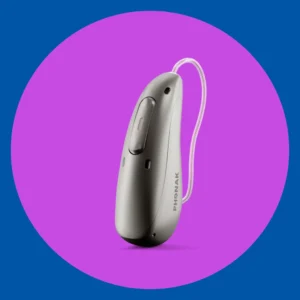
- Phonak. The EON platform in 90 and 70 tiers, with Sphere carrying the second chip and R running ERA alone. Audeo Sphere Infinio, Audeo R Infinio and Audeo Lumity all remain available. See our Phonak hearing aids page
- ReSound. Sensia in 9 and 7 tiers, with Vivia as ReSound’s premium AI line fitted alongside it and Nexia as the earlier generation we still fit
- Starkey. Omega AI+ runs on the G4 Neuro Processor, with a neural network built into the chip itself and Edge Mode on by default in the first memory. Its health and activity tracking covers exercise, social activity and respiratory rate, and the My Starkey app can alert others if your hearing aids detect a fall. Edge AI is the earlier generation we still fit, and G Series AI is the more affordable Starkey option
- Unitron. Shares engineering with Phonak and suits patients wanting current processing at a gentler tier
- Oticon. A limited, by-order offering here rather than a stocked brand, and rarely requested locally
How to Read a Hearing Aid Announcement
Four questions cut through a launch page quickly, whichever of the hearing aid technology trends it is selling.
- Does this change what I hear, or what I read about? A new chip that improves speech in noise changes your evening. A new colour does not
- Is the figure a maximum or a typical? Battery claims in particular carry both, and the lower one is your real day
- Does the feature need something else to work? Auracast needs a venue. A remote microphone needs someone to wear it
- Does it suit my loss? A flagship rated mild to severe is not a profound-loss device however good the processing is
Bring the announcement to your appointment. We will tell you plainly whether it applies to you, including when the answer is that it does not.
Why Choose Stanford Hearing
We are locally owned, with 20-plus years of trusted care in Sioux Falls and Buffalo, and voted Sioux Falls Local Best 20 years. Watching hearing aid technology trends is part of our job so it does not have to be part of yours.
- Free consultations with no pressure to buy
- Every purchase includes a 10-day trial so you can wear your hearing aids in real life before you decide, and the Phonak Virto trial is 30 days. If they are not right for you, return them inside your trial window for a full refund
- A price match guarantee, so you will not overpay locally. If a nearby clinic beats our price on a comparable device, we meet it
- 12 months no-interest financing, subject to credit approval
- In-network with all major insurance providers, including Medicare Advantage, with benefit verification before you arrive
- Sioux Falls and Buffalo clinics, with remote care available for small adjustments
Schedule a free consultation and we will show you what is new on your own ears, rather than describing it.
Common Questions About Hearing Aid Technology Trends
Should I wait for the next generation before buying?
There is always a next generation, and waiting costs you hearing you do not get back. Both major platforms refreshed in August 2026, so the current field is as settled as it gets. Stanford Hearing will tell you if something imminent would change your decision.
Do AI hearing aids hear better in noise?
The dual chip platforms do measurably better work on speech in noise than single chip designs, and the gain is real rather than cosmetic. No device removes background noise. Come in and hear the difference in our fitting room rather than taking anyone’s word for it.
Is Auracast worth choosing a hearing aid for?
Only if the places you go have it. Every current platform Stanford Hearing fits is Auracast capable, so it rarely needs to drive the decision on its own.
Are my three-year-old hearing aids obsolete?
Almost certainly not, and age alone is not the test. If they are programmed to your current hearing and you can follow conversation where it matters to you, they are doing their job. Bring them to Stanford Hearing for a check and a clean, and we will tell you plainly whether a new receiver and a fresh program would do the work before we suggest new devices.
Which hearing aid technology trends matter most for older adults?
Battery life, easy handling, and automatic adjustment, in that order for most of the patients we see in Sioux Falls. Sophisticated noise processing matters enormously for people who eat out often and much less for people who do not.
Does newer technology cost more?
Newer platforms typically launch at the top of the range and older generations become better value, which is why Stanford Hearing keeps fitting them. We will show you both and let you decide with the numbers in front of you.