
Exploring Small Hearing Aids
Updated September 2026 · Dr. Jade Husby, Au.D.
Short Version
Small hearing aids split into two families. Custom devices sit inside the ear canal and disappear. Micro behind-the-ear devices hide a tiny shell behind your ear and carry more technology, including streaming and long rechargeable batteries. Discretion favors the first. Features favor the second. Your hearing and your daily listening decide which one wins.
Most people who walk into our Sioux Falls office asking about small hearing aids have already decided that visibility is the thing standing between them and better hearing. That instinct is worth taking seriously rather than talking someone out of, because a device nobody wears helps nobody. The smallest options now carry far more than they did five years ago, and the trade-offs have narrowed to a handful of real choices. What follows is where those choices sit, so you can walk in knowing which questions to ask.
If you are earlier in the process and still weighing styles more broadly, our guide to selecting hearing aids covers the wider field first.
What Counts as Small Hearing Aids Now
Two shapes dominate, and they solve discretion in opposite ways. One hides the device by putting it somewhere nobody looks. The other hides it by making the visible part very small and very pale against your hair.
Here is the split in plain terms:
- Custom in-the-canal devices. A shell molded to your own ear, worn inside the canal. Invisible-in-canal sits deepest, completely-in-canal a shade shallower.
- Extended-wear devices. Placed deep in the canal by a provider and left there for months, with no daily handling at all.
- Micro receiver-in-ear devices. A small shell behind the ear, a thin clear wire, and a speaker sitting in the canal. This is where the newest technology lands first.
All three qualify as small hearing aids, and all three are things we fit. The differences show up in what fits inside the shell.
Custom In-the-Canal Options We Fit
Phonak’s custom line is the one we reach for most often when a patient’s first priority is that nobody notices. It comes in three shapes, and the shapes matter more than the tier numbers.
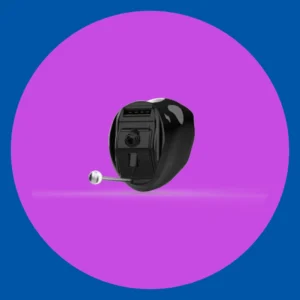
Phonak Virto R Infinio
This is the rechargeable custom device, and it is the only one in the Virto family with a battery you charge rather than replace. A full charge takes three hours and 80 percent takes an hour and a half, so an overnight habit covers you. It runs AutoSense OS 7.0, the same automatic program switching found on Phonak’s current behind-the-ear devices, and carries an IP68 rating against dust and moisture. Bluetooth pairs with up to eight devices, two of them connected at once.
Phonak Virto I-Titanium and Virto I-10 NW O
The Titanium shell is the reason this one exists. Titanium lets Phonak build a thinner wall, so the device is smaller in the same canal, and for a narrow ear that decides whether an invisible fit is possible at all. Both of these run AutoSense OS 6.0 rather than 7.0 and use a disposable battery. The 10 NW O is the non-wireless option, which sounds like a limitation and reads differently to a patient who has no interest in pairing anything to a phone.
One detail worth knowing beforehand: Phonak builds these shells using Biometric Calibration, working from 1,600 data points scanned off your ear impression. The shape of your ear becomes part of how the device is tuned, not just how it fits.
Which Power Level Your Loss Needs
Custom devices are not one size of amplifier. Phonak publishes four power levels for the Virto family, and your audiogram picks the one you get.
| Power level | Published fitting range |
|---|---|
| SP | Mild to moderate hearing loss |
| UP1 | Mild to moderately severe hearing loss |
| M | Moderate to severe hearing loss, all audiometric configurations |
| P | Moderate to profound hearing loss, all audiometric configurations |
A telecoil is optional on the applicable models rather than standard, so if you use loop systems at church or a theater, say so at the fitting and we build it in.
Extended Wear: Phonak Lyric
Lyric sits in its own category because it changes the daily routine rather than the device size. We place it deep in the canal, and it stays there for months at a time. There is no charger, nothing to insert each morning, and no battery for you to change. Phonak describes it as totally invisible because of where it sits, and it is an FDA cleared hearing aid rather than a wellness gadget.
What you give up is connectivity. Lyric does not pair with Bluetooth at all, so streaming, calls through the device and app control are off the table. Volume changes happen with a small magnetic tool called SoundLync. Replacement is a short appointment, and how often you need one varies with your own ear.
Lyric suits a particular kind of person, and it is worth being blunt about who:
- Best if you want hearing help that never requires handling, charging, or remembering
- Best if dexterity makes tiny devices frustrating and a subscription model appeals to you
- Best if invisibility outranks streaming, and you have no interest in an app
- Less suited if you live on phone calls, or if your ear anatomy or drainage history rules out a device sitting that deep
One conversation at the consultation settles this quickly, because ear anatomy either allows Lyric or it does not.
Micro Behind-the-Ear Options
Micro receiver-in-ear devices are where small hearing aids have moved fastest, and where the newest platforms arrive first. Two launched in August 2026.
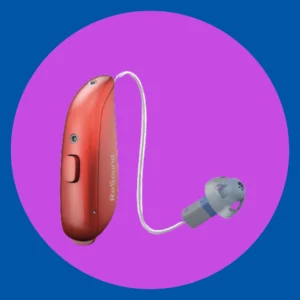
ReSound Sensia 9 and Sensia 7
The ReSound platform is built on a microRIE shell and is the smallest current device in ReSound’s line. It runs a dual chip design with a deep neural network handling background noise, carries an IP68 rating, and fits mild to severe hearing loss. Battery runs up to 24 hours, with 16 to 24 in normal use and 12 to 24 when you stream heavily. It supports Auracast and LE Audio and holds two connections at once. The 9 uses 17 fine-tuning channels and moves into its hearing-in-noise setting on its own, while the 7 uses 14 and lets you make that call yourself.
Two things to plan around. Television sound comes through an accessory rather than direct from the set, and there is no telecoil in the shell, so Auracast venues are the route to broadcast audio rather than a loop.
Phonak Audeo EON R
Phonak’s August platform shrank the shell, not only the electronics. EON R runs 25 percent smaller and 20 percent lighter than the generation before it, which you notice on the ear and again when you look in a mirror. Battery is rated up to 38 hours, it carries IP68, and it uses 20 fine-tuning channels. Tinnitus Balance is built in, and the EON R 90 is the tier that pairs with a CROS device when one ear has no usable hearing.
ReSound Vivia and Nexia
Both are still current and both are still ones we fit. Each is rated up to 30 hours with 17 channels and an IP68 rating, which makes them the longer-running option in ReSound’s microRIE family. Nexia carries Auracast. If you would rather see them side by side, our comparison of Vivia and Nexia takes them apart properly.
How the Two Families Compare
Set side by side, the trade-offs stop being abstract.
| What matters to you | Custom in-the-canal | Micro behind-the-ear |
|---|---|---|
| Visibility | Sits inside the canal, out of sight | Small shell behind the ear, thin clear wire |
| Streaming and calls | Virto R Infinio pairs with 8 devices, 2 at once. Lyric does not pair at all | Standard across Sensia, EON R, Vivia and Nexia |
| Rechargeable | Virto R Infinio only | Yes, across the current platforms |
| Published battery life | Virto R Infinio charges fully in 3 hours. Daily runtime is not published | Sensia up to 24 hours, EON R up to 38, Vivia and Nexia up to 30 |
| Fitting range | Mild through profound, by power level | Sensia mild to severe |
| Glasses and masks | Nothing behind the ear to bump | Can brush a frame if receiver length is wrong |
| Telecoil | Optional on applicable Virto models | Not in the Sensia shell. Auracast instead |
| Handling and cleaning | Small, and wax management matters more | Easier to grip, electronics sit outside the canal |
Neither column wins outright. The one that matters holds whatever you would be annoyed to give up.
Living With Small Hearing Aids Day to Day
Size changes daily habits more than people expect, and knowing that prevents most of the frustration we see at follow-ups.
- Wax. Devices sitting in the canal meet more of it. Wax guards get changed on a schedule, not when something sounds wrong.
- Moisture. A drying jar after a hot day protects a small device more than it protects a large one, because there is less room inside for anything to go wrong.
- Handling. If a size 10 battery is going to defeat your fingers on a bad morning, say so before we order, not after.
- Glasses. Micro behind-the-ear devices sit where temple arms sit. Receiver length and dome choice fix this at the fitting.
- Cleaning. A dry cloth daily beats a deep clean monthly. Our team handles the deep cleans at routine maintenance visits.
None of that is difficult. It is just different from the routine a larger device asks for.
Choosing Between Them Without Guessing
The decision resolves itself once three things are on the table: your audiogram, your ear anatomy, and a frank list of where you struggle to hear.
Among the people we fit with small hearing aids, a few patterns come up often enough to name:
- Best if you want nobody to know. Custom in-the-canal, or Lyric if your ear allows it.
- Best if you live on calls and video meetings. A micro behind-the-ear device, where streaming is standard rather than a compromise.
- Best if restaurants are the whole problem. Sensia 9 or EON R, where the noise processing is newest.
- Best if you wear glasses all day and hate anything touching the frame. Custom, with nothing behind the ear at all.
- Best if your loss has moved past moderate. A custom device at M or P power, or a micro behind-the-ear device fitted to range.
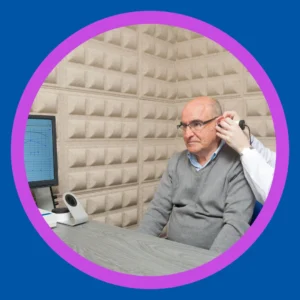
What settles the small hearing aids question in the room is measurement. We run a full hearing evaluation, then use live speech mapping to confirm the device is hitting target in your ear rather than on paper.
Why More People Should Be Wearing Something
Roughly one in five people who would benefit from a hearing aid wears one, according to the National Institute on Deafness and Other Communication Disorders. Appearance is a large part of that gap, which is exactly why small hearing aids deserve a serious look rather than a shrug. A device you will wear every day beats a better device sitting in a drawer.
Treating hearing loss is associated with better day-to-day function and stronger engagement with the people around you. That association is worth acting on, and the size of the device should never be the reason you do not.
Why Choose Stanford Hearing and What to Do Next
We have been locally owned in Sioux Falls for 20-plus years, and we are a consistent Sioux Falls Local Best winner. We carry five premium hearing aid brands and recommend based on your hearing, your lifestyle, and the places you most want to hear well. There is no single best hearing aid, only the one that is best for you, and with the smallest devices that is doubly true because your ear canal has a vote.
Free consultations come with no pressure to buy. Your first appointment is a complimentary assessment of your hearing and your needs, with no obligation. Every purchase includes a 10-day trial so you can wear your hearing aids in real life before you decide, and the Phonak Virto custom line carries a 30-day trial. If they are not right for you, return them inside your trial window for a full refund. A price match guarantee means you will not overpay locally, and if a nearby clinic beats our price on a comparable device, we meet it. 12 months no-interest financing spreads the cost into monthly payments for qualifying patients, subject to credit approval. We are in-network with all major insurance providers, including Medicare Advantage, and we verify your benefits before your appointment so you know what is covered before you commit.
You will find us in Sioux Falls, South Dakota and Buffalo, Minnesota, and we serve surrounding communities across the region. Schedule a free consultation and we will look at your ears, your audiogram, and what you need a device to do.
Your Questions About Small Hearing Aids, Answered
Are small hearing aids powerful enough for a real hearing loss?
Often, yes, and the question is worth asking before you rule small hearing aids out. Phonak publishes four power levels for its custom line, reaching moderate to profound at the P level, and the micro behind-the-ear devices we fit cover mild to severe. What decides it is your audiogram, and we will tell you plainly at your appointment if a smaller shell would leave you underpowered.
Can I get Bluetooth in a device this small?
In most of them. Phonak’s rechargeable custom device pairs with eight devices and holds two connections at once, and every micro behind-the-ear platform we fit streams. Lyric is the exception and does not pair with anything. We will match the connectivity to how you use your phone rather than assuming.
How long does a rechargeable small device last on a charge?
It depends which one. Among the micro behind-the-ear devices we fit, published figures run up to 24 hours for ReSound Sensia, up to 30 for Vivia and Nexia, and up to 38 for the Phonak Audeo EON R. Phonak publishes charge times for its rechargeable custom device rather than a daily runtime figure, so we will not quote one we cannot source.
Will a tiny device get ruined by wax or sweat?
Not with routine care. The current platforms carry IP68 ratings against dust and moisture, and wax guards do most of the work. Our team handles cleanings, wax management and repairs, and we would rather see you for a five-minute check than have you wait until something stops working.
Do small hearing aids help with tinnitus?
They can help you manage it. There is no cure for tinnitus, and there are real ways to reduce how much it intrudes. Amplification often lowers how noticeable the ringing is, and several platforms we fit include built-in tinnitus features. Our providers can walk you through the options for managing tinnitus alongside the device choice.
How long do I get to try a small hearing aid before deciding?
Ten days on most devices, and 30 on the Phonak Virto custom line. The longer window matters on custom, because a shell built for your canal needs real wear before you know whether it seals or whistles. Return anything inside its window for a full refund.
How do I know which style suits my ear?
You will not know from a website, and that is not a dodge. Canal shape, canal size, drainage history and dexterity all rule options in or out, and we can see all four in one appointment. Bring your questions and we will show you the devices in your hand before anything is ordered.