
Degrees of Hearing Loss: A Guide to All Five Levels
TL;DR: The degrees of hearing loss range from mild to profound, with each level reflecting a specific decibel range on your audiogram. Knowing where you fall helps you choose the right solution. We’ve helped patients across Sioux Falls and Buffalo for over 20 years and offer a free consultation at every stage.
The degrees of hearing loss can transform how you respond to changes in your hearing. Maybe you’re missing parts of conversations or struggling in noisy restaurants. The level of your loss shapes which solutions help most. This guide breaks down each category, what daily life looks like at every stage, and when professional care matters.
How We Measure Hearing Loss
Hearing care providers measure hearing loss in decibels, or dB. The decibel level reflects the softest sound you can detect across a range of frequencies. A complete test produces an audiogram, which maps your results across pitches and volumes.
The audiogram tells two stories at once. It shows the softest sounds you can hear at each frequency. It also reveals patterns that point to specific causes. Some people lose high-frequency hearing first. Others struggle most with low frequencies. Each pattern guides treatment decisions.
According to the Global Burden of Disease Expert Group on Hearing Loss, experts lowered the threshold for normal hearing from 25 dB to 20 dB. They also created six bilateral hearing impairment categories separated by 15-dB steps. This update matters because even slight hearing loss affects daily life.
Pure-tone audiometry remains the gold standard, but it’s only part of the picture. A full evaluation also tests how well you understand speech in quiet and in noise. Both numbers matter when matching you to the right solution.

Reading Your Audiogram
Audiograms use specific symbols and lines to show your results. Right ear results appear as circles. Left ear results show as Xs. The vertical axis shows volume in decibels. The horizontal axis shows frequency in Hertz.
Here’s a quick guide to interpreting common audiogram findings:
- Lines higher on the chart mean better hearing
- Lines lower on the chart mean hearing loss
- A drop on the right side suggests high-frequency loss
- A drop on the left side suggests low-frequency loss
- Symmetrical results across both ears suggest a similar pattern in each
- Asymmetrical results may signal a one-sided issue worth investigating
These patterns give your provider a starting point for treatment recommendations. Your audiogram is a snapshot, not a verdict. Many patients find their results more manageable than expected once a hearing care provider walks them through the findings. Our guide to common hearing loss symptoms covers the warning signs worth taking seriously.
The Five Degrees of Hearing Loss
The degrees of hearing loss fall into five widely recognized categories. Each one reflects a specific decibel range and a distinct experience of daily sound. Some sources also separate moderately severe as its own category. That gives six levels rather than five. Both frameworks describe the same continuum.
The table below shows how each degree connects to real-world hearing experiences:
| Degree of hearing loss | Decibel range | What you can typically hear | Common challenges |
| Normal hearing | -10 to 20 dB | Whispers, soft conversation, leaves rustling | None expected |
| Mild | 20 to 40 dB | Most conversation in quiet | Soft speech, group conversation, background noise |
| Moderate | 40 to 60 dB | Normal conversation up close | Speech at a distance, phone calls, TV at typical volume |
| Severe | 60 to 80 dB | Loud speech, raised voices | Most conversation without amplification |
| Profound | 80 dB and greater | Very loud sounds, alarms | Speech in nearly every setting |
Each degree calls for a different approach. Some patients thrive with technology designed for mild loss. Others need more powerful solutions. Knowing your level helps you ask the right questions during your appointment.
Mild Hearing Loss (20 to 40 dB)
Mild hearing loss is often the first stage people notice. You might hear someone speaking but miss specific words. Soft consonants like “s,” “f,” and “th” tend to fade first. The brain works harder to fill in gaps. That extra effort leads to listening fatigue by the end of the day.
Common signs of mild hearing loss include the following:
- Asking people to repeat themselves more often
- Turning up the TV or phone volume
- Difficulty hearing soft voices or children
- Trouble following conversation in restaurants
- Feeling drained after social gatherings
Each of these signs is a reasonable trigger for a free consultation. Mild loss is real, even if friends and family don’t notice it yet. Modern hearing aids with directional microphones and noise reduction can restore much of what you’re missing. Early action also reduces the cognitive strain that comes from constant guesswork.

Moderate Hearing Loss (40 to 60 dB)
Moderate hearing loss is when most people decide it’s time to act. Conversation at a normal volume becomes a challenge. You may rely on lip-reading without realizing it. Phone calls feel harder, especially with unfamiliar voices.
Daily life with moderate hearing loss often includes the following experiences:
- Frequent requests for others to speak louder
- Misunderstanding what’s said in meetings or family gatherings
- Difficulty hearing the doorbell, microwave beeps, or kitchen timers
- Withdrawing from social situations that once felt easy
- Feeling like everyone is mumbles
These signals point to a clear opportunity for treatment. Hearing aids almost always help at this stage. Receiver-in-canal styles offer a comfortable fit with strong amplification. Features like Bluetooth streaming, rechargeable batteries, and AI-driven sound processing make today’s devices more effective than ever. Our breakdown of Phonak Virto custom hearing aids shows what’s possible when we match technology to your specific listening needs.
Severe Hearing Loss (60 to 80 dB)
Severe hearing loss means you can’t follow conversation without amplification. Loud speech may be audible. Yet understanding suffers without help. Some patients in this category have lived with progressive hearing loss for years. They often adapt without realizing how much.
At this level, everyday interactions become difficult without support:
- Conversations require visual cues or shouted voices
- Phone calls without captioning are nearly impossible
- Group settings feel isolating
- Environmental sounds like traffic or alarms may go unnoticed
- Speech sounds muffled even when loud
These daily challenges respond well to the right hearing aid match. Power hearing aids deliver clear amplification without distortion. Telecoil compatibility, custom earmolds, and direct streaming options expand functionality. We’ve put together a guide to choosing the best hearing aids for severe hearing loss for patients exploring options at this stage.
Profound Hearing Loss (80 dB and Greater)
Profound hearing loss represents the most significant level. Many patients in this category cannot hear shouted speech without assistance. Some qualify for cochlear implants alongside or instead of traditional hearing aids.
Common realities of profound hearing loss include the following:
- Speech rarely registers without amplification
- Lip-reading and sign language often play a role in communication
- Environmental sounds may register more as vibration than sound
- Power hearing aids or cochlear implants are typical recommendations
- Quality-of-life support extends beyond hearing devices alone
These realities are real, but solutions exist at every level. Behind-the-ear power devices, super-power technology, and bimodal solutions can deliver meaningful benefit. A consultation with a hearing care provider helps determine which path fits your hearing and goals.
Is a 20 dB hearing loss serious?
A 20 dB threshold sits at the edge of normal hearing and the start of mild loss. It isn’t dangerous. Yet it can affect daily life more than people expect. You might struggle to hear soft voices. Or miss parts of group conversations. You might feel mentally drained after social events.
Whether 20 dB warrants treatment depends on your lifestyle and listening environments. Someone who spends most of their day in quiet may not feel the impact. A teacher, salesperson, or grandparent might feel it daily. A free consultation gives you a clear picture without pressure.
What is a bad hearing test score?
There’s no single “bad” score, since hearing tests measure performance across multiple frequencies. Most providers focus on your pure-tone average. That average combines results at 500, 1,000, 2,000, and 4,000 Hz. A score above 25 dB suggests some level of hearing loss. Higher numbers indicate greater difficulty.
Speech understanding scores matter just as much. A patient with a moderate pure-tone average who scores 90% on speech recognition may function better than someone with milder thresholds and poorer word recognition. Both numbers shape the final picture.

What Causes Hearing Loss at Each Degree?
Hearing loss develops for many reasons, and the cause often shapes the degree. Some patients experience gradual decline over decades. Others lose hearing suddenly. Each scenario calls for its own approach.
The most common contributors to hearing loss include the following:
- Age-related changes, often called presbycusis
- Noise exposure from work, hobbies, or loud environments
- Genetics and family history
- Certain medications that damage inner-ear hair cells
- Infections, head trauma, or sudden medical events
- Underlying health conditions like diabetes or cardiovascular disease
Each of these causes responds differently to treatment. Understanding the cause helps clarify what to expect and how to slow progression. Our overview of hearing loss types and causes explores these patterns in greater depth. Knowing the source of your hearing loss also influences treatment decisions.
Conductive vs. Sensorineural Loss
We classify hearing loss by where in the auditory system the issue starts. Conductive loss involves the outer or middle ear. It may be temporary or surgically correctable. Sensorineural loss involves the inner ear or auditory nerve. It’s typically permanent but very treatable with hearing aids.
The differences matter because they shape your options:
- Conductive loss often responds to medical treatment or minor surgery
- Sensorineural loss usually responds well to hearing aids
- Mixed loss combines both types and may need a combined approach
- Sudden sensorineural loss is a medical priority and warrants prompt evaluation
Each scenario points to a different next step. For a deeper look at how these categories differ, see our guide to conductive vs. sensorineural hearing loss. The right diagnosis sets the stage for the right solution.
One-Sided vs. Both-Sided Loss
Hearing loss can affect one ear, both ears, or both ears unequally. Bilateral loss is more common. Yet unilateral loss creates its own challenges with sound localization and speech-in-noise performance. People with unilateral loss often turn their head to direct their better ear toward speakers.
Bilateral loss responds well to binaural amplification. Two hearing aids work together to deliver natural, directional sound. Our article on bilateral hearing loss and its challenges explores how two-ear solutions outperform single-ear fittings. A comprehensive hearing test will tell you if your hearing loss affects one or both ears.
When Do You Need a Hearing Aid?
The right time to consider hearing aids isn’t tied to a specific decibel score. It’s tied to how your hearing affects your life. Some patients benefit at the mild stage. Others wait until conversation becomes a daily struggle.
Signs that suggest hearing aids could help include the following:
- You frequently ask others to repeat themselves
- The TV volume causes complaints from family
- You avoid social settings due to communication difficulty
- You feel exhausted after conversations
- Loved ones have mentioned your hearing
- You miss important sounds at work or home
Any one of these signs is reason enough to schedule a hearing test. Research consistently shows earlier intervention leads to better long-term outcomes. The brain stays sharper when it continues receiving full sound input. Waiting until profound loss develops makes adjustment harder.
Will hearing loss ever be reversible?
Most permanent hearing loss is sensorineural. Current science cannot reverse it. Inner-ear hair cells don’t regenerate after damage. However, hearing aids and cochlear implants restore meaningful access to sound.
Some forms of hearing loss are reversible. Conductive loss from earwax, fluid, or middle-ear issues often resolves with medical care. Quick treatment of sudden sensorineural loss may also lead to improvement. Research into hair cell regeneration continues, though no clinical treatment exists yet for adults. For now, the most reliable path to better hearing is professional evaluation and properly fitted hearing aids. Learn more in our guide to understanding hearing loss types.
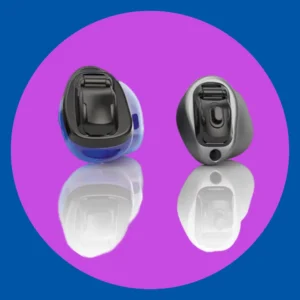
Hearing Aid Features Matched to Your Degree of Loss
Hearing aid technology has advanced dramatically. Today’s devices use AI, deep neural networks, and advanced microphone systems. They deliver clearer sound in nearly every environment. Matching features to your degree of loss is part of what makes a fitting successful.
The table below outlines which features matter most at each level:
| Degree of loss | Helpful features | Recommended styles |
| Mild | Directional microphones, noise reduction, discreet form factor | Receiver-in-canal, in-the-ear, completely-in-canal |
| Moderate | AI sound processing, Bluetooth streaming, rechargeable batteries | Receiver-in-canal, in-the-ear |
| Severe | Power amplification, telecoil, custom earmolds, direct streaming | Behind-the-ear, power receiver-in-canal |
| Profound | Super-power amplification, frequency lowering, cochlear implant compatibility | Super-power behind-the-ear, bimodal solutions |
Beyond raw amplification, modern hearing aids handle complex listening with surprising skill. Restaurants, group settings, and outdoor spaces all benefit from the latest sound processing. A consultation helps you compare options and find the right fit.
What dB is legally deaf?
The term “legally deaf” doesn’t have a single universal definition. In the United States, profound hearing loss of 90 dB or greater in both ears generally qualifies as deafness for medical and educational purposes. The Social Security Administration applies additional criteria for hearing-related disability claims.
Hearing loss between 70 and 90 dB is severe but not legally deaf in most contexts. Many people in this range communicate well with hearing aids, cochlear implants, or both. The label matters less than the daily reality. What you can do with the right solution is the question worth answering.
Why Choose Us for Your Hearing Care
We’ve spent more than two decades helping patients across Sioux Falls and Buffalo, South Dakota. Our team has guided people through every degree of hearing loss. Our approach starts with listening, both to your audiogram and to your story. No two patients have identical hearing. No two solutions look exactly alike.
Here’s what sets us apart:
- Five premium hearing aid brands so you get a brand-neutral recommendation
- Free consultations with no pressure to commit
- A 10-day trial so you can experience your hearing aids in real life first
- A price match guarantee so you can be confident in your investment
- No-interest financing to make better hearing accessible
- Acceptance of major insurance plans, including Medicare Advantage
- Two convenient locations in Sioux Falls and Buffalo
These differentiators reflect our 20-year commitment to local patient care. Whether you’re newly diagnosed or you’ve lived with hearing loss for years, we’re here when you’re ready. Schedule a free consultation and find out what’s possible for your hearing.
Frequently Asked Questions About Degrees of Hearing Loss
The degrees of hearing loss raise plenty of practical questions. Below are answers to the ones we hear most often from patients.
What are the five degrees of hearing loss?
The five degrees are normal hearing, mild, moderate, severe, and profound. Some classification systems also include moderately severe as a separate category. That’s why you may see six levels referenced. Each degree corresponds to a specific decibel range that maps to your audiogram.
At what stage of hearing loss do you need a hearing aid?
There’s no single stage that universally requires hearing aids. Many patients benefit at the mild stage. That’s especially true if they spend time in noisy environments or social settings. Most providers recommend hearing aids at the moderate level and beyond. The best indicator is whether your hearing affects your daily life.
Is there anything that can improve hearing loss?
Yes, depending on the cause. Conductive hearing loss often improves with medical treatment. Earwax removal and treatment of middle-ear infections are common examples. Sensorineural loss is permanent. However, hearing aids and cochlear implants restore meaningful access to sound. A comprehensive hearing test identifies the cause and guides next steps.
Can hearing loss get worse without treatment?
Most causes of hearing loss are physiological. That means hearing loss can progress whether or not you use hearing aids. Untreated hearing loss also correlates with greater cognitive strain and social withdrawal. Wearing hearing aids helps your brain stay engaged with sound, which supports long-term auditory health.
How accurate is an online hearing test?
Online hearing screenings can flag potential concerns. They aren’t substitutes for a professional evaluation. Calibrated equipment, trained providers, and a sound-controlled environment produce accurate results. If an online test suggests possible hearing loss, schedule a comprehensive test to confirm.