
All About Bluetooth Hearing Aids
Your phone rings. You tap your ear and answer. The conversation flows clearly to both ears while your hands stay free.
That’s Bluetooth hearing aids in action. These devices connect wirelessly to smartphones, TVs, computers, and more. They stream audio directly to your ears without cables or accessories cluttering your life.
This technology transforms how you communicate and enjoy entertainment. Whether you’re taking calls, watching movies, or listening to music, Bluetooth hearing aids deliver crystal-clear sound exactly where you need it.
Ready to discover which features matter most and which brands lead the pack? Let’s explore everything you need to know.
The Simple Science Behind Bluetooth Hearing Aids
Bluetooth creates wireless connections between your devices and your ears. No cables, no adapters, no hassle.
Modern hearing aids use two types of Bluetooth technology:
- Classic Bluetooth streams high-quality audio from phones, TVs, and tablets
- Bluetooth Low Energy (LE) saves battery while connecting to fitness trackers and smartwatches
- Combined systems give you both capabilities in one device
Classic Bluetooth excels at music, calls, and videos. Bluetooth LE extends battery life and supports newer technologies like Auracast public broadcasting. Together, they create seamless connectivity across nearly any modern device.
Your hearing aids connect automatically once paired. Sound quality stays crisp whether you’re streaming a podcast or taking a video call. Battery life remains strong throughout your day.
Why Bluetooth Changes Everything for Your Hearing
Phone calls become effortless. Audio streams to both ears simultaneously with zero background static. You hear every word clearly without holding anything to your face.
Research confirms what users experience daily. Studies show that Bluetooth coupling significantly improves speech recognition scores and quality ratings. The technology eliminates room reverberation and environmental noise that typically interfere with conventional hearing aids.
Here’s what Bluetooth connectivity solves:
- TV dialogue you’ve been missing for years
- Video calls where you catch every word
- Music and podcasts with rich, balanced sound
- Phone conversations without repeating yourself
- Navigation directions that don’t get lost in traffic noise
The benefits extend beyond entertainment. Direct streaming compensates for age-related temporal processing challenges. Your brain receives cleaner audio signals, making comprehension easier and less exhausting.
Meet the Leading Bluetooth Hearing Aid Champions
Four brands dominate the Bluetooth hearing aid market. Each brings unique strengths to your ears.
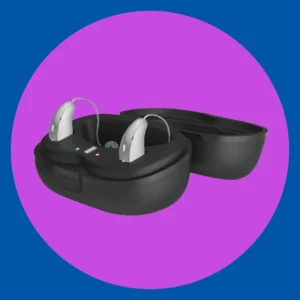
Phonak Audeo Sphere Infinio Ultra: The Universal Connector
Phonak revolutionized connectivity by working with any Bluetooth device. Their Sphere Infinio flagship includes:
- AutoSense OS 6.0 that adapts to your environment automatically
- Unlimited device pairing (phone, tablet, laptop, TV simultaneously)
- Roger microphone system for extended range
- SPHERIC Speech Clarity with AI-powered noise separation
The device switches between connected devices based on which one you’re actively using. Battery life supports all-day streaming without mid-day charging.
Starkey Genesis AI and Omega AI: The Health-Tracking Powerhouses
Starkey integrated wellness monitoring into hearing technology. Both the Genesis AI and newer Omega AI deliver exceptional performance:
- Edge AI processor analyzing sound 80 million times per second
- Fall detection with emergency contact alerts
- Activity tracking and daily wellness monitoring
- 24+ hours of battery life with rechargeability
The Thrive app gives family members optional access to your activity data. Parents appreciate this peace-of-mind feature for aging relatives.
ReSound Vivia: The Auracast Pioneer
ReSound leads in next-generation public audio broadcasting. The Vivia platform offers:
- M&RIE design using your ear’s natural shape for directional sound
- Auracast compatibility for airports, theaters, and lecture halls
- Direct streaming to both iPhone and Android
- 20+ hours of streaming per charge
The Smart 3D app enables remote adjustments from your hearing care provider. Quick tweaks happen without office visits.
Oticon Intent: The Brain-First Listening Experience
Oticon designed Intent around BrainHearing technology. The system recognizes your listening intent in real time:
- MoreSound Intelligence balancing speech and background sounds
- Real-time adaptation to conversation, entertainment, or focused listening
- Open-fit design reducing the “plugged up” sensation
- Seamless iOS and Android compatibility
Intent excels at managing multiple sound sources simultaneously. You stream podcasts while staying aware of your surroundings.
Bluetooth vs. Traditional: What You Actually Gain
Understanding the real differences helps you decide if Bluetooth technology fits your lifestyle.
| Feature | Bluetooth Hearing Aids | Traditional Hearing Aids |
| Phone calls | Stream directly to both ears | Rely on phone speaker or telecoil |
| TV/music | Wireless streaming with independent volume | Rely on room acoustics and ambient sound |
| Audio quality | Direct signal with no room interference | Subject to distance and reverberation |
| Device control | Smartphone app adjustments | Manual buttons or remote control |
| Accessories needed | Minimal (TV streamer optional) | Often require separate FM system or neckloop |
| Battery impact | Moderate increase with streaming | Longer battery life without wireless features |
| Price range | Generally higher upfront cost | Lower initial investment |
| Convenience | Hands-free calls and media | May require holding phone to ear |
Traditional hearing aids work well for basic amplification. They cost less and serve people who rarely use smartphones or stream media.
Bluetooth models transform connected lifestyles. The convenience justifies the investment through better communication and richer entertainment experiences.
The Essential Bluetooth Features That Actually Matter
Not every Bluetooth feature deserves equal attention. Focus on capabilities that match your daily routine.
Direct Streaming: Your Personal Audio Pipeline
Audio flows from devices straight to your ears. No adapter required. Both ears receive identical signals for balanced perception.
You control everything through your connected device. Volume adjusts with a tap. Settings change instantly.

Hands-Free Calling: Talk While Living Your Life
Answer calls without touching your phone. Your voice transmits through hearing aid microphones. Their voice plays in your ears.
This feature revolutionizes:
- Driving safety when calls arrive
- Cooking while chatting with family
- Working with both hands free
- Walking without juggling devices
Call quality typically exceeds traditional speakerphone performance.
TV Streaming: Rediscover Your Favorite Shows
Small boxes connect to your television’s audio output. They transmit wirelessly to your hearing aids.
Benefits include:
- Personal volume control independent from room speakers
- Crystal-clear dialogue without cranking up the TV
- No distance limitations or background interference
- Family members set their own comfortable volume
Many users report that TV streaming alone justifies upgrading to Bluetooth technology.
App-Based Control: Your Hearing Aids, Your Rules
Companion smartphone apps provide precise device control:
- Volume adjustment for different environments
- Program switching with one tap
- Equalizer settings for specific frequencies
- Remote fine-tuning during virtual appointments with your provider
Real-time adjustments adapt as your hearing needs evolve. Minor tweaks happen without office visits.

Auracast Broadcasting: The Future Arrives Now
Auracast represents breakthrough Bluetooth audio technology. Public venues broadcast sound directly to compatible hearing aids.
Airports announce gates. Theaters transmit movie audio. Conference centers stream presentations. All without separate receivers or equipment.
ReSound Nexia leads in Auracast adoption. More venues install compatible systems every month.
Connecting to Every Device in Your Life
Bluetooth hearing aids integrate with the technology you already own.
Smartphones: Your Command Center
Your phone becomes both a remote control and audio hub. Everything flows through this central connection:
- Phone calls with crystal clarity
- Text and notification announcements
- Music and podcast streaming
- Navigation directions while driving
- Voice assistant responses
Both iPhone and Android devices work seamlessly. Pairing takes minutes during your initial fitting. Connections maintain themselves automatically afterward.
Tablets and Computers: Perfect for Video Calls
Video conferencing improves dramatically with Bluetooth hearing aids. Zoom, FaceTime, Microsoft Teams, and other platforms stream audio directly to your ears.
Benefits extend to:
- Webinars and online courses
- Virtual medical appointments
- Work meetings from home
- Family video chats across distance
You hear every participant clearly without external speakers. Productivity increases when you catch every word.
Televisions: Entertainment Gets Personal Again
TV streaming delivers audio from your television to your ears. Volume control becomes completely independent.
You enjoy comfortable listening levels while others in the room set their preferred volume. Dialogue clarity returns. Complex plots make sense again. Fast-paced conversations become easy to follow.
Smart Home Devices: Safety Meets Convenience
Voice assistants integrate directly with Bluetooth hearing aids:
- Alexa, Siri, and Google Assistant responses in your ears
- Smart doorbell visitor announcements
- Home security system alerts
- Smoke detector warnings regardless of room location
These connections add both safety and convenience to daily routines.
Battery Life: Powering Your Connected World
Bluetooth streaming uses more energy than basic amplification. Understanding power management keeps you connected all day.
Rechargeable Models:
- Provide 18-24 hours of use per charge
- Include 3-5 hours of active streaming
- Charge overnight in desktop cases
- Offer quick-charge options for forgetful mornings
Disposable Battery Models:
- Last 3-7 days depending on streaming habits
- Drop to 3-5 days with heavy streaming
- Work well for people who dislike daily charging
- Require carrying spare batteries
Modern hearing aids optimize battery use automatically. Power consumption reduces during idle periods. Connection protocols prioritize efficiency without sacrificing quality.
Most users find battery life meets their needs with minimal adjustment. Simple routines keep you powered throughout each day.
Brand-by-Brand Bluetooth Technology Comparison
Different manufacturers implement Bluetooth with varying priorities. These differences affect your daily experience.
| Brand | Bluetooth Type | iPhone Compatible | Android Compatible | Auracast Ready | Typical Streaming Hours |
| Phonak | Classic + LE | Yes | Also Yes | Coming soon | 4-6 hours |
| Starkey | Classic + LE | Yes | Also Yes | Planned | 5-7 hours |
| ReSound | Classic + LE | Yes | Also Yes | Yes | 4-5 hours |
| Oticon | Classic + LE | Yes | Also Yes | In development | 3-5 hours |
Each brand excels in specific areas:
- Phonak: Most device pairing options and universal compatibility
- Starkey: Superior health tracking alongside hearing features
- ReSound: Leading Auracast adoption for public venues
- Oticon: Brain-friendly sound processing with BrainHearing technology
Your lifestyle determines which brand serves you best. Conference attendees might prioritize Auracast. Fitness enthusiasts value health sensors. Apple users appreciate universal pairing.
Maximizing Your Bluetooth Hearing Aid Experience
Smart habits keep you connected and satisfied with your devices.
Essential Setup Tips:
- Update your smartphone to the latest operating system
- Install manufacturer app updates when released
- Keep devices within 30 feet for best performance
- Customize streaming volumes separately from environmental sound
Streaming Success Strategies:
- Use TV streamers for reliable television connections
- Keep phones in pockets or on desks during calls
- Experiment with call volume versus music volume settings
- Create custom programs for different environments
Maintenance Matters:
- Clean hearing aids regularly to maintain microphone performance
- Remove earwax and debris that blocks sound quality
- Restart devices if connections become unstable
- Forget and re-pair in Bluetooth settings for persistent problems
Most connection issues resolve with a simple 30-second restart. Proper cleaning maintains both amplification and connectivity performance.
Bluetooth Hearing Aids for Your Unique Lifestyle
Different daily activities benefit from specific Bluetooth capabilities.
Active Professionals
Frequent meetings demand reliable hands-free calling. Direct smartphone connectivity eliminates holding phones during conversations.
Key benefits:
- Calendar reminders play through hearing aids
- Email notifications arrive without checking your phone
- Conference room settings switch with one app tap
- Video call programs optimize for virtual meetings
App-based program switching adapts to changing work environments seamlessly.
Seniors and Retirees
Simplified connectivity removes technical complexity. Single-button pairing stays connected automatically afterward. Family members assist with initial setup that persists indefinitely.
TV streaming addresses the most common frustration. Comfortable volumes don’t disturb spouses. The quality of life improvements for seniors using Bluetooth significantly exceed traditional alternatives.
Fall detection provides peace of mind for:
- Living independently with confidence
- Alerting emergency contacts automatically
- Tracking daily activity and wellness
- Reassuring adult children caring for parents
Technology Enthusiasts
Cutting-edge features attract early adopters. Advanced technology delivers innovative capabilities worth exploring.
Premium features include:
- AI-powered scene detection across dozens of environments
- Multiple device pairing (phone, computer, tablet, smartwatch, TV)
- Voice assistant integration for smart home control
- Regular firmware updates with new features
These users enjoy customizing every aspect of their hearing experience through app settings.
People with Bilateral Hearing Loss
Bilateral hearing loss requires coordinated streaming to both ears. Bluetooth delivers identical audio simultaneously for improved sound localization.
Benefits multiply with binaural streaming:
- Directional microphone systems work together
- Focused listening beams reduce background noise
- Phone calls achieve maximum clarity
- Coordinated volume adjustments ensure balance
App-based controls fine-tune left and right ears independently when needed.
Making the Switch to Rechargeable Bluetooth Models
Rechargeable hearing aids eliminate battery replacement hassles. They’ve become the preferred choice for Bluetooth users.
Daily Routine Benefits:
- Overnight charging in small desktop cases
- Full charge achieved in 3-4 hours
- Quick-charge features provide hours of use from 30-minute charges
- Portable charging cases recharge on the go
Long-Term Value:
- Higher upfront costs offset by eliminated battery purchases
- Environmental benefits appeal to eco-conscious users
- 4-5 years of strong performance before replacement
- Timeline aligns with typical technology upgrade cycles
Battery performance degrades gradually over time. Most rechargeable models maintain excellent function for years before requiring upgrades.
Exploring Top Brands at Stanford Hearing
Each major manufacturer brings distinct advantages to Bluetooth connectivity.
Phonak: Universal Compatibility Leader
Phonak hearing aids connect to any Bluetooth-enabled device. This includes older phones, computers, and audio equipment other brands might not support.
The Audeo Sphere Infinio represents their newest flagship. AutoSense OS 6.0 adjusts settings based on your environment automatically. Roger microphone accessories extend range beyond typical 30-foot limits.
Phonak prioritizes universal connectivity above all else. You never worry about device compatibility.
Starkey: Health and Hearing Combined
Starkey hearing aids integrate wellness tracking with connectivity features. The Omega AI delivers 4.5 times faster processing than previous generations.
Edge AI analyzes environments constantly. This creates optimized sound profiles for each unique situation. Bluetooth streaming adjusts automatically to maintain speech clarity.
The Thrive Care app connects family members to your wellness data. Activity monitoring provides reassurance for everyone involved.
ReSound: Natural Sound Pioneer
ReSound hearing aids emphasize realistic sound quality and spatial awareness. M&RIE receivers use your ear’s natural acoustics for authentic perception.
ReSound leads Auracast adoption industry-wide. Nexia supports public venue broadcasting immediately. Access this technology as venues install compatible systems.
The Smart 3D app offers remote support from providers. Virtual adjustments eliminate unnecessary office visits.
Addressing Your Bluetooth Concerns
Common questions deserve straightforward answers.
Security and Privacy
Encrypted connections protect your audio streams. Manufacturers use the same security protocols as other wireless medical devices.
Pairing requires deliberate action on both devices. Strangers cannot connect without physical access. Device names appear generic in Bluetooth settings.
Electromagnetic Interference
Bluetooth generates minimal electromagnetic fields. Power levels remain far below safety thresholds. Extensive research confirms no health risks.
Modern frequency hopping prevents conflicts with Wi-Fi and cellular signals. Your hearing aids work anywhere without interference concerns.
Learning Curve
Most users adapt within days. Initial setup takes 10-15 minutes with provider guidance. Connections happen automatically afterward.
Smartphone apps use intuitive interfaces. Basic phone skills translate directly to hearing aid control. Most features require one or two taps.
Your Bluetooth Hearing Aid Fitting Experience
Your hearing care provider guides you through complete Bluetooth setup. Understanding the process reduces anxiety.
What Happens During Your Appointment:
- Comprehensive hearing testing determines amplification needs
- Comfortable fit adjustment for optimal performance
- Smartphone pairing in seconds
- App installation and feature walkthrough
- TV streamer setup explanation (if purchased)
- Practice with volume, programs, and streaming controls
Follow-up appointments refine settings based on real-world feedback. Remote adjustments through apps address simple concerns without return visits.
Your provider remains available for questions as you explore features. Support continues throughout your ownership experience.
Frequently Asked Questions
How do I connect my Bluetooth hearing aids to my phone?
Open Bluetooth settings on your phone. Place hearing aids in pairing mode by holding the button several seconds. Tap your hearing aids when they appear in available devices. The manufacturer app guides remaining steps.
Why do my hearing aids keep disconnecting from Bluetooth?
Low battery power causes most disconnections. Restart both hearing aids and phone to reset connections. Check for pending software updates. Forget the device in settings and repair if problems persist.
Can I connect my hearing aids to multiple devices at once?
Most hearing aids remember multiple paired devices. Only one streams audio at a time. Newer models like Phonak Sphere Infinio support two simultaneous connections. They switch automatically to whichever device plays audio.
Do Bluetooth hearing aids work with all smartphones?
Modern Bluetooth hearing aids work with iPhone and Android devices. Your phone needs Bluetooth 4.2 or newer. Most phones manufactured after 2015 meet this requirement.
How do I improve Bluetooth connection quality?
Keep phones within 30 feet of hearing aids. Update operating systems and apps regularly. Clean hearing aids frequently since debris affects performance. Restart devices for persistent problems.
Can I answer calls hands-free with Bluetooth hearing aids?
Yes. Tap your hearing aid button or use voice commands to answer. Your voice transmits through hearing aid microphones. The caller’s voice plays in your ears. This requires compatible devices and proper app configuration.
Will streaming drain my hearing aid batteries quickly?
Streaming uses more power than basic amplification. Rechargeable models provide 18-24 hours including several streaming hours. Heavy streaming might need midday charging. Disposable batteries drop from one week to 3-5 days with frequent streaming.
What’s the range of Bluetooth hearing aids?
Bluetooth maintains connections up to 30 feet in open spaces. Walls reduce range. Phones work in pockets, on desks, or in nearby rooms. Moving farther causes audio dropouts.
Experience Bluetooth Technology at Stanford Hearing
Stanford Hearing fits all major Bluetooth brands with over 20 years of expertise. Our free consultations explore your specific needs without pressure. We demonstrate technology hands-on so you experience streaming before deciding.
Our guarantees protect your investment:
- Price-match promise ensures best value
- No-interest financing makes technology affordable
- 10-day trial period tests devices in your real environment
- All major insurance accepted including Medicare Advantage
Don’t let another day pass missing conversations or struggling with TV volume. Schedule your free consultation now and discover how Bluetooth hearing aids transform daily life.
Contact us today. Better hearing with effortless connectivity starts with one simple call.