
Affordable Hearing Aids: Separating Myth from Reality
Updated February, 2026
If the price of hearing aids has stopped you from taking action, you are not alone. Cost is the number one reason people delay getting help — sometimes by years. That delay is understandable. Hearing aids carry a reputation for being expensive, and a quick online search does not always paint a reassuring picture. But the conversation around affordable hearing aids deserves more nuance than a sticker shock moment.
The truth is, the landscape has changed. Technology tiers have expanded. Insurance coverage has improved. And the definition of “affordable” depends on far more than the number you see first. This guide walks you through what actually drives hearing aid prices, answers the questions people search for most, and helps you figure out the path that makes the most sense for your life.
Why Do Hearing Aids Cost So Much?
This is where a lot of frustration begins. People compare hearing aids to earbuds and wonder why there is such a massive gap. The comparison is understandable, but it misses what is actually inside a modern hearing aid.
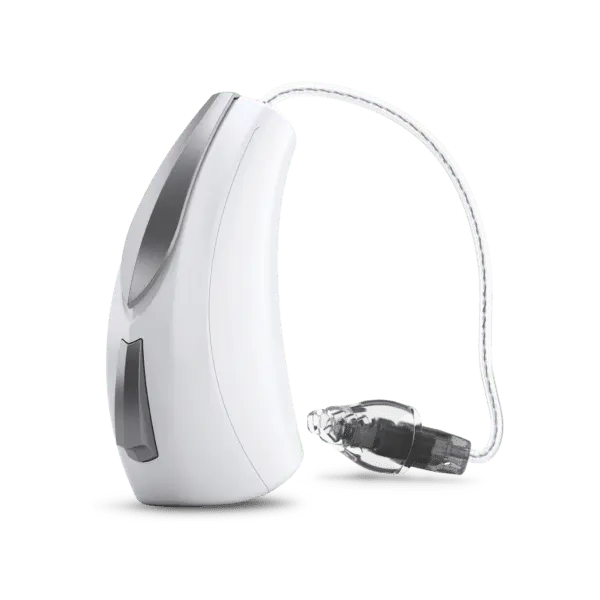
Today’s devices are sophisticated medical instruments. They use artificial intelligence to process sound in real time. Also, they adapt to your environment automatically. They stream audio directly from your phone, filter out background noise, and in some cases analyze your listening patterns to improve over time. The latest hearing aid technology includes dual-chip AI processors, Bluetooth 5.3 connectivity, and rechargeable batteries engineered to last all day — all packed into a device smaller than a jellybean.
Beyond the hardware, the price also reflects professional care. A licensed hearing care provider evaluates your hearing, selects the right device for your specific loss, performs a precise fitting, and supports you through adjustments over months. That expertise is bundled into most purchases at full-service hearing centers, and it matters more than most first-time buyers realize.
The Four Technology Tiers
Most major brands — including Phonak, Starkey, ReSound, and Unitron — organize their hearing aids into four technology levels. Understanding these tiers is one of the smartest things a first-time buyer can do.
Here is what each tier generally offers:
- Essential level: Basic amplification, noise reduction, and feedback cancellation. Works well for mild hearing loss in quieter environments.
- Standard level: Adds directional microphones and better speech clarity in moderate noise. A solid middle-ground option for many patients.
- Advanced level: Stronger noise management, wind reduction, and improved speech understanding in challenging environments like restaurants.
- Premium level: Top-tier AI processing, automatic environment detection, full Bluetooth streaming, and companion app control. Built for active lives and complex hearing needs.
A higher tier does not always mean a better outcome for every patient. The right tier depends on your degree of hearing loss, your lifestyle, and where you spend most of your time. Unitron’s lineup is a strong example of how entry and standard tiers deliver real-world value without unnecessary complexity — you can explore Unitron hearing aid models and technology to see how that plays out across their range. A good hearing care provider will match you to the tier that fits your actual needs, not the most expensive option available.
Why Are Costco Hearing Aids So Cheap?
Costco is the largest retail hearing aid seller in the country outside of the VA, and their prices genuinely are lower than most private practices. That fact deserves a straight answer, not a dismissal.
The price difference comes down to business model. Costco buys hearing aids in enormous volume across hundreds of locations, which allows them to negotiate wholesale prices that smaller independent practices simply cannot match. Their overhead is also minimal — a hearing center operates as a small corner of an existing warehouse, with a lean staffing structure.
The tradeoffs are real, though. Several things are worth knowing before you head to your nearest warehouse:
- Costco-specific models: Many devices sold at Costco are versions made specifically for their retail channel. They may not include every feature found in the same manufacturer’s full lineup sold through independent providers.
- Staffing model: Costco hearing centers are typically staffed by hearing instrument specialists, not licensed audiologists. The level of diagnostic evaluation reflects that difference.
- Service limitations: Most Costco hearing aids are programmed in a way that ties them to Costco’s system. If you move, or your nearest location closes, accessing service becomes harder.
- Wait times: Appointment availability at busy Costco locations can stretch to several weeks for even basic adjustments.
- Membership required: You need an active Costco membership to purchase hearing aids there — an added annual cost that factors into the real price.
For some patients — particularly those with mild to moderate hearing loss and straightforward fitting needs — Costco offers genuine value. For patients with more complex hearing needs, or anyone who values a long-term relationship with a consistent provider, the gaps in service begin to outweigh the savings.
Costco vs. A Full-Service Hearing Center: A Direct Comparison
| Factor | Costco | Stanford Hearing Aids |
|---|---|---|
| Technology access | Costco-specific or prior-gen models | Full current-generation lineup: Phonak, Starkey, ReSound, Unitron |
| Membership required | Yes | No |
| Professional level | Hearing instrument specialists | Licensed audiologists and hearing care specialists |
| Diagnostic evaluation | Basic screening | Full audiological evaluation with Real Ear Measurement |
| Appointment availability | Weeks-long waits reported | Prompt scheduling at multiple locations |
| Service flexibility | Locked to Costco locations | Unlocked — serviceable at any authorized provider |
| Insurance billing | Out-of-pocket, self-file | Direct billing to major insurance including Medicare Advantage |
| Financing | Limited | 12-month no-interest financing available |
| Price match | Not available | Guaranteed |
| Free consultation | Not offered | Yes |
| Trial period | 180 days | 10 days |
The 180-day trial Costco offers looks appealing on paper. But a trial period only matters if the device was correctly fitted in the first place. A longer return window does not substitute for a precise fitting backed by real ear measurement from the start.
Are Cheap Hearing Aids Worth Buying?
This question usually points to one of two things: over-the-counter (OTC) hearing aids, or entry-level prescription models. Both deserve a fair look.
Over-the-Counter Hearing Aids
The FDA legalized OTC hearing aids in 2022 for adults with self-perceived mild to moderate hearing loss. These devices are sold directly to consumers without a prescription or professional fitting. Prices range from under $200 to around $1,500 per pair.
For a specific type of patient, OTC devices offer real value. If you have confirmed mild hearing loss, are comfortable with technology, and are willing to self-adjust your devices over time, OTC can be a reasonable starting point. They are also a legitimate option for people who have worn hearing aids before and understand their needs well.
The honest limitations are these: OTC devices use generic, pre-programmed settings. They cannot be calibrated to your specific audiogram. A hearing aid that is not precisely matched to your hearing profile can actually increase listening fatigue rather than reduce it. And without a professional evaluation first, you may not know the actual type or cause of your hearing loss — something that matters more than many people realize.
Entry-Level Prescription Hearing Aids
The essential and standard tiers from trusted brands like Phonak, Starkey, ReSound, and Unitron are not cut-rate devices. They include core features that make a real difference in daily life: noise reduction, feedback cancellation, directional microphones, and in many cases Bluetooth connectivity. For patients with mild to moderate hearing loss who spend most of their time in quieter environments, these tiers deliver strong outcomes.
The key difference from premium tiers is not quality — it is the sophistication of the AI processing and the number of automatic adjustments the device makes. A patient in a busy restaurant or demanding work environment may notice that gap. A patient who mostly talks with family at home may not.
Working with a hearing care provider to identify the right tier is far more valuable than defaulting to either the most or least expensive option. If you are still weighing your options and wondering whether to go without insurance coverage entirely, our guide to buying hearing aids without insurance walks through every realistic path.

What Drives the Real Cost of Affordable Hearing Aids
A price tag alone does not tell you what something costs over time. This is especially true with hearing aids, where the purchase price is only one part of the picture.
Here is what the full cost of ownership actually includes:
- The device itself: Hardware cost varies by brand, style, and technology tier.
- Professional fitting and evaluation: At a full-service practice, this is typically bundled in. At some discount retailers, it is not.
- Follow-up adjustments: New hearing aids almost always need fine-tuning in the first several weeks. Some providers include unlimited adjustments; others charge per visit.
- Repairs and maintenance: Devices typically last five to seven years. Repair coverage and maintenance plans vary widely.
- Batteries or charging: Rechargeable models eliminate ongoing battery costs. Disposable battery models add a small but real ongoing expense.
An affordable hearing aid with poor fitting can cost more in the long run — through repeated adjustments, early replacements, and the continued impact of untreated hearing loss on daily life.
How Insurance Can Make Hearing Aids More Affordable
Insurance is one of the most underused tools first-time buyers have. Many patients assume their coverage does not apply, when in fact it does.
The details of hearing aid insurance coverage vary widely by plan, but here is what you should know.
Original Medicare (Parts A and B) does not cover hearing aids. However, Medicare Advantage (Part C) plans — offered by private insurers — often do. Many Medicare Advantage plans include partial or full hearing aid coverage, routine hearing exams, and fitting services. Coverage caps, frequency limits, and network restrictions vary by plan, so reviewing your Summary of Benefits carefully matters.
Private insurance coverage has also been expanding. Many employer-based plans now include some level of hearing benefit. If you are unsure what your plan covers, the fastest path is to call the member number on your insurance card and ask directly.
We are in-network with all major insurance providers, including Blue Cross Blue Shield, Aetna, Cigna, and UnitedHealthcare, as well as Medicare Advantage plans. Our team works directly with your insurance to maximize your benefits before you spend a dollar out of pocket. If you want to know exactly what your plan covers before you commit to anything, a free hearing consultation with our team is the easiest first step.
Additional options worth knowing about:
- HSA and FSA accounts: Hearing aids, batteries, fittings, and repairs all qualify as medical expenses under IRS rules. Using pre-tax funds reduces your effective cost meaningfully.
- State Medicaid programs: Coverage varies by state, but many Medicaid plans include hearing care benefits for adults with documented hearing loss.
- Veterans Affairs (VA): Veterans enrolled in VA health care may qualify for hearing aids at no cost if there is a documented medical need.
- Vocational rehabilitation: Working-age adults who need hearing aids to perform their job duties may qualify for assistance through state vocational rehabilitation programs.
- Nonprofit assistance programs: Several organizations provide hearing aids to people who meet income requirements. The Starkey Hearing Foundation and Miracle-Ear Foundation both run programs for low-income individuals. Lions Clubs and Hearing Charities of America also offer support. Our team can point you toward the right programs based on your situation.
Finding Genuine Value in Affordable Hearing Aids
The goal is not the lowest price. The goal is the best outcome for your specific situation — at a cost you can manage. Those are different targets, and treating them as the same leads to decisions people often regret.
Here is a practical framework for first-time buyers. These steps give you the clearest path to making a confident decision on affordable hearing aids.
- Start with a proper evaluation: A full audiological evaluation tells you the type and severity of your hearing loss. Without it, no price comparison means anything. Ours is free.
- Know your tier before you shop: Understanding the four technology levels means you can evaluate options honestly rather than being upsold or undersold.
- Ask about what is included: Confirm whether follow-up adjustments, repairs, and accessories are bundled or billed separately.
- Check your insurance first: Before paying out of pocket, verify your benefits. Our team can help with this directly.
- Consider total cost, not just purchase price: A well-fitted, well-supported device that lasts seven years often costs less than a cheaper device that underperforms or requires constant paid adjustments.
The right hearing aid is one that matches your hearing loss, your lifestyle, and your budget — in that order. You have more options than you think.
Frequently Asked Questions About Affordable Hearing Aids
Are cheap hearing aids worth buying?
It depends on what “cheap” means. Entry-level prescription hearing aids from reputable brands can offer real benefit for mild to moderate hearing loss. OTC devices are a legitimate option for some adults. Generic online amplifiers with no professional evaluation are a different story — they can increase frustration rather than reduce it.
Why are Costco hearing aids so cheap?
Costco uses bulk purchasing power and low warehouse overhead to offer lower prices. The tradeoff is that models sold there are often Costco-specific versions, service is tied to Costco locations, and the level of professional care differs from an independent hearing center.
What are the cheapest and best hearing aids?
“Best” depends on your hearing loss and lifestyle. For mild loss in quiet environments, an essential-tier prescription device from a trusted brand delivers strong value. For more active lifestyles or complex needs, stepping up to standard or advanced technology typically produces better outcomes. Our full hearing aid options walk through the complete range we carry.
Does insurance cover hearing aids?
Original Medicare does not. Medicare Advantage plans often do, with varying coverage levels. Private insurance coverage is expanding. HSA and FSA funds can be used for hearing aids regardless of other coverage. See our overview of hearing aid costs and coverage for more detail.
Can I try hearing aids before committing?
Yes. We offer a 10-day trial period so you can experience how hearing aids perform in your real daily life before making a final decision. You can also browse common hearing health questions answered to help you prepare for your first appointment.
The Bottom Line on Affordable Hearing Aids
The price of hearing aids is real, and the worry that comes with it is completely valid. But affordable hearing aids are not a myth — they are a matter of finding the right path for your specific needs, budget, and insurance situation.
According to national hearing loss statistics, approximately 15% of American adults report some trouble hearing. Most wait far longer than they should to address it. The longer hearing loss goes untreated, the harder the adjustment becomes — and the greater the impact on daily life, relationships, and long-term health.
You do not have to navigate this alone, and you do not have to guess. A free evaluation with our team at Stanford Hearing Aids costs nothing and tells you exactly where things stand. From there, we help you understand every option available — technology tiers, insurance benefits, financing, and timing — so you can make a decision that feels right.
Ready to find out what is actually possible for your budget? Contact us and schedule your free consultation today.