
The Key to Better Hearing: Understanding Your Hearing Aid Fitting
Updated August 2026
Short Version: A hearing aid fitting is the appointment where your devices get programmed to your ears. Your provider measures how sound behaves inside your ear canal, then adjusts from there. Expect roughly one to two hours. You leave wearing them, with a follow-up already scheduled at our Sioux Falls or Buffalo clinic.
Most people who gave up on hearing aids had a fitting problem, not a device problem. The hearing aid fitting is where a good device becomes a useful one. Skip that step and even premium technology ends up sitting unused in a drawer. Here is what the appointment involves at our clinics, in plain terms, start to finish.
What a Hearing Aid Fitting Involves
The fitting is not a try-on. Your provider programs the devices to the results of your hearing evaluation. Then the settings get verified against your own ear.
Three things happen that cannot happen anywhere else:
- Your amplification is matched to your measured hearing loss
- The sound is verified inside your ear canal, not on a screen
- You leave knowing how to wear, clean, and charge the devices
Everything else at the appointment supports those three. If you have not had testing yet, a diagnostic hearing evaluation comes first. That testing sets the targets we program to.
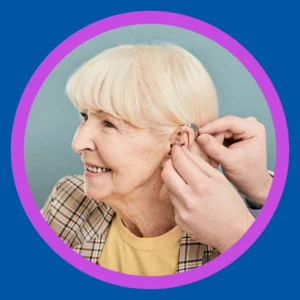
What Happens at Your Hearing Aid Fitting, Step by Step
Plan for one to two hours. The length depends on your hearing loss and the style you chose.
Programming and First Insertion
Your provider starts at the computer, not in your ear. The devices arrive blank and get loaded with your audiogram data.
Early in the appointment you will:
- Confirm the devices match the style and model you selected
- Watch your provider load your hearing profile into each one
- Learn where the microphone, receiver, and charging contacts sit
- Practice inserting and removing them yourself
That practice matters more than people expect. Insertion is the skill most new wearers struggle with at home.
Real Ear Measurement
This is the step that separates a real fitting from a guess. Every ear canal differs in shape and volume. Identical settings sound different in different ears.
Your provider places a thin probe microphone in your canal. Calibrated sound plays, and the probe measures what reaches your eardrum. The hearing aid goes in with the probe still there. Then the output gets measured again and corrected to your targets.
Without this measurement, programming is theory. With it, the fitting matches your anatomy.
Fine-Tuning With Your Feedback
The numbers get you close. Your reaction gets you the rest of the way.
Expect your provider to ask about three things:
- Loudness, especially whether your own voice sounds odd
- Sharpness on consonants and clinking dishes
- Clarity when someone speaks from across the room
Say what you notice, even if it sounds vague. Vague feedback still points a trained provider toward the right adjustment.
We also test speech understanding in quiet and with background noise running. That comparison tells us whether the directional microphones need work. Your own voice gets its own check. It bothers new wearers more than any other sound.
Setting Up Streaming and the App
Most current devices pair with a phone, and we handle that at the fitting. Bring your phone unlocked and know your app store password.
We will set up three things before you leave:
- Bluetooth pairing for calls and audio
- The manufacturer app, with volume and program controls
- Any accessory you bought, such as a remote microphone or TV streamer
Write down which program you use where. New wearers forget the streaming feature exists for weeks otherwise.
How to Prepare for Your Hearing Aid Fitting
A little preparation makes the appointment more useful. Patients who prepare tend to need fewer early adjustments.
Do these three things:
- Bring someone whose voice you want to hear clearly
- Write down the rooms and situations that give you trouble
- Block out two hours so nothing feels rushed
Bring your phone and its charger too, if you want streaming set up. Our list of questions to ask at a hearing consultation prints well for the visit.
Choosing a Style Before the Fitting
Style affects the fitting itself. Custom styles need ear impressions taken ahead of time, so the choice comes first.
| Style | Best if you | Fitting note |
|---|---|---|
| Receiver-in-canal | Want discreet size with strong sound quality | Fits at the first appointment, domes swapped on the spot |
| Behind-the-ear | Have more significant hearing loss or dexterity concerns | Tubing and earmold sized during the visit |
| Custom in-the-ear | Prefer something that sits in the ear and stays put | Needs impressions taken before the devices are ordered |
| Deep canal styles | Want the most discreet option available | Longest lead time, and comfort checks matter most |
Your ear anatomy and your hands both factor in. We carry five brands, so the recommendation stays about your hearing rather than one manufacturer. You can compare the hearing aid brands we carry before you come in.

Why an In-Person Hearing Aid Fitting Works Better Than Self-Fitting
Over-the-counter devices have a real place. They also have real limits, and the limits are worth knowing before you buy.
The FDA guidance on over-the-counter hearing aids sets the boundary. Those devices suit adults with perceived mild to moderate hearing loss. They are not intended for severe or profound loss. Prescription devices come only through a licensed hearing care professional. That professional programs them to your measured hearing.
Here is what the in-person appointment adds:
- Verified amplification measured inside your own ear canal
- Programming built on a diagnostic evaluation rather than self-assessment
- Physical comfort checks on domes, molds, and retention
- A provider who adjusts the settings when your report differs from the data
Self-assessment cannot do those four things. That gap is why fitting problems, not device problems, drive most abandoned hearing aids.
What a Hearing Aid Fitting Cannot Fix
Honest expectations protect your investment. A fitting solves a great deal, though it does not solve everything.
Several situations still need separate attention:
- Wax buildup, which we check for before programming anything
- Very loud rooms, where even excellent devices leave some effort behind
- Sudden changes in hearing, which need prompt clinical attention rather than a settings tweak
Your provider will say plainly which category you fall into. Overselling the outcome would only cost us your trust and your follow-up visits.
The First Two Weeks After Your Hearing Aid Fitting
Your brain has been filling in missing sound for years. Now it gets the real signal back, and the adjustment takes a little while.
Amplification helps you notice sound again, though it works differently than the hearing you remember. Federal guidance from the NIDCD is clear on that point. Hearing aids do not restore normal hearing. Regular wear does increase your awareness of sounds and their sources. Expect refrigerators, turn signals, and paper to sound loud at first.
Give yourself a routine for the first two weeks:
- Wear them daily, starting with quiet rooms and building up
- Keep a short note of anything that sounds wrong
- Bring that note to your follow-up
Consistency does most of the work here. Wearing them a few hours daily beats all-day wear twice a week. Steady exposure is what trains your brain back toward normal listening.
Follow-Up Care at Our Sioux Falls and Buffalo Clinics
The fitting is the start of the relationship, not the end of the transaction. We schedule your follow-up before you leave, usually within a few weeks.
At that visit we adjust based on real life rather than a sound booth. Church acoustics, restaurant noise, and one grandchild with a quiet voice all produce different fixes.
Many patients drive in from smaller communities across South Dakota and western Minnesota. Tell us your drive when you book, and we will combine visits where we can. Ongoing hearing aid repair and maintenance happens at either clinic. Cleanings never mean a trip to a mailbox.
Visit our Sioux Falls hearing center or our Buffalo hearing center, whichever sits closer to you.

Why Choose Stanford Hearing for Your Hearing Aid Fitting
We have been locally owned for more than 20 years. Patients here keep voting us a Sioux Falls Local Best winner. Real ear measurement is standard at every fitting we do. That is the part cheaper models skip.
Your hearing aid fitting at our clinics comes with:
- A free consultation before you commit to anything
- A 10-day trial in your own life, not just our office
- Five premium brands, so the recommendation stays brand-neutral
- Our price match guarantee
- No-interest financing
- In-network insurance including Medicare Advantage, with benefit verification handled for you
- Two clinics, in Sioux Falls, South Dakota and Buffalo, Minnesota
Every item above applies at both locations. Talk with a hearing care provider who listens. You can schedule a free consultation whenever you are ready. Feel free to meet our Sioux Falls hearing care team before booking.
Common Questions About Hearing Aid Fitting
How long does a hearing aid fitting take?
Plan on one to two hours at Stanford Hearing, depending on your hearing loss and style. Custom devices sometimes run longer because comfort checks take time. We would rather use the extra twenty minutes than send you home with a rough fit.
Will I hear well immediately after my fitting?
You will hear more immediately, though clarity keeps improving for several weeks. Stanford Hearing sets your first-week targets slightly below full prescription on purpose. Ramping up gradually is easier on your brain and produces better long-term wear.
Can my existing hearing aids be refit instead of replaced?
Often yes, and that is worth asking before you shop. Stanford Hearing can remeasure your hearing and reprogram devices bought elsewhere, including some over-the-counter models. Whether it helps depends on the device and how much your hearing has shifted.
What if the fitting does not feel right after a few days?
Call us rather than waiting for the follow-up. Stanford Hearing books adjustment visits quickly because early corrections prevent abandoned devices. Feedback in the first week is the most useful feedback we get.
Do you fit hearing aids for children?
Our clinics focus on adult hearing care, and pediatric fittings need specialized equipment and protocols. Stanford Hearing will point you toward appropriate pediatric care rather than stretch outside our scope. Ask us and we will help you find the right place.