
Noise and Kids: The Importance of Hearing Protection for Children
Children experience the world through sound. Their laughter, learning, and connections all depend on healthy hearing. Yet many parents don’t realize how vulnerable young ears are to damage. Approximately 4 in every 1,000 children are born with hearing loss, and many more develop it during childhood. The good news? Most noise-induced hearing damage is completely preventable with the right knowledge and tools.
This guide walks you through everything you need to protect your child’s hearing, from understanding dangerous noise levels to choosing the right protection for different situations.
Why Children’s Ears Need Extra Protection
Young ears are more susceptible to noise damage than adult ears. Their ear canals are smaller, which can amplify certain sounds. Their developing auditory systems are also more vulnerable to permanent damage from loud noise exposure.
Children face unique hearing risks that adults don’t encounter:
- They can’t recognize when sounds reach dangerous levels or know when to move away from noise sources
- Their smaller ear canals amplify certain frequencies more than adult ears do
- They hold toys and devices closer to their ears during play and listening
- Their developing auditory systems are more vulnerable to permanent damage from brief loud exposures
- They lack the judgment to remove themselves from harmful noise situations
These factors make parental awareness crucial for prevention.
Understanding hearing loss types helps you recognize what can go wrong. Noise-induced hearing loss occurs when loud sounds damage the delicate hair cells in the inner ear. Once these cells are damaged, they don’t regenerate.
The impact goes beyond just hearing. Untreated hearing issues can affect speech development, academic performance, and social interactions. Early protection sets the foundation for lifelong hearing health.

Common Sources of Harmful Noise for Kids
Loud noise surrounds children in everyday life. Many parents are surprised to learn which activities put their kids at risk.
Recreational activities top the list:
- Concerts and music festivals that reach 110+ decibels for extended periods
- Sporting events with air horns, cheering crowds, and stadium sound systems
- Fireworks displays that produce explosive sounds exceeding 150 decibels at close range
- Movie theaters with action films and surround sound systems pumping bass
- Arcades and amusement parks with overlapping music and game sounds
These entertainment venues create sustained or sudden loud noise that damages hearing quickly.
Personal audio devices pose a significant and growing threat:
- Headphones and earbuds that deliver music directly into ear canals at dangerous volumes
- Gaming headsets worn for hours during online play sessions
- Tablet and smartphone speakers turned to maximum during video watching
- Portable Bluetooth speakers that kids carry everywhere and crank up loud
Many kids turn up the volume to block out background noise, making the problem worse.
Everyday items around the house and yard create surprisingly harmful noise levels:
- Musical toys, squeaky toys, and toy weapons that produce sounds over 100 decibels
- Power tools like drills, saws, and sanders used during weekend projects
- Lawn mowers, leaf blowers, and trimmers running during yard work
- Kitchen appliances like blenders, food processors, and garbage disposals
- Hair dryers, vacuum cleaners, and other household maintenance equipment
Young children often play nearby while parents do yard work or home projects, facing repeated exposure to harmful sounds.
School environments aren’t always quiet either. Cafeterias, gymnasiums, music rooms, and school buses regularly reach noise levels that concern hearing experts. Band practice and choir rehearsals can also expose kids to sustained loud sounds.
Understanding Safe vs. Dangerous Noise Levels
Not all loud sounds are equally dangerous. Both volume and duration matter when assessing risk to your child’s hearing.
Sound is measured in decibels (dB). Normal conversation registers around 60 dB. Sounds below 70 dB are generally considered safe, even with prolonged exposure.
Above 85 dB, hearing damage becomes possible with extended exposure. The louder the sound, the less time it takes to cause harm. A rock concert at 110 dB can damage hearing in just two minutes.
Noise Level Guidelines by Decibel Range
| Decibel Level | Example Sounds | Safe Exposure Time | Risk Level |
| 0-70 dB | Normal conversation, dishwasher, rainfall | Unlimited | Safe |
| 71-85 dB | Vacuum cleaner, city traffic, alarm clock | 8+ hours | Minimal risk |
| 86-100 dB | Hair dryer, blender, lawn mower, motorcycle | 2 hours to 15 minutes | Moderate risk |
| 101-110 dB | Rock concert, car horn, power tools, sporting event | 2 minutes to 30 seconds | High risk |
| 111+ dB | Sirens, fireworks, gunshots, jet engine | Immediate damage possible | Severe risk |
Pay attention to the duration rule. Exposure time should be cut in half for every 3 dB increase above 85 dB. A sound at 88 dB is safe for 4 hours, but one at 91 dB should be limited to 2 hours.
Watch for warning signs that your child has been exposed to excessive noise:
- Temporary ringing in the ears (tinnitus) that lasts more than a few minutes
- Muffled or dampened hearing after leaving a loud environment
- Difficulty understanding speech or following conversations after noise exposure
- Complaints of ear fullness or pressure that doesn’t resolve quickly
- Need to turn up device volumes higher than usual after a loud event
These symptoms indicate potential damage and warrant a hearing evaluation.
Types of Hearing Protection for Children
Several hearing protection options work well for kids. The best choice depends on your child’s age, the situation, and comfort preferences.
Earmuffs work well for young children and offer these advantages:
- Easy to put on and take off without special insertion skills
- Visible to parents and others, making compliance easy to monitor
- Adjustable headbands that grow with your child over several years
- Comfortable for extended wear during concerts or events
- Available in fun colors and designs that appeal to kids
Many kids find earmuffs more comfortable than earplugs initially.
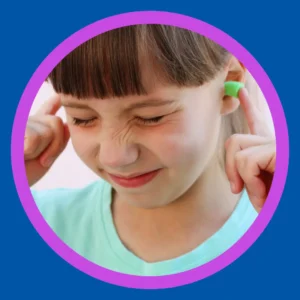
Earplugs provide a compact alternative with their own benefits:
- Small and portable enough to keep in pockets or bags
- Less conspicuous than earmuffs for self-conscious older kids
- Available in disposable foam or reusable silicone materials
- Effective for swimming and water activities when properly fitted
- Cost-effective for families who need multiple pairs
Getting a proper fit can be tricky with younger children who have smaller ear canals.
Custom-molded earplugs offer the best fit and protection. A hearing care provider takes an impression of your child’s ear canal and creates plugs specifically shaped for them. These work well for kids who need frequent protection for activities like band practice or regular concert attendance.
Noise-canceling headphones reduce background noise electronically. They’re popular for travel and studying but may not provide adequate protection in very loud environments. They work best for moderate noise reduction rather than high-decibel protection.
Hearing Protection Comparison Guide
Protection Type |
Best For |
Pros |
Cons |
Recommended Age |
| Earmuffs | Concerts, sporting events, yard work | Easy to use, visible, adjustable, reusable | Bulky, can be hot, may interfere with hats | All ages (infant and up) |
| Foam Earplugs | Swimming, sleeping, general noise | Inexpensive, disposable, lightweight | Sizing tricky, can fall out, single-use | 4+ years |
| Reusable Earplugs | School events, regular activities | Washable, cost-effective, portable | Requires proper insertion, easily lost | 6+ years |
| Custom Earplugs | Musicians, frequent flyers, regular exposure | Perfect fit, maximum protection, long-lasting | Higher initial cost, child may outgrow | 5+ years |
| Noise-Canceling Headphones | Study, travel, moderate noise | Comfortable, allows audio, stylish | Battery-dependent, less protection than passive options | 3+ years |
Choose protection based on the specific situation. Concert earmuffs differ from swimming earplugs. Your local hearing center can help match protection type to your child’s needs and activities.
Age-Appropriate Protection Strategies
Different ages require different approaches to hearing protection. Infants, toddlers, school-age children, and teens all face unique challenges.
Infants and Toddlers (0-3 years)
The youngest children need the most protection and parental vigilance. They can’t communicate discomfort or request hearing protection.
Protect your baby’s hearing with these essential strategies:
- Keep babies away from sustained loud noise whenever possible
- Bring infant earmuffs to events like weddings, festivals, or family gatherings
- Monitor toy noise levels by testing them at arm’s length near your own ear first
- Create a quiet sleep environment with white noise machines at low volumes
- Place baby monitors away from the crib and keep parent units at moderate volume
- Avoid bringing infants to venues like movie theaters or concerts when possible
These simple precautions prevent damage during the most vulnerable developmental period.
Preschool and Early Elementary (4-7 years)
This age group becomes more independent but still needs guidance:
- Teach your child to recognize when sounds are too loud using simple language
- Make hearing protection fun by letting them choose colorful earmuffs or decorated earplugs
- Establish rules for headphone use limiting volume to 60% of maximum
- Set listening time limits of 60 minutes at a stretch for personal devices
- Practice covering ears as a first response to sudden loud noises
- Praise them when they remember to use protection without reminders
These lessons help children understand cause and effect while building good habits.
School-Age Children (8-12 years)
Older elementary students face increased exposure at school and activities:
- Pack hearing protection in their school bag for band, gym, and cafeteria use
- Discuss peer pressure around hearing protection and emphasize that it’s smart
- Monitor personal listening devices closely and enable volume limits through parental controls
- Check devices periodically to ensure volume limits haven’t been disabled
- Choose over-ear headphones instead of earbuds that fit deeply into ear canals
- Teach them to take listening breaks after an hour of headphone use
They’re developing responsibility but still need consistent reminders and monitoring.
Teens (13+ years)
Teenagers face the highest risk of noise-induced hearing loss:
- Have honest conversations about permanent hearing damage using facts and statistics
- Share information about young adults already experiencing hearing loss
- Encourage them to take listening breaks following the 60/60 rule
- Support their use of hearing protection at concerts by providing high-fidelity earplugs
- Discuss how musicians’ earplugs reduce volume without muffling sound quality
- Allow them autonomy in choosing protection styles they’ll actually wear
Teens respond better to facts than warnings, so emphasize consequences and long-term impact.
Age-Appropriate Protection Guidelines
| Age Group | Primary Risks | Best Protection Options | Key Strategies |
| Infants (0-12 months) | Loud events, toys, household noise | Infant earmuffs, distance from noise | Parental vigilance, avoid loud venues |
| Toddlers (1-3 years) | Toys, household appliances, public spaces | Toddler earmuffs, ear covers | Supervision, volume monitoring |
| Preschool (4-5 years) | Toys, entertainment, early devices | Child earmuffs, headphone limits | Education, habit formation |
| Elementary (6-10 years) | School activities, devices, hobbies | Earplugs, earmuffs, volume-limited headphones | Rules, reminders, modeling |
| Tweens (11-12 years) | Personal audio, school band, sports | Musician’s earplugs, custom options | Responsibility training, check-ins |
| Teens (13-18 years) | Concerts, earbuds, jobs, vehicles | High-fidelity earplugs, custom protection | Education, autonomy, consequences |
Your hearing care provider can assess your child’s specific needs. They’ll recommend protection that fits properly and matches your family’s lifestyle.
Recognizing Signs of Hearing Damage in Children
Early detection makes a significant difference in outcomes. Many hearing problems in children go unnoticed because kids adapt and compensate.
Behavioral signs often appear first and include these red flags:
- Asking for repetition frequently or responding with “what?” more than usual
- Turning up the TV or device volume consistently higher than other family members
- Sitting very close to the television or moving closer to speakers
- Seeming to ignore you or not responding when called from another room
- Difficulty following multi-step directions even after repetition
These behaviors may seem like inattention but could indicate hearing issues.
Speech and language development concerns that warrant evaluation:
- Speech not developing on schedule compared to developmental milestones
- Not pronouncing words clearly or struggling with certain sounds
- Limited vocabulary compared to peers of the same age
- Difficulty rhyming or playing with sounds in words
- Watching speakers’ mouths intently to understand them
If your child’s speech isn’t progressing normally, hearing could be a factor.
Academic struggles sometimes stem from undiagnosed hearing problems:
- Difficulty following classroom directions even when paying attention
- Poor reading progress despite adequate instruction and practice
- Seeming inattention that actually reflects missed auditory information
- Trouble with phonics and sound-based learning activities
- Reluctance to participate in class discussions or group work
Teachers may notice these issues before parents do in some cases.
Watch for physical complaints after loud events:
- Ear pain that persists beyond the event itself
- Ringing sounds (tinnitus) lasting more than a few hours
- Muffled hearing that doesn’t clear within a day
- Sensation of fullness or pressure in one or both ears
- Increased sensitivity to normal sounds after noise exposure
Any of these symptoms warrant professional evaluation promptly.
Understanding the reality of hearing loss helps parents take symptoms seriously. Early intervention prevents complications and supports healthy development.
Creating a Hearing-Healthy Home Environment
Your home should be a refuge for your child’s ears. Simple changes reduce daily noise exposure and establish healthy habits.
Set reasonable volume limits throughout your household:
- Keep televisions at levels where conversation remains possible in the room
- Ensure tablets, gaming systems, and music players stay at moderate levels
- Test your child’s headphones by listening yourself at their usual volume
- If someone across the room can hear what’s playing through headphones, it’s too loud
- Use volume-limiting features built into most children’s headphones and devices
These boundaries protect hearing during daily activities at home.
Choose quieter appliances and modify your home environment:
- Select appliances with lower decibel ratings when replacing household items
- Close doors when using loud equipment like vacuum cleaners or blenders
- Schedule noisy household tasks when children are at school or outside
- Add soft furnishings like rugs and curtains that absorb sound
- Create quiet zones specifically for homework and sleep
Small environmental changes reduce cumulative noise exposure significantly.
Model good hearing protection habits as a parent:
- Wear protection yourself when using power tools or attending loud events
- Keep earplugs or earmuffs visible and accessible in common areas
- Talk openly about protecting your own hearing and why it matters
- Point out when environments are too loud and take action
- Make hearing protection as routine as wearing seatbelts
Children learn by watching their parents more than by hearing lectures.
Maintain healthy ear hygiene without overdoing it. Skip ear candling this flu season and avoid inserting cotton swabs into ear canals. The ears are self-cleaning and excessive cleaning can cause harm.
When to Seek Professional Hearing Care
Some situations require expert evaluation beyond home prevention measures. Don’t wait if you notice concerning signs.
Schedule a comprehensive hearing test in these situations:
- Your child fails a school hearing screening or you’re told further testing is recommended
- You notice any of the behavioral, speech, or academic warning signs mentioned earlier
- Your child experiences temporary hearing loss, ringing, or pain after a loud event
- Chronic ear infections occur repeatedly even with medical treatment
- Family history includes hearing loss and you want baseline monitoring
- Any sudden change in hearing occurs in one or both ears
What seems temporary could indicate damage that needs professional assessment.
Chronic ear infections warrant hearing evaluation. Repeated infections can cause conductive hearing loss even after infections clear. Fluid buildup affects hearing and development in ways that persist beyond the infection itself.
Family history matters more than many parents realize. If hearing loss runs in your family, more frequent monitoring helps catch problems early. Some genetic hearing loss progresses over time and benefits from early intervention.
A hearing care provider offers comprehensive testing for all ages:
- Baseline hearing tests that establish normal ranges for your child
- Age-appropriate testing methods that work even with very young children
- Identification of bilateral hearing loss and other conditions
- Guidance on appropriate protection for specific activities and risk levels
- Custom hearing protection solutions when needed
- Ongoing monitoring as your child grows and their needs change
Professional support makes prevention and early intervention much more effective.
Building Lifelong Hearing Health Habits
Teaching children to protect their hearing now prevents problems later. These habits become automatic with consistency.
Make hearing protection routine for loud events with these practical steps:
- Keep earplugs or earmuffs in the car, your bag, and your child’s backpack
- Normalize their use like seatbelts or bike helmets rather than treating them as special
- Purchase multiple sets so you always have protection available
- Replace lost or worn protection promptly to avoid gaps in use
- Make putting in protection part of the pre-event routine
Consistency turns protection into an unconscious habit rather than a negotiation.
Teach children to self-advocate as they mature:
- Practice what they might say when asking someone to lower volume
- Role-play moving away from speakers at events without seeming rude
- Empower them to leave situations that feel uncomfortably loud
- Encourage them to speak up in school about excessive noise in band or gym
- Remind them that protecting their hearing shows intelligence, not weakness
Older kids should feel comfortable making these decisions independently.
Connect hearing protection to their interests and goals:
- Musicians need protection that preserves sound quality while reducing volume
- Athletes attending games need comfortable options they can wear for hours
- Students who want careers in music, medicine, or aviation have extra incentive
- Gaming enthusiasts benefit from understanding how prolonged headphone use affects them
- Help them find solutions that work with their hobbies rather than against them
Personal relevance increases compliance and long-term commitment.
Celebrate Protect Your Hearing Month and similar awareness efforts. National Protect Your Hearing Month provides opportunities to discuss hearing health as a family and reinforce good practices.
Schedule regular hearing checkups just like dental or vision appointments. Annual or biennial hearing tests establish baseline measurements and catch changes early before they affect development or quality of life.
Frequently Asked Questions About Hearing Protection for Children
At what age should I start protecting my child’s hearing?
Protection should begin from birth. Infants need shielding from loud environments. Establish good habits early and maintain them throughout childhood.
Can hearing damage from noise exposure be reversed?
No. Noise-induced hearing loss is permanent. Prevention is the only cure. Damaged hair cells in the inner ear don’t regenerate or repair themselves.
How loud is too loud for headphones?
Follow the 60/60 rule. Keep volume at 60% of maximum for no more than 60 minutes at a time. If others can hear what’s playing through your child’s headphones, it’s too loud.
Will my child outgrow custom earplugs quickly?
Ear canals grow most rapidly in early childhood. After age five, growth slows significantly. Custom plugs often last several years depending on the child’s age when fitted.
Do all children need hearing protection at concerts?
Yes. Concerts typically exceed 100 decibels. Hearing damage can occur in minutes at these levels. Always bring protection to loud events regardless of age.
What if my child refuses to wear hearing protection?
Start young to normalize the practice. Let them choose styles they like. Explain the reasons simply and age-appropriately. For teens, emphasize permanent consequences and connect to their future goals.
Are noise-canceling headphones enough protection for very loud events?
No. Noise-canceling technology reduces background hum but doesn’t provide sufficient protection at high decibel levels. Use dedicated hearing protection for concerts and similar high-noise events.
How can I tell if toys are too loud?
Hold the toy at arm’s length near your ear. If it seems loud to you, it’s likely over 85 decibels and too loud for a child. Many toys include volume controls or can be modified with tape over speakers.
Your Partner in Hearing Health
Protecting your child’s hearing takes awareness, preparation, and the right support. Small steps now prevent significant problems later.
Your local hearing center offers expert guidance tailored to your child’s needs. From selecting appropriate protection to conducting baseline hearing tests, professional support makes prevention easier and more effective.
Ready to learn more about hearing protection options for your family? Our team provides free consultations and personalized recommendations. We help parents make informed decisions about their children’s hearing health with compassionate, expert care.
Start your child on the path to lifelong healthy hearing. Contact us today to discuss your questions and explore protection solutions that fit your family’s lifestyle.