
Age-Related Hearing Loss: Managing Hearing Health as We Grow Older
Updated March, 2026
You ask someone to repeat themselves. You turn the TV up. You nod along in group conversations, hoping no one notices you missed half of what was said. Age-related hearing loss is one of the most common health changes adults experience, and it tends to sneak up quietly.
The good news is that age-related hearing loss is manageable. With the right information and support, you can protect your quality of life, stay connected to the people you love, and hear clearly for years to come. This guide covers everything you need to know: what causes it, what the warning signs look like, why treatment matters, and what your options are.
What Is Age-Related Hearing Loss?
Age-related hearing loss, also called presbycusis, develops gradually as the auditory system changes over time. According to the National Institute on Deafness and Other Communication Disorders, roughly one in three adults over 65 experiences some degree of hearing loss. By age 75, that number climbs to nearly half of all adults.
Unlike sudden hearing loss from illness or injury, presbycusis builds slowly. Most people lose a small amount of hearing each year without realizing it. By the time they notice, the loss is often already moderate.
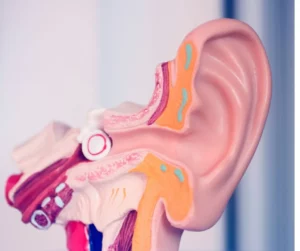
How Hearing Changes with Age
Age-related hearing loss typically affects high-pitched sounds first. You may still hear low rumbles and bass tones clearly while struggling with voices, birdsong, or the ring of a phone. Here is what changes inside the ear over time:
- The cochlea. This inner ear structure converts sound vibrations into electrical signals. Age causes gradual loss of the hair cells inside the cochlea. Once gone, those hair cells do not regenerate.
- The middle ear bones. The tiny bones that amplify sound can stiffen with age, reducing their efficiency.
- The auditory nerve pathways. These carry signals from the ear to the brain. Age-related changes in these pathways slow and reduce signal clarity.
- The brain itself. The brain’s ability to process and interpret speech can decline with age, independent of the ear.
Because these changes happen across multiple structures, age-related hearing loss often involves both the ability to detect sound and the ability to understand speech.
What Contributes to Age-Related Hearing Loss?
Aging is the primary driver, but other factors accelerate the process. Understanding them gives you more control.
- Lifetime noise exposure. Years of exposure to loud environments add up. Concerts, power tools, farming equipment, and loud workplaces all take a cumulative toll.
- Cardiovascular health. The cochlea depends on strong blood flow. Conditions like high blood pressure, heart disease, and diabetes reduce circulation to the inner ear and accelerate hearing loss.
- Genetics. Some people are more susceptible to age-related auditory changes based on family history.
- Ototoxic medications. Certain drugs, including high doses of aspirin, some antibiotics, and some chemotherapy agents, can damage the inner ear over time.
- Smoking. Research links smoking to higher rates of hearing loss, likely through its effects on circulation.
For a deeper look at the full range of causes, visit our page on hearing loss types and causes.
Recognizing the Symptoms of Age-Related Hearing Loss
Age-related hearing loss rarely announces itself dramatically. It arrives in small, easy-to-rationalize moments. Recognizing the pattern early makes a meaningful difference in how well you can protect your long-term hearing health.
Early Warning Signs
These early indicators are easy to dismiss but worth paying attention to:
- Frequently asking people to repeat themselves
- Struggling to follow conversations in noisy places like restaurants or family gatherings
- Turning the TV or radio louder than others prefer
- Missing phone rings or notification sounds
- Difficulty hearing voices on the phone, especially when it is not on speaker
- Misunderstanding words rather than simply not hearing them
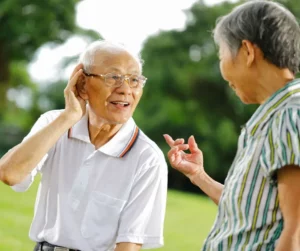
Signs the Loss Is Advancing
As age-related hearing loss progresses, the challenges become harder to work around:
- Difficulty following conversations even in quiet environments
- Withdrawing from social situations that feel exhausting or frustrating
- Feeling anxious or irritable after long conversations
- Missing important information at doctor appointments
- Relying on reading lips more often without realizing it
- Experiencing tinnitus, a persistent ringing, buzzing, or hissing in one or both ears
If you notice these patterns in yourself or a family member, schedule a hearing test and evaluation as soon as possible. Early intervention always produces better outcomes than waiting.
How Age-Related Hearing Loss Affects Overall Health
This is the section most people do not expect. Age-related hearing loss is not just a communication inconvenience. Left untreated, it connects to serious health outcomes that go well beyond the ears.
Cognitive Decline and Dementia Risk
The link between untreated hearing loss and cognitive decline is one of the most well-researched connections in hearing health. When the brain receives degraded sound signals, it works harder to fill in gaps and interpret speech. That mental effort diverts resources away from memory, attention, and reasoning.
Over time, this strain accelerates cognitive aging. Studies show that untreated hearing loss increases dementia risk significantly, with the risk rising alongside the degree of hearing loss. Researchers now consider hearing loss one of the largest modifiable risk factors for dementia.
The practical implication is straightforward: treating age-related hearing loss is not just about hearing better. It protects brain health.
Fall Risk
Hearing loss affects balance more than most people realize. Sound provides constant environmental cues that help the body maintain stability. When those cues are absent or degraded, spatial awareness suffers.
Research also shows that the cognitive effort required to process unclear sounds steals attention from the subconscious processing that keeps the body balanced. Each 10 decibel increase in untreated hearing loss raises fall odds meaningfully, and falls remain a leading cause of injury in older adults.
Social Isolation and Mental Health
Following a conversation in a noisy room requires real mental work when you have age-related hearing loss. Over time, many adults start avoiding social situations not because they want to withdraw, but because the experience feels exhausting or embarrassing.
This isolation creates a serious cycle. Reduced social connection is strongly linked to depression, anxiety, and poorer cardiovascular health. Social engagement protects the brain and the body, and hearing loss quietly erodes that engagement when left untreated.
The Connection to Tinnitus
Many adults with age-related hearing loss also develop tinnitus. When the brain receives less sound input, it can generate its own phantom noise to compensate. The result is persistent ringing, buzzing, hissing, or clicking that only the person experiencing it can hear.
Tinnitus and hearing loss frequently respond to the same treatment. If you experience both, our guide on hearing aids for seniors with tinnitus covers what to look for and how treatment helps.
Stages of Age-Related Hearing Loss at a Glance
| Stage | Degree of Loss | Typical Challenges | Recommended Action |
|---|---|---|---|
| Normal | Up to 25 dB | No significant difficulty | Annual monitoring; protect hearing |
| Mild | 26–40 dB | Trouble in noisy places; some missed speech | Hearing evaluation; may benefit from hearing aids |
| Moderate | 41–55 dB | Difficulty in most conversations; frequently asking for repetition | Hearing aids strongly recommended |
| Moderately Severe | 56–70 dB | Struggles even in quiet settings; significant communication effort | Hearing aids essential |
| Severe | 71–90 dB | Very limited speech understanding without amplification | Hearing aids required; may explore other options |
| Profound | 91+ dB | Cannot understand speech without significant amplification or visual support | Advanced hearing aids or cochlear implant evaluation |
Most adults with age-related hearing loss fall in the mild to moderate range when they first seek help. Earlier treatment at these stages produces better long-term outcomes.
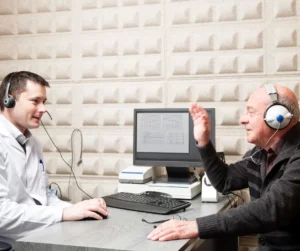
Treatment Options for Age-Related Hearing Loss
Age-related hearing loss cannot be reversed, but it responds well to treatment. Today’s options are better than ever, and most people experience a significant improvement in communication and quality of life after getting fitted.
Hearing Aids: The Primary Solution
Hearing aids remain the most effective and widely used treatment for age-related hearing loss. Today’s devices bear almost no resemblance to the bulky, whistling aids of decades past. They are small, discreet, rechargeable, and packed with AI-powered technology designed to handle the specific challenges older adults face.
For a comprehensive breakdown of features and brands, visit our guide to hearing aids for seniors.
Key Features That Matter for Older Adults
When choosing hearing aids for age-related hearing loss, certain features deliver the most meaningful benefit for daily life:
- Rechargeable batteries. Eliminates the frustration of handling tiny disposable batteries. Place them in the charger overnight and wake up to all-day power.
- AI-powered speech processing. Modern hearing aids use deep neural network chips to separate speech from background noise in real time. This is especially valuable in restaurants, family gatherings, and noisy group settings.
- Automatic environment detection. Premium hearing aids detect your listening environment and adjust settings automatically. No manual program switching required.
- Directional microphones. These focus on the sounds in front of you while reducing noise from the sides and behind.
- Tinnitus management programs. Many hearing aids include built-in sound therapy programs that help the brain tune out tinnitus over time.
- Bluetooth connectivity. Streams phone calls, TV, and music directly into both ears with clear, personalized sound.
- Fall detection. Select hearing aids include sensors that detect falls and automatically alert designated contacts.
What Each Brand Does Best for Seniors
We carry Phonak, Starkey, ReSound, Unitron, and Oticon. Each brand brings a different strength to age-related hearing loss management:
| Brand | Senior-Focused Strength | Standout Feature |
|---|---|---|
| Phonak | Best-in-class speech clarity in noise | AI chip that separates speech from competing voices in any direction |
| Starkey | Comprehensive health monitoring | Fall detection, balance exercises, respiratory rate tracking, 51-hour battery |
| ReSound | Natural sound processing and Bluetooth leadership | Intelligent Focus responds to head movement to prioritize speech |
| Oticon | Brain-friendly sound philosophy | 4D Sensor Technology adapts to your intent, not just your environment |
| Unitron | Accessible entry point with easy upgrades | FLEX:TRIAL and FLEX:UPGRADE programs reduce commitment anxiety |
Your hearing care provider matches features to your specific hearing loss pattern and lifestyle. What works best for someone who attends weekly choir practice differs from what works best for someone who primarily watches TV and makes phone calls at home.
Assistive Listening Devices
Beyond hearing aids, a range of assistive devices can supplement your hearing in specific situations:
- TV streamers send audio directly to your hearing aids without raising the volume for everyone else
- Remote microphones help in large spaces or across the dinner table
- Captioned telephones display text for phone calls in real time
- Hearing loops in theaters, churches, and public venues connect directly to hearing aids with telecoil technology
Communication Strategies
Hearing aids do most of the work, but simple strategies help in challenging situations:
- Position yourself facing the speaker in good light
- Reduce background noise when possible by turning off the TV or choosing quieter seating
- Ask speakers to face you, speak clearly, and rephrase rather than just repeat
- Take breaks during long conversations to reduce fatigue
Protecting the Hearing You Have
Treatment addresses existing age-related hearing loss. Equally important is slowing further progression. These steps make a real difference over time.
Limit Noise Exposure
Hearing loss from noise exposure compounds age-related changes. Protect your ears in any environment louder than 85 decibels. Use quality ear protection at concerts, while mowing the lawn, using power tools, or attending sporting events.
Our hearing protection page covers the right protection options for different situations.
Protect Your Cardiovascular Health
Hearing and heart health share a direct connection. Regular exercise, a heart-healthy diet, and managing blood pressure and blood sugar all support blood flow to the inner ear. Protecting your cardiovascular health is one of the most effective long-term strategies for slowing age-related hearing loss.
Be Mindful of Medications
Talk to your doctor or pharmacist about the ototoxic potential of any medication you take regularly. This is especially important for seniors managing multiple conditions. Never stop a prescribed medication without medical guidance, but awareness allows you to monitor your hearing more closely.
Schedule Regular Hearing Checks
Even if you notice no symptoms, annual hearing evaluations after age 60 establish a baseline and catch changes early. The sooner a change gets addressed, the better the outcome.
Why Early Treatment Produces Better Results
Many adults wait an average of seven to ten years from first noticing hearing difficulties before seeking help. That delay costs more than most people realize.
The brain adapts to degraded sound input over time. When hearing aids eventually arrive, the brain has to relearn how to process clear speech. This takes longer and requires more effort the longer treatment was delayed.
Early treatment keeps auditory pathways active, reduces cognitive strain, and preserves the social connections that protect long-term health. Starting treatment at mild loss is always easier, and more effective, than starting at moderate or severe loss.
Start Hearing Clearly Again with Stanford Hearing
We have helped Sioux Falls and surrounding South Dakota communities manage age-related hearing loss for more than 20 years. Our approach is simple: we listen first, then recommend. Every patient receives a thorough evaluation and a brand-neutral recommendation based on their actual hearing needs and lifestyle.
Here is what you get when you work with us:
- Free consultation to assess your hearing and answer your questions
- 10-day trial period to test hearing aids in your real life before committing
- Five premium brands under one roof: Phonak, Starkey, ReSound, Unitron, and Oticon
- Price match guarantee so you never overpay
- No-interest financing to make premium hearing care accessible
- In-network with major insurance, including Medicare Advantage
Age-related hearing loss responds best to early action. The sooner you address it, the easier the process and the better the results. Contact us today to schedule your free consultation at our Sioux Falls or Buffalo location.
Your Age-Related Hearing Loss Questions Answered
Is age-related hearing loss permanent?
In most cases, yes. The hair cells in the cochlea that deteriorate with age do not regenerate. However, hearing aids and assistive devices effectively compensate for the loss and restore clear communication. Treatment dramatically improves daily function even though it does not restore natural hearing.
How do I know if I need hearing aids or just a hearing check?
Start with a hearing evaluation regardless of how significant your difficulties feel. A comprehensive hearing test establishes the degree and type of your loss and determines whether hearing aids are appropriate. Some patients with mild loss benefit from hearing aids right away. Others benefit from monitoring and prevention strategies first.
Can I treat age-related hearing loss without hearing aids?
Hearing aids remain the most effective intervention for age-related hearing loss. Assistive listening devices, captioning tools, and communication strategies can supplement hearing aids, but they do not replace the benefit of properly fitted amplification. There are no proven medications or supplements that reverse age-related auditory changes.
What is the difference between age-related hearing loss and noise-induced hearing loss?
Both cause permanent damage to the hair cells inside the cochlea. Age-related hearing loss results from the natural aging process and develops gradually over decades. Noise-induced hearing loss results from exposure to loud sounds and can happen at any age. Many older adults experience a combination of both, with noise exposure from earlier in life compounding age-related changes.
Does age-related hearing loss affect both ears equally?
Not always. It often affects both ears, but one side can decline faster than the other. Your hearing care provider measures each ear independently and fits hearing aids to match the specific degree of loss in each ear.
How do tinnitus and age-related hearing loss relate to each other?
The two conditions frequently occur together. When the auditory system processes less sound due to hearing loss, the brain can generate phantom noise to compensate. This produces the ringing or buzzing associated with tinnitus. Treating the underlying hearing loss with hearing aids often reduces tinnitus perception. For more detail, see our guide on managing tinnitus with hearing aids.
At what age should I start getting my hearing checked?
Most hearing care providers recommend baseline hearing evaluations starting at age 50, or earlier if you have a history of noise exposure, cardiovascular conditions, or a family history of hearing loss. After age 60, annual evaluations help catch age-related changes early when treatment is most effective.